Bronze light fixtures: real bronze or a finish, how to tell
This article is also available in French: Luminaire bronze
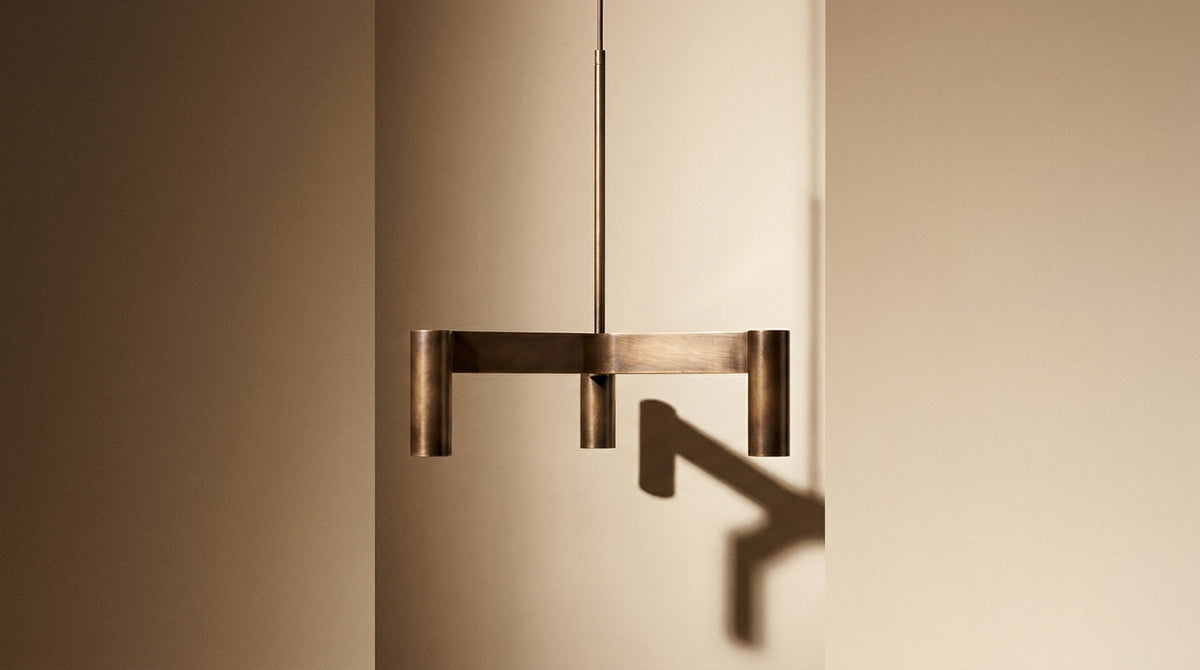
Grab a magnet: if it sticks, it is painted steel, not bronze. If it does not stick and the piece feels heavy in the hand, you are holding solid bronze. If it does not stick but the piece is light, it is a bronze finish over hollow metal. Weight and the magnet settle it, never the colour.
What is a bronze light fixture, and how do you tell it from a simple finish?
A bronze light fixture has a body cast or turned from a copper and tin alloy. The rest of the market is metal coated with a paint or a bronze-effect plating. The difference does not show in the photo of a designer light fixture: it is felt in the hand and read on the back of the mount.
How do you know if it is real bronze?
The magnet first. Then the weight: solid bronze is dense for its volume, hollow metal rings clear when tapped. Finally the patina, darker in the recesses, the solder joints and the corners that a hand never rubs. A uniformly brown light fixture, with no variation, is almost always a finish.
Older pieces add another criterion: the casting mark under the base, the tool marks on the stem. Our article on fake bronze or brass chandeliers details the five checks to make at a flea market.
Solid bronze, brass, bronze finish: three different things
| Clue | Solid bronze | Brass | Bronze finish |
|---|---|---|---|
| Magnet | Does not stick | Does not stick | Sticks if the core is steel |
| Weight in the hand | Dense, heavy | Dense, slightly lighter | Light, often hollow |
| Patina | Evolves, darkens in the recesses | Tarnishes, revives with a cloth | Uniform and fixed |
| Care | Dry cloth, occasional wax | Gentle polishing paste | Do not rub, the layer comes off |
On a survey of 250 references from our catalogue as of 21 November 2026, the metal material is declared on 82% of the listings and glass on 38%. In other words, metal dominates, and the real question is always the surface treatment.
Brushed, oiled, antique or champagne bronze: which finish for which room?
Brushed bronze, the finish that forgives everything
A brushed bronze keeps a fine, matte grain, little marked by fingerprints. It suits the living room, the corridor, the hallway, and withstands regular cleaning without losing its look. It is the most forgiving finish for a heavily used living space.
Oiled and antique bronze, the patina that lives
Oiled bronze is protected by a layer of wax or oil that darkens slowly. Antique bronze starts out already patinated, with blacks in the recesses. Both finishes demand one thing: do not degrease them. A damp cloth is enough, and the patina carries on its work.
Champagne, bronze and black: the pairings that work
Champagne brightens a dark room without weighing it down. Bronze paired with black creates a crisp contrast, very readable on a pale wall. The duo works because it mixes a warm metal with a graphic structure. See our selection of black and gold light fixtures for proportions that hold.
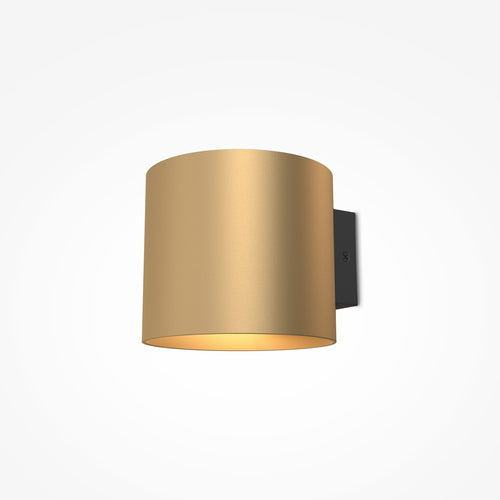
Brass, for its part, stays yellower and brighter than bronze. If the final look matters more than the material, a bronze wall light will set the warm tone with less upkeep than polished brass.
Bronze light fixtures: the pieces to see in person
 Pendant light | Interlacia
 Pendant light | Nivara
 Pendant light | Ysandre
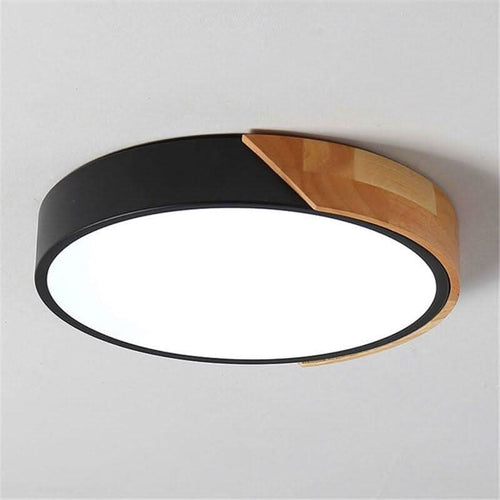
 Ceiling light | Bruna
 Living room floor lamp | Hyra
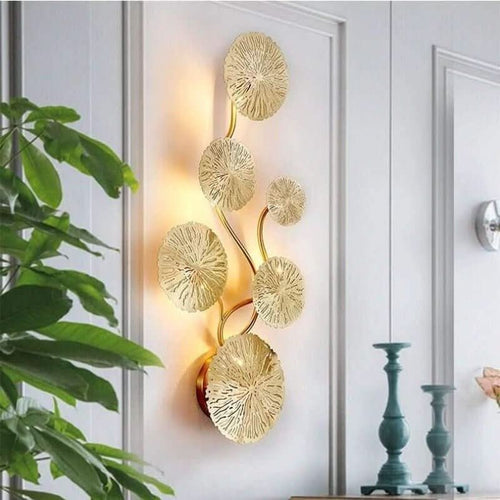
 Wall light | Sveva
See the whole selection: Alternative to Luminaire.fr: designer lighting shop | Designix
Unsure between solid bronze and a bronze finish on your piece? Write to us to ask an adviser, and we will tell you what will hold up in the room and at what height.
Where and at what height should you place a bronze light fixture?
Above a table, allow 75 to 80 cm between the tabletop and the lowest point of the pendant. For a wall light, the right height is measured from the floor and depends on use: reading, circulation or simply wall decor. These two benchmarks settle most installation mistakes.
At what height should you hang a pendant above a dining table?
| Configuration | Table / lowest point gap | Benchmark |
|---|---|---|
| Table for 2 to 4 | 70 to 75 cm | The eye line stays below the shade |
| Table for 6 to 8 | 75 to 85 cm | No one leans in to see the plate opposite |
| Kitchen island | 75 to 90 cm | Aligned with the worktop, not the floor |
A dining room chandelier on a chain is adjusted after installation, once the table is in place. A height-adjustable pendant saves you drilling new holes if you change the table in two years.
Height of a bronze wall light
- Headboard: 1.10 to 1.30 m from the floor, 15 cm from the edge of the mattress
- Corridor and staircase: 1.80 to 2.00 m, out of shoulder reach
- Around a mirror: at face height, never above the light source
- Dining room: 1.50 m if the wall light supplements the lighting over the table
A badly placed wall light illuminates the wall instead of the book. For a living room lighting project, it is better to layer three heights: ceiling, wall, coffee table.
Bronze light fixture in bathroom, kitchen, outdoors: what humidity changes
Humidity attacks the finish before the material. Solid bronze withstands moisture-laden air, but a bronze finish on steel rusts from an invisible point, often at the fixing screw. The IP rating, for its part, is chosen room by room.
- IP44: bathroom, outside zones 0 and 1, resists splashes
- IP65: outdoors, terrace, poolside, resists jets
- IP20: living room, bedroom, corridor, nothing to protect
- Kitchen: at least 60 cm from the hob, greasy steam rises
On our survey of 250 references as of 21 November 2026, 94% of the listings declare IP20. A living room light fixture therefore has no business in a bathroom, however handsome it is. The details of the classes are set out in our guide to the IP rating of an outdoor light fixture.
In a damp zone, a brass bathroom wall light ages better than an oiled bronze one, which whitens with repeated contact with soap. A bronze floor lamp stays in a dry room.
How do you clean and care for a bronze light fixture?
Dry microfibre cloth, once a month. For an oiled or antique bronze, a barely damp cloth then immediate drying. Never white vinegar, never ammonia, never an abrasive sponge: these three moves strip the protective layer and leave a matte mark that cannot be fixed.
Which product can I use to clean bronze?
Warm water with a drop of mild soap for fingerprints, then dry. On patinated solid bronze, a very gentle polishing paste applied in circles, without pressing on the recesses. On a bronze finish, nothing but a dry cloth: the product goes through the layer and reveals the bare metal.
Our full method for caring for a chandelier or pendant details the motion, the frequency and the parts to remove.
When the patina should darken, and when to revive it
It should darken: that is normal oxidation, it gives depth to the recesses and body to the relief. It should be revived when the metal turns dull and breaks out in small green spots, a sign of stagnant humidity. A gentle rub and a microcrystalline wax are enough to bring the shade back without erasing the piece's history.
If the result looks too dark to you, know that you can give a metal chandelier a new look without stripping it entirely. Around bronze, the warm tones of a gold light fixture extend the same light without visual competition.
Which room should bronze go into first?
In stock · shipping costs shown at checkout · up to 30% off in your cart
Ready to turn inspiration into reality?
Tell us about your room, your style and your budget, and we will show you the pieces that truly suit your project.
Get guidance in 30 seconds →