
Stone streetlights
This selection is also available in our French store: Lampadaires en pierre
No products in this selection.
- Tracked delivery to your country Tracked delivery
- Secure payment at checkout Multiple payment methods
- 14 days to change your mind 14-day returns
- Secure payment Secure payment
Not sure of your style? Find it in 30 seconds
A few questions, and we will show you the pieces made for you.
Frequently asked questions
How do I choose the right product?
What are the delivery times?
Can I return an item?
Can I pay in instalments?
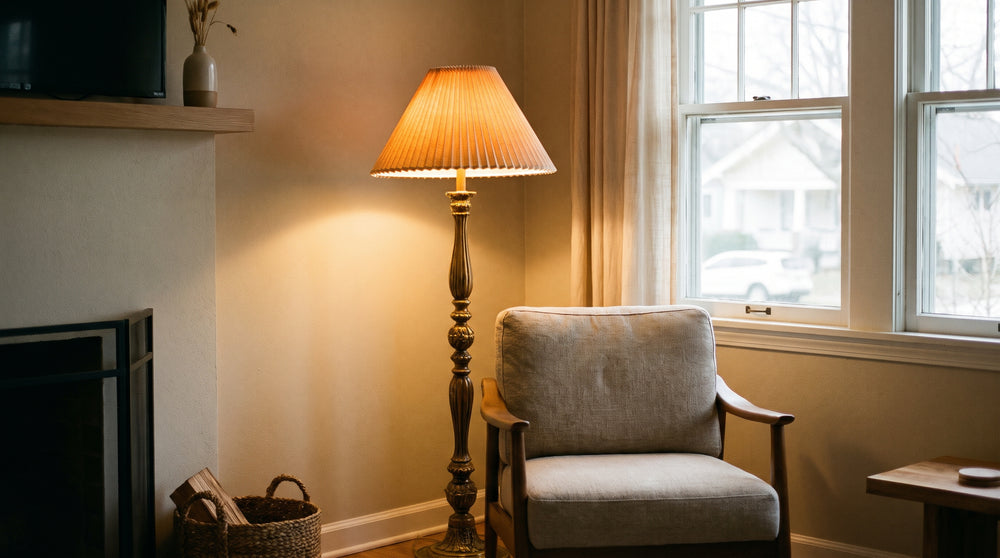
An interior that reflects who you are
Carefully selected pieces, shipped from our warehouses. Our team advises you before you buy, so you choose with confidence.
- Tracked delivery
- Pay in instalments, where available
- 14 days to change your mind
- Advice & showroom in Lyon, France
A stone lamp post comes down to three things: the height of the shade relative to the seat, the diameter of the base relative to the walkway, and the socket type shown on the spec sheet. Stone does not diffuse light, it frames it: the shade decides the output, upward or downward.
The rest comes down to the material, natural or reconstituted stone, and to the actual place of the fixture in the room.
What light does a stone lamp post give in a living room?
Stone is opaque: it does not diffuse light, it frames it. In a stone lamp post, the shade defines the output, upward for indirect light or downward to light an armchair. The mineral base brings a stable presence, a matte tone and a contrast with the living room fabrics.
Stone lamp post: what the material changes
A stone stem reflects almost nothing: light does not bounce off the surface, it stops. As a result, the halo forms above and below the shade, never on the sides. In a living room already full of cushions and curtains, this matte tone avoids the bright spot that catches the eye. To compare with more diffuse sources, look at living room LED lighting.
Stone lamps: same material, other formats
Stone is also worked into table lamps, ceiling lights and pendants. The principle stays the same: a mineral mass, a shade that does the output. A small format on a console lights less high than a floor lamp, but it catches the eye in the same place. The rest of the catalogue can be browsed in all the lighting for the home.
Where to install a stone lamp post in the house?
In a living room, the stone lamp post takes its place in the corner between the sofa and the wall, out of the walkway. In an entrance, it accompanies a console or a mirror. On a covered terrace, it is only installed if the protection rating shown on the product sheet allows it.
| Room | Placement | Desired effect | Point to check |
|---|---|---|---|
| Living room, sofa corner | Next to the sofa, set back from the walkway | Indirect halo above the seat | Height of the shade relative to the seated eye line |
| Entrance | Near a console or a mirror | Accent light on arrival | Stability of the base on hard floor |
| Office and reading corner | Opposite the screen | Side light for reading | Orientation of the shade |
| Covered terrace | Sheltered from the rain | Evening atmosphere | Protection rating shown on the sheet |
| Guest bedroom | On the floor, away from the headboard | Soft glow | Bulb intensity and temperature |
Stone lamp post for the living room
Allow a gap of at least thirty centimetres between the base and the walkway so you do not knock the stone as you move around. The corner behind the sofa remains the best spot: the stem is barely seen, the shade lights the seat. A model with an adjustable shade settles the question of the open book; the selection of adjustable floor lamps shows what that changes.
Entrance and office: the placements that work
In an entrance, the fixture goes next to the mirror, never in front of it: matte stone absorbs light instead of reflecting it. At the office, place it on the side opposite the screen to avoid glare on the slab. For a workstation, compare with the office desk light.
Natural or reconstituted stone: what difference for a lamp post?
Natural stone is an extracted block, with unique veins and a weight that stabilises the lamp post. Reconstituted stone is made from crushed stone and a binder, moulded: the tones and edges are more regular. Both stay matte, the first stands out, the second matches more easily.
| Criterion | Natural stone | Reconstituted stone |
|---|---|---|
| Veins and tones | Unique on each piece | Regular from one example to another |
| Empty weight | Often heavier, very stable | More contained, to be placed on a level floor |
| Shapes and edges | Accepted irregularities | Clean edges, repeatable shapes |
| Sensitivity to stains | Marble fears acids and greasy substances | Resists everyday cleaning better |
| Care | Dry cloth, neutral products | Water and mild soap are enough |
Reconstituted stone lamp post: regularity and even tones
Two examples ordered months apart look alike, which matters when completing a pair on either side of a sofa. Moulding also allows thinner stems, and therefore lighter ones to move. For an already very textured room, look at what the wooden living room floor lamps give before deciding.
Natural stone chandelier, ceiling light, lamp post: the unique veins
Yes, stone is also worked into pendants and ceiling lights, often in slate or marble. These pieces weigh more than a textile shade: check the stated weight, the nature of the ceiling and the type of fixing before drilling. All the formats are gathered in the Designix lighting collection.
How to choose the height and stability of a stone lamp post?
A stone lamp post is chosen first by the height of its shade: above the sofa seat, high enough not to dazzle when seated. The diameter of the base must stay set back from the walkway. The weight of the stone works for stability on a hard floor.
Stem height and base diameter
Around 140 to 170 cm high, the shade reaches the shoulder height of a standing person and above the seated eye line: this is the usual range for living room floor lamps. For the base, aim for a diameter that leaves at least a hand's width free between the stone and the neighbouring furniture. A wide stem inspires a Nordic inspiration, a narrower stem slips into a tight corner.
Weight, stability and movement around the fixture
A heavy base forgives a vacuum cleaner bump, not a warped floor: place the fixture in position and check that it does not tip before plugging it in. On parquet, a felt pad under the stone prevents scratches. Light-toned models, like the modern white colours, are easier to spot in a dark hallway.
How to match a stone lamp post with the rest of the living room?
Matte stone matches with few materials at once: a beige or white base warms a coloured wall, a grey stone talks with light wood and black metal. Avoid adding a third strong material in the same corner, otherwise the lamp post gets lost in the decor.
Beige, white or grey stone: which tone for the living room
On a saturated wall, a light stone creates a clean breathing space. On a white background, a grey stone or a travertine gives relief without adding colour. The simple marker: the tone of the base must exist elsewhere in the room, in a cushion, a tray, a rug. The wood and metal floor lamps follow the same logic of matching.
Wood, black metal and stone in the same room
Two strong materials are enough. Stone and light wood for a warm living room, stone and matte black metal for a more graphic result. If the room already mixes a lot, a version in bamboo or in design metal lightens the composition at a lower weight.
How to install and care for a stone lamp post?
Before plugging in, check the cable length, the switch position and the socket type shown on the product sheet. For care, a dry cloth is enough day to day; on reconstituted stone, a sponge with water and mild soap, avoiding acidic products that mark marble.
Cable, switch and socket: what to check
A stone base cannot be drilled like wood: the cable comes out through the base and must reach the socket without tension. On the bulb side, everything depends on the socket: E27 for a large screw cap, E14 for a small one, sometimes a non-replaceable integrated LED. In a closed shade, an LED heats less than a halogen of the same power. Models with an integrated source are gathered in the design LED floor lamps.
Cleaning and protecting stone day to day
Dust dry with a microfibre cloth. On marble, avoid vinegar, lemon and abrasives, which attack the surface; a cork coaster under a vase limits greasy marks. Never spray product directly on the socket. A light base needs cleaning more often: see the white LED floor lamps and the white and black colours.
What budget should you plan for a stone lamp post?
The budget of a stone lamp post comes down to three items: the material, reconstituted or natural, the size of the stem and the work on the shade. Reconstituted stone models remain the most accessible; a solid natural block or a signed piece sits higher. The collection grid shows the current price.
What makes the price of a stone lamp post vary
A moulded stem in series costs less than a block sawn in a quarry, where each piece follows its veins. The shade counts too: pleated textile, blown glass or metal add a manufacturing step. A vintage or industrial style piece can cost less than a new solid stone.
Accessible model or exceptional piece: where the cursor sits
For a first living room light, reconstituted stone offers the matte result without the weight of a natural block. For an entrance that is never moved, a natural stone takes on its unique veins. Compare also with the Scandinavian lines, lighter to move. The current price is shown directly in the collection grid.
Secure payment, tracked delivery, returns and Designix customer service: the same conditions apply to every order. Take two minutes to measure the seat height and the width of the walkway before confirming your basket, that is what avoids a return.
Frequently asked questions about stone lamp posts
Himalayan salt lamp: is it dangerous?
A salt stone lamp is a block of rock salt lit by a small bulb placed inside. Salt attracts moisture: in a very humid room, it can seep. The real risk is electrical, not mineral: keep the socket and cable dry, unplug before handling, and avoid the bathroom.
Reconstituted stone garden bench or lamp post: which criteria differ?
A stone garden bench is judged on the seat, frost resistance and anchoring to the ground. A stone lamp post is judged on the electrics, the protection rating and the stability of the base. An outdoor stone bench stays outside all year; a fixture is only installed outside if its sheet allows it.
Which bulb base should you choose for a stone lamp post?
Everything depends on the socket shown on the product sheet: E27 for a large screw cap, E14 for a small cap, sometimes a non-replaceable integrated LED. In a closed shade, prefer an LED bulb intended for this use, which heats less than the same power in halogen.
Can a stone lamp post stay outside under a covered terrace?
Only if the protection rating on the product sheet provides for it. Without a stated rating, the fixture is intended for indoor use. Under a covered terrace, humidity and splashes remain possible: the stone withstands them, the socket and cable do not.
Why choose a stone lamp post rather than a metal one?
Stone brings a stable mass and a matte tone that does not reflect light, which suits living rooms already full of fabrics and colours. Metal remains lighter to move and visually finer. The choice comes down to the available space and the stability sought.




