
Recessed LED bulbs 220V
This selection is also available in our French store: Ampoules LED encastrables 220V
No products in this selection.
- Tracked delivery to your country Tracked delivery
- Secure payment at checkout Multiple payment methods
- 14 days to change your mind 14-day returns
- Secure payment Secure payment
Not sure of your style? Find it in 30 seconds
A few questions, and we will show you the pieces made for you.
Frequently asked questions
How do I choose the right product?
What are the delivery times?
Can I return an item?
Can I pay in instalments?
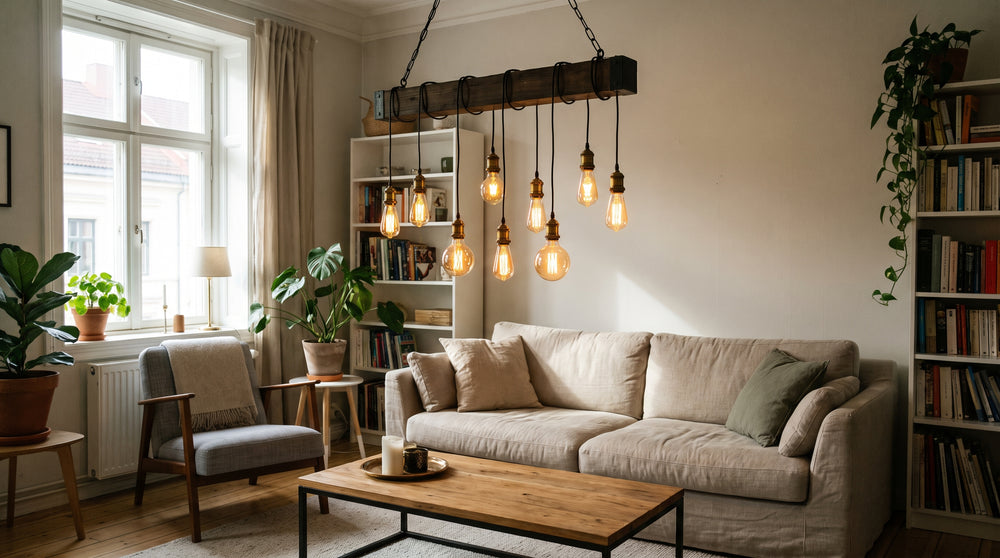
An interior that reflects who you are
Carefully selected pieces, shipped from our warehouses. Our team advises you before you buy, so you choose with confidence.
- Tracked delivery
- Pay in instalments, where available
- 14 days to change your mind
- Advice & showroom in Lyon, France
First check the base of your socket and the ceiling cut-out diameter: a recessed LED downlight 220V connects directly to the mains, with no transformer to house. The light comes out flush with the ceiling, with no visible pendant, in a living room, bedroom or bathroom.
What is a recessed LED downlight 220V?
A recessed LED downlight 220V fits into a ceiling recess, connects directly to the mains and needs no transformer. It is recognised by its base, most often GU10, G9 or G4, or by its integrated LED module. The light comes out flush with the surface, with no visible pendant.
Recessed LED downlight 220V without transformer: how does it work?
The 230V reaches the socket or terminal block of the downlight directly, with no driver in between. This simplicity matters when the space above the ceiling is thin: nothing to house, nothing to replace later. The 220V LED bulbs range gathers these models, and the GU10 base remains the most widespread in recessed ceilings. The shape of the light, meanwhile, changes mainly with the downlight reflector.
Recessed LED downlight 220V with transformer: in which case?
Low-voltage versions, often 12V, work with a driver placed near the downlight. They suit a ceiling that leaves room above, and require access to replace the part if it fails. To switch to low voltage, check that the driver matches the total wattage of the connected points.
Tiltable or extra flat recessed LED downlight 220V: which shape for which ceiling?
A tiltable downlight pivots to direct the beam towards a wall, a worktop or a picture, while a fixed model lights straight down to the floor. Extra flat versions fit into a shallow ceiling, under a false ceiling or in a slab. The choice depends on the available height and the desired effect.
Tiltable recessed LED downlight 220V
The swivel range is used to light a precise spot without multiplying sources: a kitchen worktop, a bookshelf, a picture above a sofa. In the same room, fixed downlights provide the general wash and two tiltable ones create the accents. Before drilling, note the cut-out diameter and the recess depth of the model.
Extra flat recessed LED downlight 220V without transformer
An extra flat recessed light is chosen when the void above the ceiling is too shallow for a standard downlight, or when you want to limit the protrusion under a slab. It is most often fixed. Other G4 and G9 bases fit the small formats, provided you check the socket voltage. Also compare the available beam shapes in the bulbs range.
| Type of recessed light | Connection | Adjustment | Target ceiling |
|---|---|---|---|
| Without transformer, 230V base | Direct to the mains | Fixed or tiltable | False ceiling or standard slab |
| With transformer, low voltage | Driver to house nearby | Fixed or tiltable | Ceiling with technical space |
| Extra flat | Direct to the mains | Most often fixed | Shallow ceiling |
| Integrated LED module | Direct to the mains | Fixed | General wash lighting, replaced with the fixture |
Dimmable recessed LED downlight 220V: how to choose the right colour temperature?
The colour temperature sets the mood: around 2700K the light leans warm and suits a living room or bedroom, around 3000K it stays warm but crisper for a kitchen or hallway, beyond that the rendering becomes more technical. A dimmable model is dimmed with a dimmer suited to LEDs.
Dimmable recessed LED downlight 220V
Two points are checked on the product sheet: that the downlight is indeed stated as dimmable, and that the wall dimmer is compatible with this type of source. A dimmer designed for older lamps causes flickering or buzzing. The dimmer-compatible models avoid this mismatch, provided you do not mix several brands on the same circuit.
2700K or 3000K: which light for which room?
In general, warm light relaxes and neutral light helps you read or work. The most useful reference remains the room: you do not look for the same rendering in a bedroom and in a garage. Very warm white 2700K and warm white 3000K cover most living rooms.
| Temperature | Rendering | Recommended rooms | Desired effect |
|---|---|---|---|
| 2700K | Very warm white | Living room, bedroom, entrance | Cosy evening mood |
| 3000K | Warm white | Kitchen, bathroom, hallway | Crisp but warm light |
| 4000K | Neutral white | Office, workshop, garage | Accurate colour reading |
Recessed LED downlight 220V without transformer bathroom: which ingress protection rating?
In a damp room, the ingress protection rating matters as much as the light: a downlight exposed to splashes must display a suitable IP, stated on its product sheet. It is installed away from directly sprayed zones, and a model without transformer is preferred, simpler to connect to the mains and to house above the ceiling.
Recessed LED downlight 220V without transformer bathroom
The absence of a driver frees up space in a ceiling often cluttered by ventilation and plumbing. It also simplifies troubleshooting: you replace the source, not the power supply. The IP rating is read on the sheet, and it is better to note it before buying than to discover it during installation.
Kitchen and damp rooms: where to place a recessed light
Above a sink or worktop, steam and splashes require the same caution as in a bathroom. A downlight set back from the water point needs less protection than one directly above. The same logic applies outdoors, where outdoor bulbs withstand harsher conditions.
What are the drawbacks of LED lamps?
LEDs consume little but have their limits: their light is more direct and less enveloping than a filament source, some models flicker or buzz with an unsuitable dimmer, and heat is poorly evacuated in a poorly ventilated recessed light. Colour rendering also varies from one model to another.
Why does an LED downlight flicker or buzz?
Most often, the dimmer is not designed for an LED load, or the total load of the circuit is too low for it. Grouping several downlights on the same dimmer sometimes solves the problem. When the noise persists, the source itself is the cause and replacing it is the only solution.
How to avoid LED light that is too cold on the ceiling?
Cold light comes from a high temperature, not from LED technology. A 3000K recessed light in a hallway and 2700K in a bedroom, with the same intensity everywhere, is enough in most interiors. Keep the same temperature on the sources in a room, otherwise the difference shows. For a softer interior, also look at the living room bulbs and their warm renderings.
Which is the best LED bulb for a home?
There is no single bulb, but a model per use: a 220V recessed light for a low ceiling and discreet light, a GU10 for a directed downlight, an E27 for an existing fixture, a G9 or G4 in a small fixture. The right choice brings together the base, the temperature and the protection suited to the room.
Bedroom, hallway, kitchen: which bulb for which room?
A bedroom calls for warm light and a beam that does not bombard the bed, which you will find in the bedroom bulbs. A hallway tolerates a crisper white and a fixed downlight is enough. For a niche or a worktop without drilling, a cuttable LED strip is cut only at the marked points and is then connected with a connector, as long as the power supply matches the total connected length.
Note the base before buying
Compatibility comes down to three readings: the socket base, the circuit voltage and the space available around the fixture. An existing fixture keeps its base, most often the E27 screw base or a small loop base. This is also the moment to check whether a dimmer is already fitted on the switch.
Powerful LED ceiling light or recessed downlights: which solution for a living room?
A LED ceiling light illuminates a room from a single point, sometimes with several sources, and is installed where no false ceiling is planned. Recessed downlights spread the light in a wash and disappear into the ceiling. A modern ceiling light suits when you want a visible object; a recessed light when you want discreet lighting.
Modern LED ceiling light
The visible fixture has the advantage under a solid slab or in an older home where drilling is not possible. It then becomes the landmark of the room. In our selection of light fixtures, formats are chosen first by the surface to be lit and the ceiling height.
Living room LED ceiling light: how to combine it with recessed lights?
The two coexist well: recessed lights provide the luminous base, the ceiling light adds a lighting level and a presence. For the whole to hold together, keep the same colour temperature on all points and vary the intensity rather than the hue. Models with three sources, including retro-style bulbs, lend themselves to this composition.
Powerful LED wall light and LED living room chandelier: how to complete a recessed ceiling?
A wall light brings vertical accent lighting, on a living room wall or along a hallway, and some also serve for reading. A chandelier structures the room from above when the ceiling is high enough. These fixtures combine with recessed downlights that provide the general lighting.
Living room LED wall light: which wall and which height?
A wall light is placed on a free wall, not behind a sofa where the light would fall on your back. In general, it is placed at shoulder height for reading use, higher for simple ambient lighting. The chosen wall also determines the rendering: a light surface reflects more light than a dark tone.
Living room LED chandelier or modern LED wall light: which mood?
The chandelier occupies the centre and requires clear height beneath it, the wall light stays discreet and is multiplied by two or four on a large wall. The most understated models are found in the modern design bulbs, while the glass bulbs rely on the visible material. In both cases, the wattage is read on the fixture sheet, not on its appearance.
How to install and maintain a recessed LED downlight 220V?
Before drilling, note the cut-out diameter and the recess depth of the model, then switch off the power at the breaker. The connection is made on the downlight terminal block or on a 230V socket, without transformer. Regular dusting of the fins limits overheating and preserves the quality of the light.
Recessed LED downlight 220V: how to connect it to the mains?
Switch off the power, check that there is no voltage, then identify the live, neutral and earth on the terminal block. The downlight clips into its recess once the wires are tucked away, without pinching the sheath. If a dimmer is present, it is tested at this point, before closing the ceiling.
Maintaining a recessed light: dust, fins and overheating
Dust accumulated on the fins prevents heat from escaping and wears the source out faster. A dry cloth on the outside of the downlight and a light cleaning of the cooling surfaces are enough, without dismantling the ceiling. Insulation wool placed over a recessed light remains the first cause of overheating.
Frequently asked questions about recessed LED downlights 220V
Does a recessed LED downlight 220V work without a transformer?
Yes, a 220V recessed light connects directly to the mains: this is the case for models with a GU10 or G9 base in 230V, and for LED modules designed for this voltage. A transformer is only needed for low-voltage versions, often 12V, where a driver must be housed near the downlight.
Dimmable recessed LED downlight 220V: what should you check?
Two things on the product sheet: that the downlight is indeed stated as dimmable, then that the installed dimmer is compatible with this type of LED. A dimmer designed for older sources causes flickering or buzzing. Dimming is then controlled from the wall switch.
Tiltable or fixed recessed LED downlight 220V, how to decide?
The tiltable version is justified when the light must target a precise point: a wall, a worktop, a bookshelf. The fixed one suits when you want an even wash over the whole room. In the same ceiling, you can mix the two: fixed for general lighting, tiltable for accents.
Recessed LED downlight 220V for bathroom: which model to aim for?
Look for a downlight whose ingress protection rating matches the zone where it is placed, this value appearing on the product sheet, and install it away from directly sprayed volumes. A model without transformer simplifies the connection and frees up space above the ceiling. The colour temperature is then chosen according to the desired rendering.
Powerful LED ceiling light: when to prefer it to recessed downlights?
The ceiling light has the advantage when the ceiling cannot be drilled, in an older home or under a solid slab, and when you want a visible fixture that contributes to the decoration. Recessed downlights remain more discreet and spread the light better over a large room. The two can coexist.
Choose your downlight according to the base already in place, the cut-out diameter and the colour temperature of the room, keeping a single hue per space. To broaden your search, browse the light fixtures, from ceiling light to chandelier.
- Secure payment
- Tracked delivery
- Returns
- Designix customer service




