
Solar LED bulbs
This selection is also available in our French store: Ampoules LED solaires
No products in this selection.
- Tracked delivery to your country Tracked delivery
- Secure payment at checkout Multiple payment methods
- 14 days to change your mind 14-day returns
- Secure payment Secure payment
Not sure of your style? Find it in 30 seconds
A few questions, and we will show you the pieces made for you.
Frequently asked questions
How do I choose the right product?
What are the delivery times?
Can I return an item?
Can I pay in instalments?
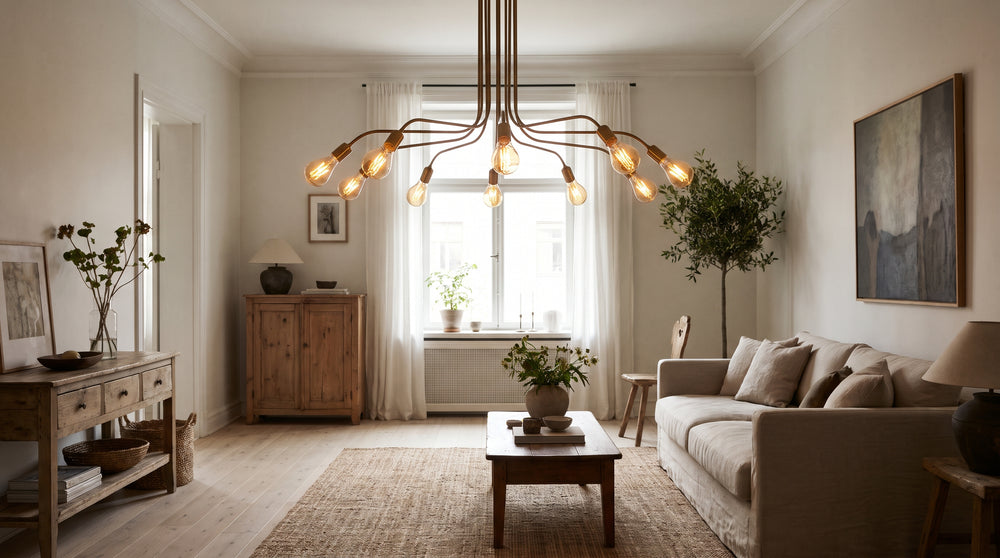
An interior that reflects who you are
Carefully selected pieces, shipped from our warehouses. Our team advises you before you buy, so you choose with confidence.
- Tracked delivery
- Pay in instalments, where available
- 14 days to change your mind
- Advice & showroom in Lyon, France
Check three things before buying an outdoor solar light bulb: the base of the socket already in place, the exposure of the panel the model includes and the protection rating on its data sheet. A solar bulb does not connect to the mains: it recharges during the day and lights up in the evening, which makes it suitable for the garden, terrace or balcony.
How does an outdoor solar light bulb work?
An outdoor solar light bulb combines a small photovoltaic panel, a battery and the LED in the same housing, or in a separate housing connected by a cable. The panel charges the battery during the day; most often, a twilight sensor switches the light on in the evening. Without direct sunlight, the reserve does not replenish.
Outdoor solar light bulb: what happens at nightfall
The sensor cell detects the drop in evening light and closes the circuit: the LED lights up without intervention. In the morning, it switches off and the battery resumes charging. This cycle is self-contained, with no timer to set and no socket to provide. The panel must stay clear, otherwise the cycle stops for lack of reserve. Bulbs intended for outdoor use carry this electronics in the base or in a remote housing, to be chosen according to the space available.
Self-adhesive outdoor solar LED lamps: the case of models without a base
These models stick to a wall, a railing or a balcony post, and combine panel, battery and LED in a single puck. No socket, so no diameter constraint: the mounting becomes the main criterion. On a damp or dusty wall, the adhesive holds poorly, and a screw or a separate bracket remains safer. A model in glass is easier to clean than a plastic diffuser dulled by the sun.
Where to install an outdoor solar LED light?
An outdoor solar LED light is installed where its panel sees the sky for a good part of the day: terrace, balcony, path, exposed facade, shed. The shade of a wall or a tree reduces charging. To light an entrance without running an electrical line, a solar spotlight with a detector is often enough.
Outdoor solar LED spotlight: for a path, a gate or a wall
The spotlight is mounted high up, above the traffic area, and its detector sweeps the path or the approach to the gate. Set the range so that it reacts to a visitor and not to branches. The panel glass stays facing the sky, never under a canopy. For a consistent look on a facade, compare finishes in the lighting range.
Outdoor solar LED lamps: terrace, balcony and relaxation areas
On a terrace, the priority is atmosphere: an outdoor dinner, an armchair for reading, a set table. A lantern or a pendant with an open shade works better than a floodlight. Beware of a solid shade: it hides the panel and cuts off charging. The bulb catalogue lets you compare the light effects before making your choice.
| Model type | Where to install it | What to check | Point of caution |
|---|---|---|---|
| Solar bulb with a base | Lantern, terrace pendant, socket light | Base, runtime, switching mode | The panel must stay exposed, not under a shade |
| Solar spotlight with detector | Path, gate, facade wall, entrance | Panel orientation, detector range | Avoid the shade of a tree or canopy |
| Self-adhesive solar lamp | Balcony, railing, smooth wall, shed | Bracket and cleanliness of the surface | The adhesive holds less well on a damp wall |
| Decorative solar light | Terrace, garden, coffee table | Style, colour, mounting | Do not place it in a flood-prone area |
| String lights with remote panel | Gazebo, pergola, tree | Cable length, panel exposure | Keep the cable accessible for cleaning |
Which base to choose for an outdoor solar light bulb?
The base depends on the socket already in place: E27 for most garden lights and pendants, E14 for small globes and wall lights, GU10 or GU5 for spotlights, G9 for decorative lights. If the solar model uses this base, it screws in like a classic bulb, with no mains connection.
Outdoor solar LED bulb with E27 or E14 base: what the socket changes
The large E27 base accepts the widest bulbs, and therefore the most generous batteries: it is the standard format for terrace lanterns. The small E14 fits globes and compact wall lights, with less room for the electronics. Measure the socket diameter before ordering, then pick from the E27 base models or the small E14 sockets depending on the result.
12V or 220V LED bulbs: why a solar one needs no voltage
A solar bulb connects to neither 12V nor 220V: it runs on its own low-voltage battery. The base question remains useful for the mechanics, not for the power supply. If you are looking for a bulb for an existing circuit, turn to the 12V low-voltage bulbs or the 220V bulbs, which do not recharge in the sun.
- E27: lanterns, terrace pendants, garden lights.
- E14: globes, wall lights, small decorative lights.
- GU10 and GU5: recessed or track spotlights, depending on the model.
- G9: decorative lights with a slim socket.
What light should an outdoor solar light bulb give in the evening?
For a terrace or a garden, a warm white between 2700 K and 3000 K remains comfortable and does not harden faces. An amber tint or a bulb with a visible filament gives a more decorative effect. Cool white, on the other hand, turns plants blue and tires the eyes late in the evening: keep it for traffic areas.
Warm white 2700K or 3000K: which atmosphere in the garden?
2700 K recalls the incandescent bulb: soft light, relaxed faces, plates that stay appetising. 3000 K, a little sharper, keeps this warmth while lighting a path or an outdoor worktop better. For an outdoor dinner, prefer the first; for moving around without tripping, the second. Compare the effects in the 2700K warm white bulbs and the 3000K bulbs.
Amber tint, retro bulbs and filament: the decorative effect
Amber glass tints the light and draws a warm halo on the foliage: ideal in a visible lantern. A filament bulb shows off the visible source, provided the light is open, otherwise the filament cannot be seen. These finishes are about atmosphere, not legibility. The amber finishes and the retro spirit pair well with terrace lanterns.
| Effect | What it changes | Where to use it | Good to know |
|---|---|---|---|
| Warm white 2700 K | Soft light, close to the classic bulb | Terrace, garden lounge, evening meals | The most versatile |
| Warm white 3000 K | A little sharper, without being cold | Path, entrance, outdoor worktop | A good compromise between legibility and atmosphere |
| Amber tint | Warm, decorative hue | Lantern, visible pendant, atmosphere | The effect is more colourful than neutral |
| White tint | Blends into a discreet light | Wall light, spotlight, modern light | Check the transparency of the diffuser |
| Bulb with visible filament | The filament outlines the source | Outdoor chandelier, terrace pendant | Keep it for open lights |
Solar bulb or classic LED light: what to choose depending on the room?
A solar bulb does not replace a ceiling light: indoors, it does not receive enough daylight to recharge. For a living room, a kitchen or a hallway, keep a mains-powered LED light and reserve solar for outdoor use, unless a model is explicitly designed for both uses.
Living room ceiling light, kitchen and ceiling lighting: the selection criteria
In a living space, think in terms of surfaces and uses: a wide ceiling light illuminates evenly, a more compact model marks out a corner. The base determines your freedom to change the bulb later, and dimmer compatibility decides evening comfort. For living rooms, start from the living room bulbs and check the dimmer-compatible models.
Chandelier, wall light and strip: the case of living rooms
A chandelier shows off a visible source: prefer filament bulbs or G9 bulbs for slim sockets. A wall light illuminates a passage or highlights a wall. For a niche or a piece of furniture, a cuttable LED strip is cut only on the marked points, never between two: the following section would no longer light up. The bulb catalogue remains the basis for comparing bases and colours.
How to install and maintain an outdoor solar light bulb?
Point the panel south, tilted to catch the light, with nothing masking it. Clean the panel glass regularly, more often under trees. In winter, bring in models sensitive to frost or shelter them, and check the battery contacts before the warm season.
Outdoor solar light bulb: where to fix the panel so it charges
The panel is placed high up, clear of shadows cast by the wall, the gutter or vegetation. Avoid sticking it under a roof overhang: it sees little sky and charges poorly. If the cable allows, move the panel to the sunniest point and keep the lamp near the area to be lit. Our Designix lights are also chosen with this installation constraint in mind.
Maintaining the panel and battery of an outdoor solar lamp
A damp cloth on the glass is enough; abrasive products scratch the surface and reduce efficiency. From time to time, check that the screws and contacts have not turned green. A battery that no longer lasts the night often signals insufficient charging before it is worn out. For outdoor use, compare the bulbs intended for outdoor use and their protection rating.
Secure payment, tracked delivery, returns accepted and Designix customer service: you order with peace of mind, and the team answers before and after purchase.
How long does an outdoor solar light bulb light up?
Runtime depends on the day's sunshine, the battery capacity and the selected mode. A cloudy night or a shaded panel shortens the lighting. Detection mode, which only switches on when someone passes, lasts longer than continuous lighting. No fixed duration can be guaranteed from one model to another.
Runtime: what makes it vary from one night to the next
Three factors count: the duration of direct sunshine, the condition of the battery and the lighting setting. A December day charges less than a June day, and a partially shaded panel produces little even in fine weather. The 12V low-voltage bulbs show the difference between a wired circuit and an on-board reserve.
Detection mode or continuous lighting: which to choose for an entrance?
For an entrance or a gate, detection mode limits consumption and is less startling than a permanent light. For a terrace dinner, continuous lighting remains more comfortable, provided you charged it the day before. A classic LED bulb model depends on neither the sky nor the season.
Start by noting the base of your socket and the exposure of your wall, then choose your model from all our lights: the grid shows the current price and the specifications of each reference.
Frequently asked questions
What is the difference between an LED bulb and a normal bulb?
A classic incandescent bulb heats a filament to give light; an LED converts electricity directly into light, heats less and lasts longer. The solar version adds a panel, a battery and a sensor: it produces its own electricity and needs no socket. Light quality is read on the colour temperature.
Can a solar panel be recharged with a lamp?
In practice, no. A photovoltaic panel expects daylight, far more intense than that of an indoor lamp. Pointing a lamp at it does not usefully recharge the battery. To test a model indoors, better to place it behind an exposed window or follow the manufacturer's instructions.
Cuttable LED strip: how does it work?
A cuttable LED strip has marks at regular intervals. Cut only on these lines, never between two: the following section would no longer light up. Then reconnect with a connector designed for the strip, respecting the indicated polarity. A non-cuttable strip cannot be cut.
Can an outdoor solar light bulb be installed in an LED ceiling light?
If the base matches, the bulb screws in, but it will not recharge: a closed ceiling light does not let enough daylight through. It then loses the point of solar. For a living room or kitchen ceiling light, a mains-powered LED bulb remains the logical solution.
Are outdoor solar LED lamps resistant to rain?
It all depends on the protection rating on the product data sheet: the higher the IP number, the better the device is protected against water and dust. A model intended for outdoor use carries this mention; an indoor model placed outside may fail. Check the data sheet before installing.




