
LED beacons
This selection is also available in our French store: Balises LED
No products in this selection.
- Tracked delivery to your country Tracked delivery
- Secure payment at checkout Multiple payment methods
- 14 days to change your mind 14-day returns
- Secure payment Secure payment
Not sure of your style? Find it in 30 seconds
A few questions, and we will show you the pieces made for you.
Frequently asked questions
How do I choose the right product?
What are the delivery times?
Can I return an item?
Can I pay in instalments?
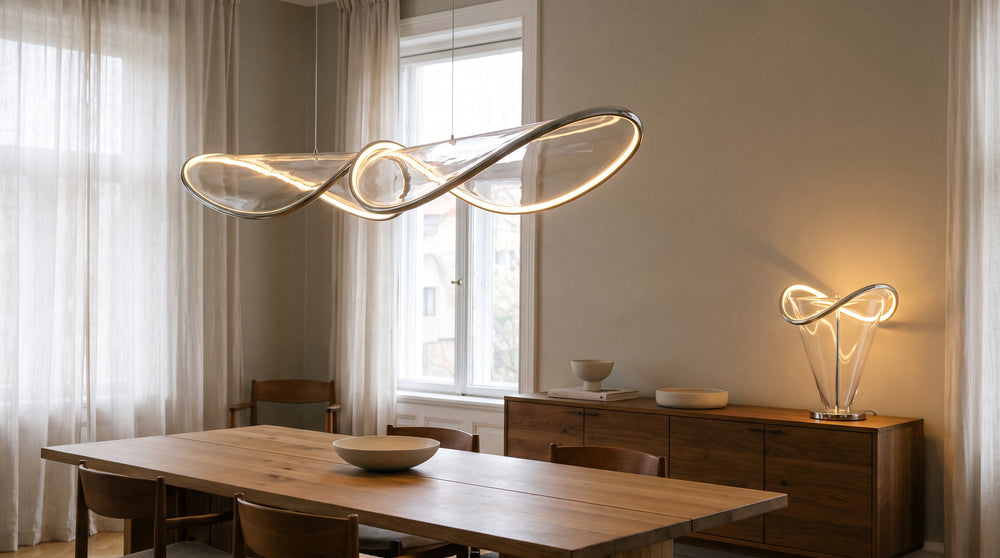
An interior that reflects who you are
Carefully selected pieces, shipped from our warehouses. Our team advises you before you buy, so you choose with confidence.
- Tracked delivery
- Pay in instalments, where available
- 14 days to change your mind
- Advice & showroom in Lyon, France
Allow one LED marker light every two to three metres along a path, and one per step on the wall side of a staircase. An LED marker light is a point of light that signals a route or an obstacle without lighting the room: it is chosen first on its exposure (ingress protection rating), then on its power supply, mains, solar or battery.
What is an LED marker light and what is it for?
An LED marker light is a small point of light that signals an obstacle, a step or a route rather than lighting a room. It is mounted on the floor, as a wall light or recessed, and guides at night without glare. You choose it according to its location and its power supply.
LED marker light: illuminate or signal?
A light fixture illuminates a surface; an LED marker light gives a direction. Its light stays dim and concentrated: it draws a point or a line of markers, not a halo. That is what makes it bearable in a corridor at night, when a ceiling light wakes the whole house. The same housing can flash, in which case it is called an LED flash marker light, useful for being spotted from afar. For general lighting in a room, see our full range of light fixtures.
Where to place an LED marker light?
Three locations come up again and again: the stair tread, the edge of a path, the facade. In every case, the marker light goes on the circulation side, at low height, and points towards the area to be marked. An LED marker light placed at eye level glares more than it guides. Indoors, a motion detector limits switching on to actual movement.
Which LED marker light for a staircase?
On a staircase, the LED marker light is fixed on the wall side, at step height, to light the next step without shining into anyone's eyes. Choose a recessed or surface-mounted model, mains-powered or battery-powered, with a detector if the staircase is rarely used.
Indoor stair LED marker light: recessed or surface-mounted?
The recessed version requires a hole cut with a hole saw in the step or the wall string, and gives a flush line, very discreet during the day. The surface-mounted version screws onto the wall or the stringer without touching the structure, which suits solid wood as well as concrete. On a battery version, prefer a housing whose compartment stays accessible without removing the marker light. For the rest of the volume, see the Designix light fixture catalogue.
How to mark a staircase without glare?
Point the beam towards the next step, never upwards. One marker light per step is often enough, one in two if the staircase is short. The grazing light marks the nosing without reaching the eyes of the person coming down. For large volumes and pendant lights, our home light fixtures complete the setup.
Which outdoor LED marker light to choose?
Outdoors, look first at the ingress protection rating: IP44 is enough under a canopy, IP65 withstands direct rain. Then come the fixing (recessed in a slab, screwed to a wall) and the power supply, mains, solar or rechargeable battery, depending on how close a power supply is.
Recessed or screw-mounted outdoor LED marker light?
The recessed version sits flush with the slab or the decking board: nothing sticks out, the broom and the mower do not catch on it. It requires a depth allowance and a base that drains water. The screw-mounted version goes on a wall, a low wall or a mounting plate and is easier to remove to change the battery. Aluminium and stainless steel resist corrosion better than ABS by the sea.
Which ingress protection rating for an outdoor LED marker light?
The ingress protection rating is read as IP followed by two digits: the first concerns solids, the second water. IP44 covers splashes under a canopy, IP65 direct rain and jets. A gasket pinched during screwing cancels out the best data sheet. To light a terrace more widely, the full light fixture range takes over.
| Location | Most suitable mounting | Preferred power supply | Point to check |
|---|---|---|---|
| Indoor staircase | Recessed in the step or wall-mounted | Mains, battery or detector | Light directed towards the step, not the eyes |
| Path and garden | Spiked or screwed to the ground | Solar or mains | Ingress protection rating and panel orientation |
| Facade and wall | Surface-mounted or recessed | Mains or solar | Sealing of the gaskets and strength of the fixing |
| Terrace and poolside | Flush recessed | Low-voltage mains or battery | Moisture resistance and non-slip surface |
| Corridor and cupboard | Freestanding, magnetic or rechargeable | Rechargeable battery or cell | Easy access for recharging |
| Stationary vehicle | Magnetic on the roof | Rechargeable battery | Visibility and compliance stated by the manufacturer |
Outdoor solar LED marker light: how does it work and when to avoid it?
A solar LED marker light stores the energy from a small panel in a battery and switches on at dusk. It is installed without a cable, which suits an isolated path or low wall. It depends on the sun: in a shaded or busy passage, a mains or rechargeable version is more consistent.
Where to place an outdoor solar LED marker light?
The panel must see the sky for several hours a day: top of a low wall, clear edge of a path, post. In the shade of a north wall or under a tree, the battery does not recharge enough. Point the sensor towards the brightest area and clean the glass twice a year. The dusk sensor triggers the light without intervention. The shop's light fixture selection helps you compare with a wired solution.
Solar LED marker light: what are its limits?
No cable, so a ten-minute installation, but a light that varies with the season: dimmer in winter, sometimes absent after several overcast days. On a busy passage, a mains or rechargeable model gives a more stable result. For year-round facade lighting, browsing all the light fixtures remains the best starting point.
Rechargeable LED marker light: for which uses?
A rechargeable LED marker light is handheld: you place it on a bedside table, in a corridor, a cupboard or a tent, then put it back on its base or on USB. It avoids running a cable and suits rooms without a socket, provided you accept regular recharging.
Rechargeable or battery LED marker light?
The rechargeable version plugs in via USB or on a base: no more buying cells, but a regular trip to the charger. The cell version suits a cupboard or a shed opened twice a year. A magnetic fixing frees the marker light in one movement, long enough to light a lock, then you stick it back on the wall.
How long does a rechargeable LED marker light last?
The duration depends on the mode chosen: permanent standby, motion detection or manual switching. A marker light left on continuous lighting runs flat in one night, the same one in detection mode lasts several weeks. Battery capacity and how often the area is used matter more than the data sheet. Keep a cable permanently near the base, and take a look at all the home light fixtures if the room lacks fixed light points.
| Power supply | Mounting | Maintenance | When to choose it |
|---|---|---|---|
| Mains | Fixed connection | None, apart from cleaning | Location with an electrical point |
| Solar | Cable-free, panel oriented | Clean the panel, monitor the battery | Path or low wall far from a socket |
| Rechargeable battery | Mobile or on a base | Recharge regularly | Portable use, corridor without a socket |
| Cell | Mobile | Replace the cell | Occasional use, low brightness |
How to install and care for an LED marker light?
A battery or solar marker light is screwed or magnetically fixed in a few minutes, without an electrician. A mains-connected model, however, requires a planned power supply and, in line with regulations, the work of a professional. Maintenance is limited to dusting the lens and checking the gaskets and the battery.
How to install a recessed LED marker light in a slab?
Mark the spot, drill to the diameter of the housing, do a dry fit before connecting. Apply sanitary silicone to the collar, not to the thread, then screw without forcing: the housing must sit flush to drain water. A 230 V connection is made with the power off and, in line with regulations, by a professional. For the other light points in the area, find the light fixture range in the same place.
How to care for an outdoor LED marker light?
A soft cloth on the lens, a check of the gasket and screws at each change of season, replacement of the battery when the runtime drops. A high-pressure jet displaces the gaskets and does more damage than rain. By the sea, rinsing with clean water limits salt on stainless steel.
At Designix, orders are paid securely, delivery is tracked and returns are handled; customer service answers installation questions. See the Designix light fixtures.
Car and V16 LED marker light: how to signal a stationary vehicle?
For a stationary vehicle, use a light signalling beacon placed on the roof or magnetically attached to the bodywork, visible to other drivers. A V16 beacon flashes and recharges; its compliance depends on the country you are driving through, so check the manufacturer's statement before setting off.
Car LED marker light: magnetic or freestanding?
The magnetic version sticks to the roof or the tailgate and stores in the glovebox; it suits one car and transfers from one vehicle to another. The freestanding version, wider, is seen better from afar but slides if the roof is wet. In both cases, check the charge before a long journey.
V16 LED marker light: what to check before setting off
A V16 LED flash marker light flashes and recharges via USB. Visibility, sealing and permitted use vary from country to country: the manufacturer's instructions are authoritative. Keep it within reach and test it once a month. For the home, the light fixture catalogue remains the right starting point.
Which mistakes to avoid with LED marking?
The most common pitfalls: multiplying light points until a corridor becomes a runway, mixing warm white and cool white, or installing an unprotected marker light in the rain. Better to have few well-oriented marker lights, a consistent shade and an ingress protection rating suited to the location.
How many LED marker lights along a path?
Enough for the eye to move from one point to the next without searching: regular spacing, tighter on a bend or a narrowing. Too many points tire the eye and blur the route. Start with the corners and changes of level, then add more if the layout remains unclear.
LED marker light: warm white or cool white?
Warm white, around 2700 to 3000 K, suits an interior and a residential garden. Cool white, above 4000 K, marks a technical path better but hardens stone facades. Above all, keep a single colour temperature along the same route: the mix is immediately visible. To match the rest of the lighting, the light fixture shop can be browsed by use.
A staircase, a path and a facade are marked with three different approaches: exposure, then power supply, then mounting. Discover the Designix light fixtures to complement the marking with general lighting.
Frequently asked questions
Can a recessed LED marker light be installed in a wooden terrace?
Yes, provided you drill the right diameter, leave the gasket flush and avoid areas where water pools. In a wooden board, prefer a marker light with a thin collar and check that the base tolerates moisture. Removal must remain possible to change the battery.
How does an outdoor solar LED marker light work?
A panel captures daylight, stores it in a battery, and a dusk sensor switches the marker light on in the evening. No cable is needed, but the runtime drops if the panel stays in the shade. Clean it regularly and plan for battery replacement.
What is the difference between an LED marker light and an LED ceiling light?
The ceiling light illuminates a room from the ceiling; the marker light signals a specific point on the floor or a wall. One is for seeing, the other for finding your way. Both can coexist on a staircase or in an entrance, with matching colour temperatures.
Does a rechargeable LED marker light give enough light for a corridor?
It serves as a marker, not as main lighting: in a corridor, it is enough to guide a step at night without lighting the room. To read or move around for a long time, you need a light fixture. Above all, check access to recharging and the fixing if the marker light is high up.
How to care for an outdoor LED marker light?
Dust the lens with a soft cloth, check that the gasket is not pinched and that the screws stay tight. By the sea or in the garden, rinse with clean water without a high-pressure jet. Check the battery and the solar panel at each change of season.




