
Ceramic lampshades
This selection is also available in our French store: Abat jours en céramique
No products in this selection.
- Tracked delivery to your country Tracked delivery
- Secure payment at checkout Multiple payment methods
- 14 days to change your mind 14-day returns
- Secure payment Secure payment
Not sure of your style? Find it in 30 seconds
A few questions, and we will show you the pieces made for you.
Frequently asked questions
How do I choose the right product?
What are the delivery times?
Can I return an item?
Can I pay in instalments?
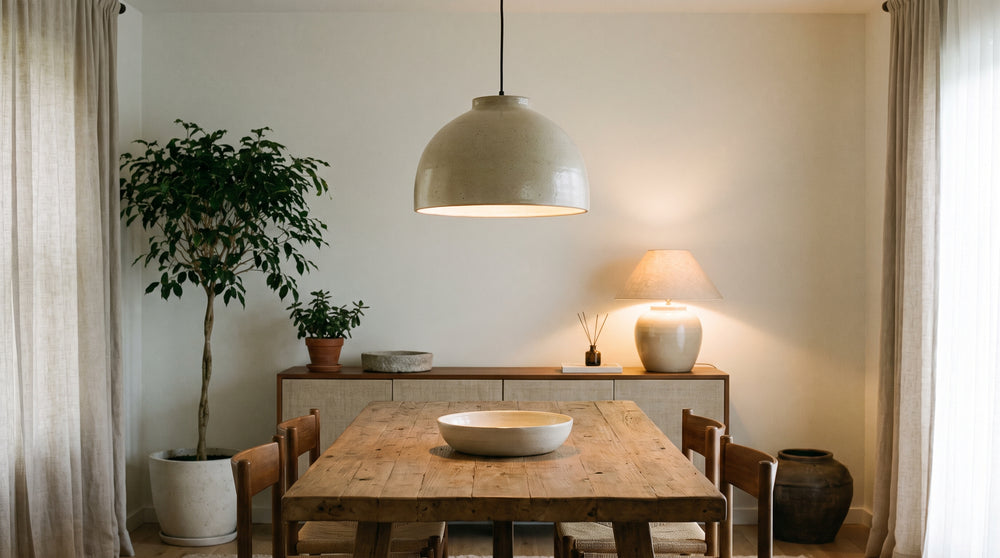
An interior that reflects who you are
Carefully selected pieces, shipped from our warehouses. Our team advises you before you buy, so you choose with confidence.
- Tracked delivery
- Pay in instalments, where available
- 14 days to change your mind
- Advice & showroom in Lyon, France
A ceramic light shade is chosen first for the light it reflects: the wall blocks the bulb's output and projects it upwards and downwards, creating a halo on the wall and avoiding direct glare. Then check three points before buying: the socket diameter, the frame height and the weight your support can take.
- What light does a ceramic light shade give
- Ceramic, stoneware, earthenware or porcelain
- The limits to know
- Recognising ceramic
- Fitting on a bedside table or floor lamp
- Hanging from the ceiling
- Vintage, artisan or DIY
- Matching the room
What light does a ceramic light shade give?
Ceramic does not let light through like fabric or glass: it blocks it and reflects it upwards and downwards from the shade. The result is a soft light, without direct glare, that mainly lights the walls and the support. The thinner or lighter the glaze, the stronger the halo.
White ceramic light shade: what effect in the room?
A light, glazed wall reflects more light towards the ceiling and the wall. In a bedroom, this is often enough to replace a night light: the eye does not meet the bulb and the room remains readable. White finishes go with almost all woods and do not dominate the decor.
Coloured ceramic light shade: what changes in the evening
A dark glaze absorbs part of the output: the halo is more discreet, more contrasted, and the light concentrates on the top and bottom. At the end of the day, a deep tone frames the scene without lighting it harshly. This is the effect sought in a living room, less so in a child's bedroom. See the black colour for this type of atmosphere.
Which material for a light shade: ceramic, stoneware, earthenware or porcelain?
A ceramic light shade covers several clays: earthenware, porous and often light, stoneware, dense and matte, porcelain, fine and smooth. The choice is based on appearance and on the weight the support can take. Fabric and linen remain lighter and more diffusing, glass more transparent.
| Type of ceramic | Appearance | Behaviour in light | Where it fits |
|---|---|---|---|
| Earthenware | matte or glazed, often light | opaque, reflects light upwards and downwards | bedside lamp, small shade |
| Stoneware | dense, matte or glazed | opaque, deep tones | floor lamp, pendant |
| Porcelain | fine, smooth, sometimes translucent | lets a little light through if the wall is thin | living room, feature piece |
| Terracotta | raw, unglazed | opaque, visual warmth | dry room, artisan feel |
What is the difference between pottery and ceramic?
Ceramic is the general term: all fired clays and vitrified bodies are part of it. Pottery refers to a utilitarian or decorative ceramic, often in terracotta, shaped on the wheel or by hand. So all pottery is ceramic, but the reverse is not true.
Which is better, ceramic or porcelain?
Neither is better: porcelain is finer and can let a little light through, which softens the halo, but it remains more fragile on the edges. Stoneware withstands daily use better. If you are looking instead for a light, highly diffusing shade, compare with fabric light shades or a lighter linen light shade.
What are the drawbacks of ceramic on a light shade?
Ceramic is heavy, fragile and opaque: a knock on an edge marks it, and its weight requires a stable support. It also blocks light upwards. So it is best reserved for a floor lamp, a well-fixed pendant or a bedside lamp with a wide base, rather than a small lightweight support.
What is the main flaw of a ceramic light shade?
It is the weight. On a bedside lamp with a thin stem, a ceramic light shade unbalances the whole and can make the lamp tilt at the slightest touch. On a floor lamp or a pendant, this same weight is no longer a problem, provided the fixing is checked. A wide support and a solid frame solve the issue.
Does ceramic withstand the heat of a bulb?
Ceramic is fired at very high temperature: the heat of a domestic bulb does not degrade it. Caution concerns the bulb and the air around it. Respect the wattage indicated on the lamp and keep a space between the bulb and the wall. An LED heats less, which helps on a closed shade.
How to tell if it is ceramic?
Ceramic is recognised by weight, touch and sound: dense in the hand, cold at first, it rings clear when tapped. Plastic imitates the shape but remains light and warm. Stoneware and porcelain are vitrified, earthenware and terracotta remain porous.
What are the two types of ceramic?
On one side porous bodies, terracotta and earthenware, which absorb water where the glaze is missing. On the other vitrified bodies, stoneware and porcelain, whose mass is dense and non-absorbent. This difference is felt in the weight, heard in the sound and seen under the shade, on the unglazed part.
Is ceramic the same as terracotta?
Terracotta is one ceramic among others, the simplest: shaped clay then fired, often left raw. Earthenware, stoneware or porcelain are also ceramics, with different bodies and firings. Look underneath the shade: a matte, grainy body often indicates terracotta.
How to fit a ceramic light shade on a bedside lamp or a floor lamp?
On a bedside lamp, the shade fits on the socket with a ring, or on a frame with a metal bridge. Screw in the bulb, slide the ring, tighten the wheel without forcing. On a floor lamp, check the opening diameter and the frame height before choosing.
| Support | Suitable format | Fixing | To check before buying |
|---|---|---|---|
| Bedside lamp | small format | ring on the socket | socket diameter and base height |
| Floor lamp | tall shape, wide opening | metal bridge or ring | frame diameter and weight of the ceramic |
| Ceiling pendant | bell or dome | pendant socket or frame | strength of the fixing point and cable length |
| Ceiling light or wall light | compact format | fixing on the socket | bulk and access to the bulb |
How to fit a light shade on a bedside lamp or a floor lamp?
Switch off the power, screw in the bulb, then present the shade. On a socket, the ring slides on and the wheel is tightened by hand, without forcing: excessive tightening cracks the glaze. On a frame, the bridge fits on the provided rods. Check that the ceramic touches neither the bulb nor the base. For other assemblies, see choosing your light shade according to the support.
Glass or ceramic light shade for a bedside lamp?
Glass lets light through on the sides and lights the tabletop more widely; ceramic reflects it upwards and downwards, with a softer halo and less grazing light. On a bedside table, ceramic avoids dazzling the person lying down. Glass is better if you read in bed and need light on the pages.
How to hang a ceramic light shade from the ceiling?
A ceramic pendant is fixed to the ceiling by the hook or the base plate of the electrical cable, then the shade fits on the socket or on the pendant frame. Switch off the power, check the strength of the fixing point, and adjust the cable length before screwing.
Which fixing for a ceramic pendant?
The ceiling attachment point must be chosen to hold the weight of the whole, shade included. A base plate screwed into a solid support, or a hook designed for the load, avoid pull stress on a hollow partition. If in doubt about the ceiling material, have the fixing checked. The shade then fits on the socket, usually E27, or on the pendant frame.
Can a ceramic light shade be fitted on a ceiling light or a wall light?
Yes, if the format remains compact and access to the bulb is preserved. A ceramic ceiling light close to the ceiling reflects light downwards and strongly lights the floor; a wall light requires enough clearance to change the bulb. In both cases, switch off the circuit before working and check the bulk.
Vintage, artisan or DIY ceramic light shade: what differences?
A vintage ceramic light shade is recognisable by its irregular glaze and turning marks; artisan shades are turned or moulded in small series, with tones that vary from one piece to another. DIY often consists of adapting a new shade onto an old base, after checking the socket diameter.
Small ceramic light shade: for what use?
The small format is for bedside lamps, sofa ends and side tables. It casts a short halo, ideal for ambient light, and weighs less on the socket. In a child's bedroom, prefer a closed shape and an inaccessible fixing point: see the baby's room.
How to change the fabric of a light shade or switch to ceramic?
On a fabric shade, remove the lining and cover the frame with a new stretched and glued fabric. On ceramic, there is nothing to cover: replace the whole piece, checking the socket diameter and frame height. Compare the current shape with modern shapes before deciding.
How to match a ceramic light shade to the room?
A white ceramic lightens without dominating; black or dark green frame the light and carry less visual weight in a large room; blue and bright tones become a colour accent. Match it to use: more contrasted in a living room, more matte and discreet in a bedroom.
Green or blue ceramic light shade: what atmosphere?
Dark green and deep blue give a low, muted light, suited to rooms where you stay in the evening. These tones absorb part of the output: the halo is shorter and the room darker beyond the lamp. For a living room focused on conversation, it is a coherent choice. For a reading corner, provide a supplementary source.
Where to place a ceramic light shade in a living room or bedroom?
In a living room, place it on a side unit or at the end of the sofa, next to a seat, with the halo directed towards the wall. In a bedroom, the bedside lamp is enough: indirect light avoids glare on waking. Complete with a light shade for the living room or bedroom models depending on the room to equip, and browse all our light shades to compare formats.
Order from Designix with secure payment, tracked delivery, returns and customer service to support you before and after purchase. Before confirming, measure the socket and frame height: this is the step that avoids mistakes. Find all our lighting, then refine with the light shade collection and the complete lighting catalogue to equip the whole room.
Frequently asked questions
How to install a light shade?
The shade is fitted on the socket using a ring, or on the lamp frame using a metal bridge. The bulb is screwed in first, the ring then slides on and the wheel is tightened without forcing. Check that the shade touches neither the bulb nor the base.
How to hang a light shade from the ceiling?
The power is off, the base plate or hook of the pendant is fixed to the ceiling, then the shade fits on the socket or on the frame. Adjust the cable length before screwing and check that the fixing point supports the weight of the ceramic.
How to change the fabric of a light shade?
On a fabric shade, remove the lining and cover the frame with a new stretched and glued fabric. On ceramic, there is nothing to cover: replace the whole shade, checking the socket diameter and frame height before buying.
What are the drawbacks of ceramic?
Ceramic is heavier and more fragile than fabric: it is vulnerable to knocks on the edges and requires a stable support. It is also opaque, so it reflects light upwards and downwards rather than diffusing it sideways. Its weight can strain a fragile socket.
Does ceramic withstand heat?
Ceramic is fired at very high temperature, so it withstands the heat of a domestic bulb. Caution concerns the bulb itself: an overly powerful or poorly ventilated bulb heats unnecessarily. Respect the wattage indicated on the lamp and leave a space around the bulb.




