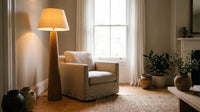
Brown floor lamp
- Tracked delivery to your country Tracked delivery
- Secure payment at checkout Multiple payment methods
- 14 days to change your mind 14-day returns
- Secure payment Secure payment


Not sure of your style? Find it in 30 seconds
A few questions, and we will show you the pieces made for you.


































Frequently asked questions
How do I choose the right product?
What are the delivery times?
Can I return an item?
Can I pay in instalments?

An interior that reflects who you are
Carefully selected pieces, shipped from our warehouses. Our team advises you before you buy, so you choose with confidence.
- Tracked delivery
- Pay in instalments, where available
- 14 days to change your mind
- Advice & showroom in Lyon, France
Start by choosing the shape based on the floor space and the light height you want: an arc above the sofa, a slim stem near an armchair, a globe for soft ambient light. The rest comes next, with the room, the colour temperature and the shade material.
What light does a brown floor lamp give in a living room?
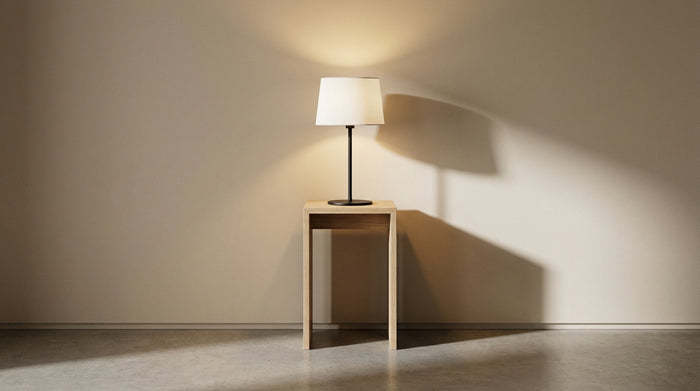
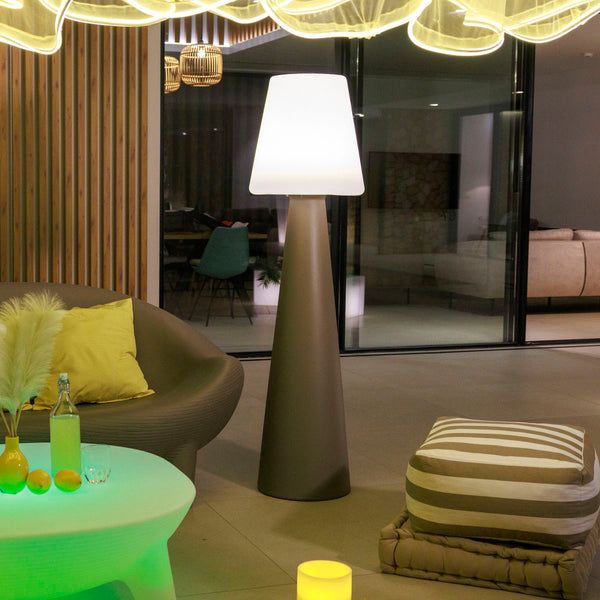
A brown floor lamp gives a warm, filtered light when the shade is linen or fabric, and a crisper light when it is glass. The brown base stays discreet in the evening: it absorbs part of the light instead of reflecting it, and the room keeps a calm mood rather than a bright spot in the middle of the furniture.
Brown floor lamp for the living room: what mood of light
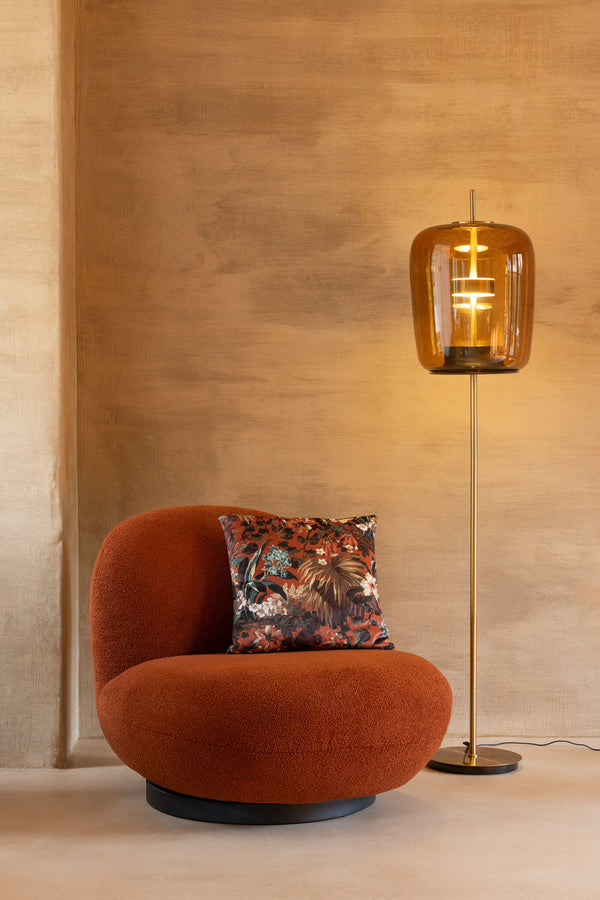
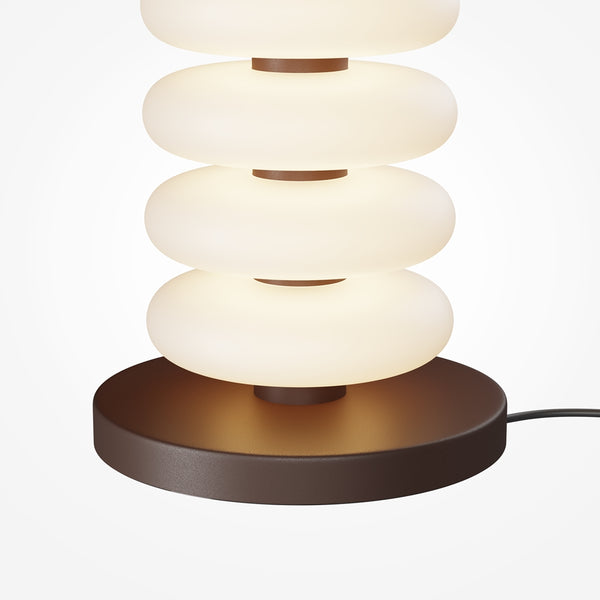
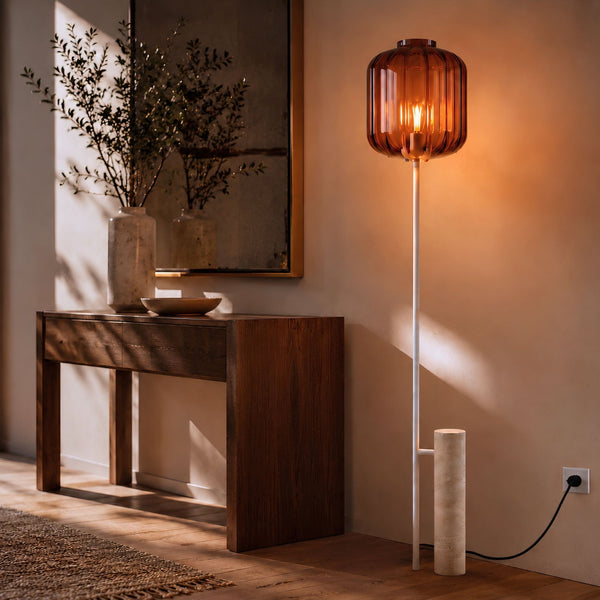
With a linen or fabric shade, the light passes through the material and spreads widely, without glare. That is the result of the models in the linen shade selection, which give a soft, enveloping light, ideal next to a sofa in the evening. A glass shade, on the other hand, lets through a more direct and crisper light, as on the brown glass on anthracite base. Arcs, finally, carry the light above the reading area and throw a halo onto the ceiling, which lights the room without switching on the central ceiling light.
Warm white or neutral white: which to choose?
The most common light temperature in this selection is warm white, from 2700 to 3500 K: an amber tone that warms woods, taupe walls and beige textiles. Neutral white, between 3500 and 4500 K, stays rare here, and cool white even more so. For an evening living room, stay with warm white and keep neutral white for an office where you read documents.
Where to place a brown floor lamp in the home?
Nine times out of ten, this piece ends up in the living room, and often soon after in the bedroom. The right question is not the room, it is what the light needs to illuminate in that spot: a book, an armchair, a worktop or simply a dark corner.
Brown floor lamp in the bedroom and the office
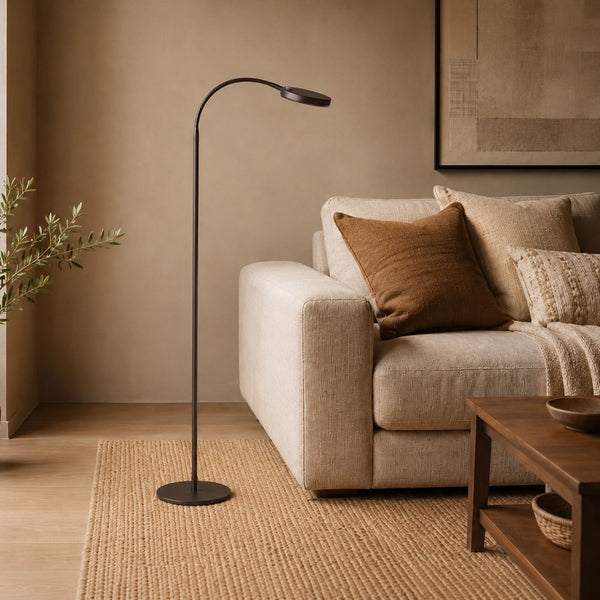
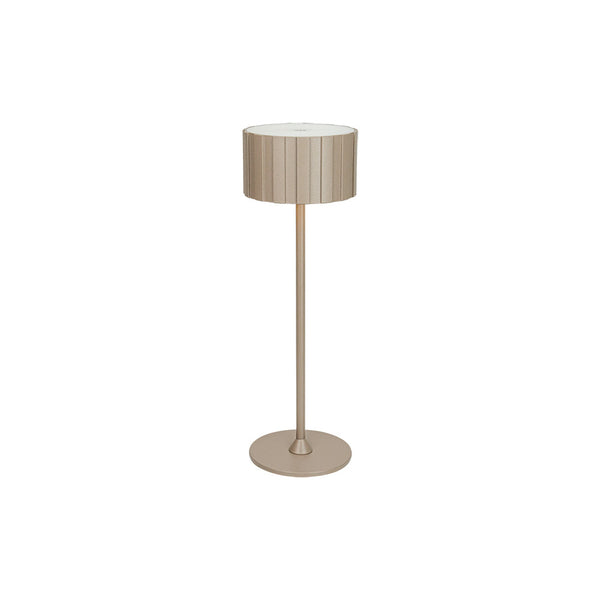
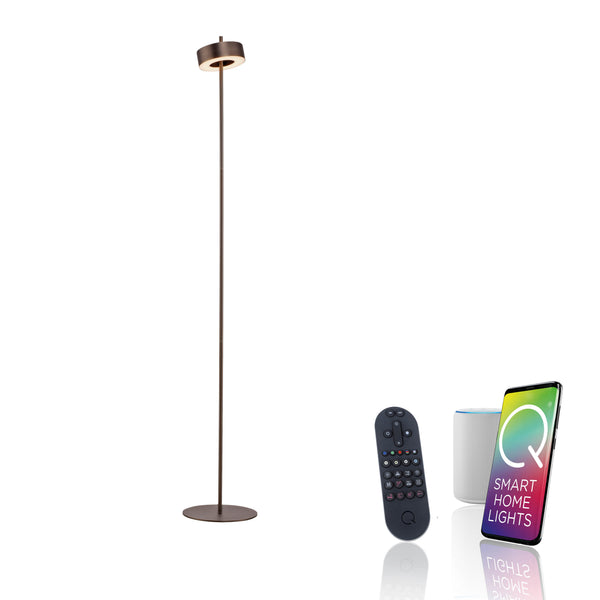
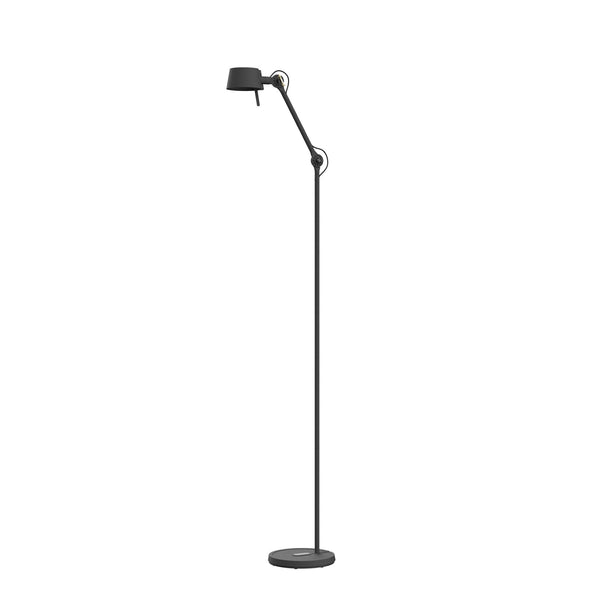
In a bedroom, a slim stem or round head model replaces the harsh ceiling light and creates a night corner without any work. The models designed for the bedroom often combine a textile shade and a warm light, with a dimmer on some of them. Behind a desk, look for a compact format: the office selection gathers stems of around 132 cm, to be placed at an angle so as not to cast a shadow on the keyboard. The model with a round head and slim stem illustrates this understated format well.
Hallway, dining room and bathroom floor lamp: small spaces
In a hallway, the constraint is the walkway: a narrow base and a slim stem stop you from bumping into it. In a dining room, an arc with several shades lights the table from above without taking up the worktop. For a bathroom floor lamp, the logic changes: a damp room needs a suitable protection rating, IP44 at minimum, and dry indoor use stays at IP20. This case is better solved with a small wall-mounted accent light than with a large floor lamp.
Floor lamp on a stem, arc or globe: which shape to choose?
The shape is chosen according to the available space and the light height you want. An upright floor lamp lights at shoulder height, an arc carries the light above a sofa, a globe model diffuses it all around. In this selection, tube shapes dominate, followed by round shapes, globes and arcs.
Brown floor lamp on a stem and slim stem
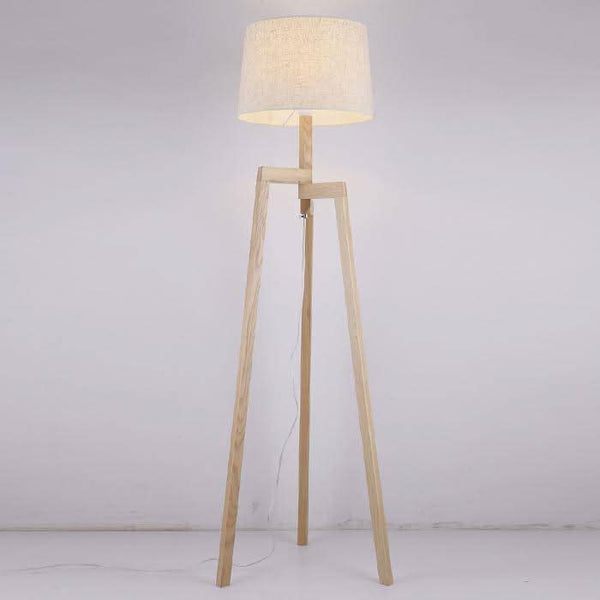
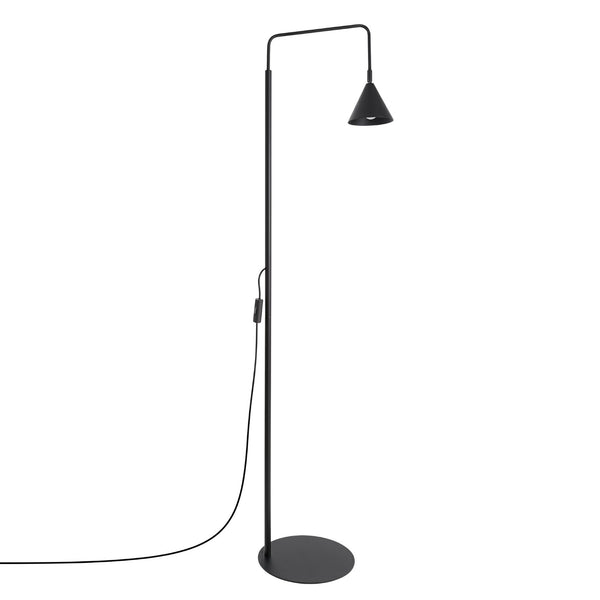
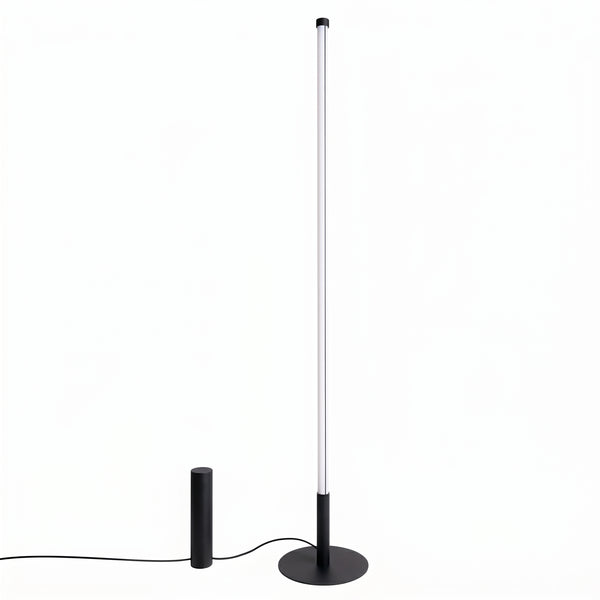
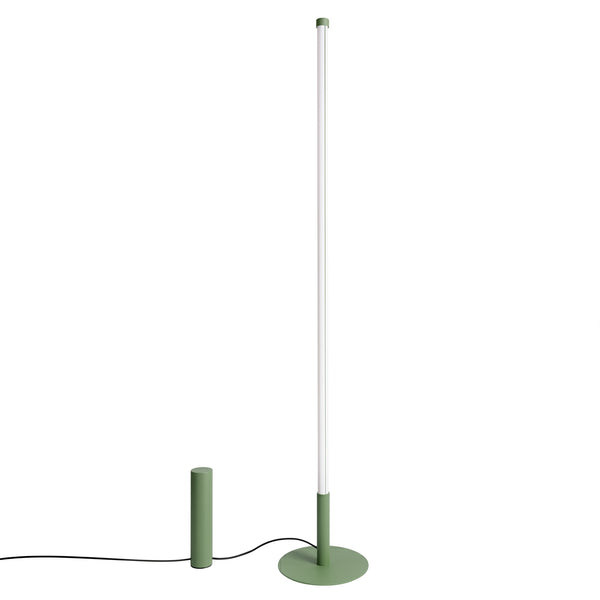
A slim stem takes up little floor space and slips between an armchair and a wall. The heights recorded in the selection range from around 132 cm for compact models to 156 and 168 cm for large shades, with shade diameters of 30 to 45 cm. Compare the base diameter with the free space before choosing: that is what decides whether the floor lamp on a stem fits in the walkway.
Globe floor lamp and round shapes
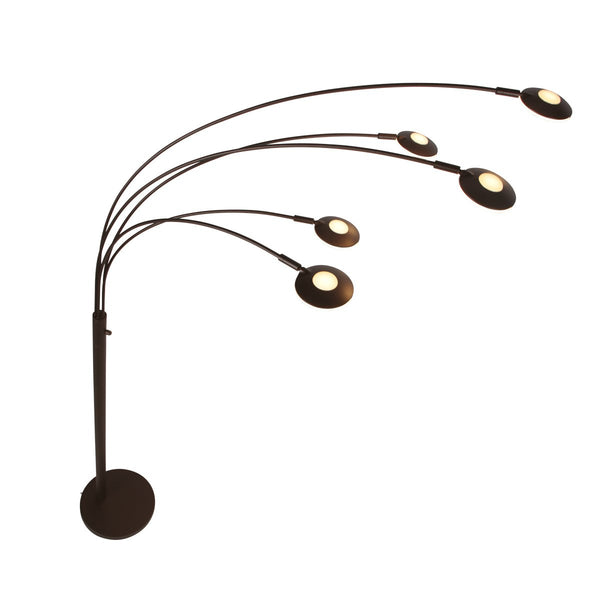
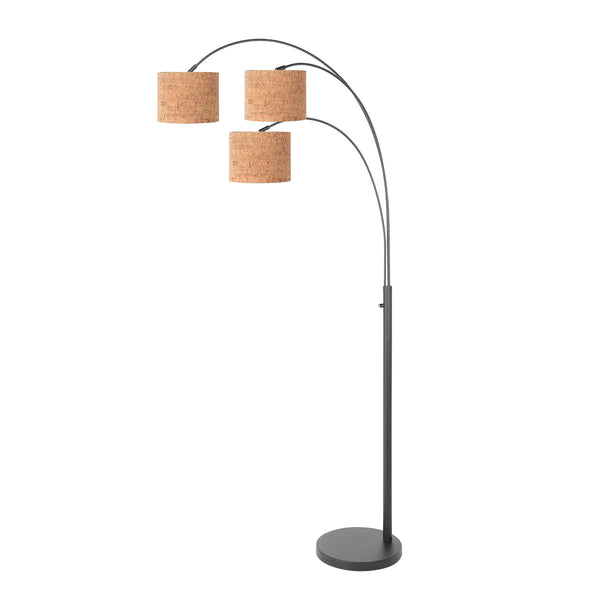
A globe lights in every direction: perfect as ambient light in a corner, less suited to reading. The globe shapes sit alongside round heads and cylinders here. For arcs, heights range from 180 to 240 cm, which allows them to reach over a sofa or a table; the brown arc with a black shade is a good example, with its 45 cm shade and adjustable reach.
| Room | Shape and style to favour | Format seen in the selection | To check before buying |
|---|---|---|---|
| Living room | Arc, tube or large shade | Arcs from 210 to 240 cm, stems from 156 to 168 cm | Footprint of the arc and floor space |
| Bedroom | Slim stem, round head, linen or fabric | From 132 to 168 cm | Moderate intensity and warm light |
| Office | Compact format on a stem | Slim stem of around 132 cm | Position relative to the worktop |
| Dining room | Arc with several shades | Arcs from 180 to 240 cm | Clearance height under the shades |
| Hallway | Narrow model, discreet base | Slim stem, narrow base | Footprint of the base in the walkway |
Which colour complementary to brown should you pair with a floor lamp?
The colour complementary to brown sits in the blues, from midnight blue to blue-grey, because it faces it on the colour wheel. In practice, a brown floor lamp also works on a beige, taupe or white wall, with a touch of black for the structure and the shade.
Complementary colour for dark brown and taupe
Against dark brown, you are not looking for a bright colour but for a light contrast: off-white, sand beige or taupe. A dark base on a light wall creates the visual separation, whereas a light brown on taupe blends in and avoids bulk. The matching black finishes often serve as a touch on the shade or the base.
Beige or chocolate brown floor lamp
Chocolate brown structures the room and stands out less than black; beige brown lightens and almost disappears in a light interior. The most common colours in this selection are brown, then black, beige, taupe and white, which leaves plenty of room to match the floor lamp to the rest of the furniture. Gold appears only as a structural detail on a few models.
Which material to choose: metal, linen, glass or bamboo?
Metal gives a slim, stable line, linen filters the light, glass makes it more direct, woven bamboo adds volume. Most models actually combine several materials, for example a metal stem and a textile shade.
Brown floor lamp in wood, walnut and woven bamboo
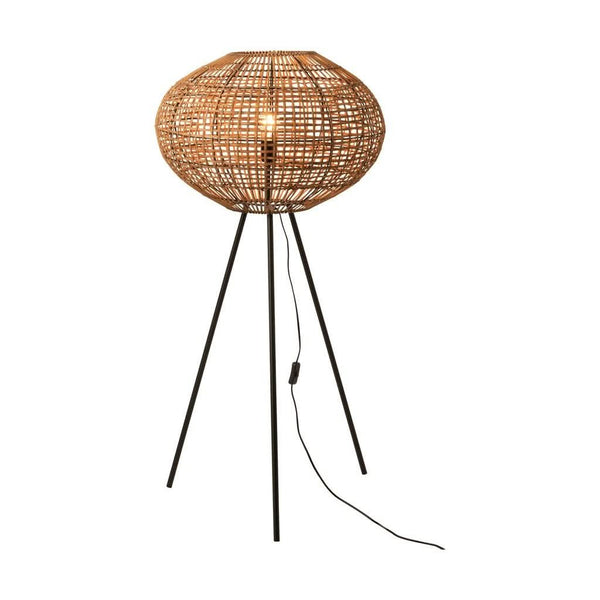
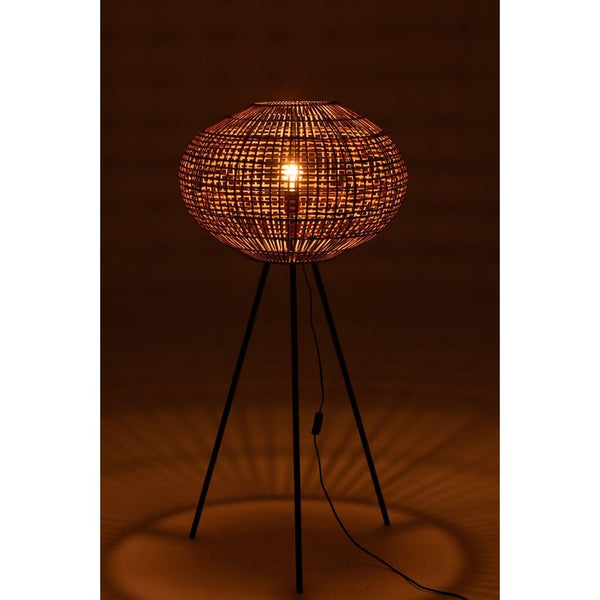
Wood and woven bamboo create a natural, warm mood, with a light base that keeps the look understated. In this selection, the wood and bamboo stems range from Nordic to bohemian style, such as the arc with a woven bamboo shade black base and brown weave. These woven volumes filter the light and draw patterns on the wall.
Designer brown floor lamp: metal and glass
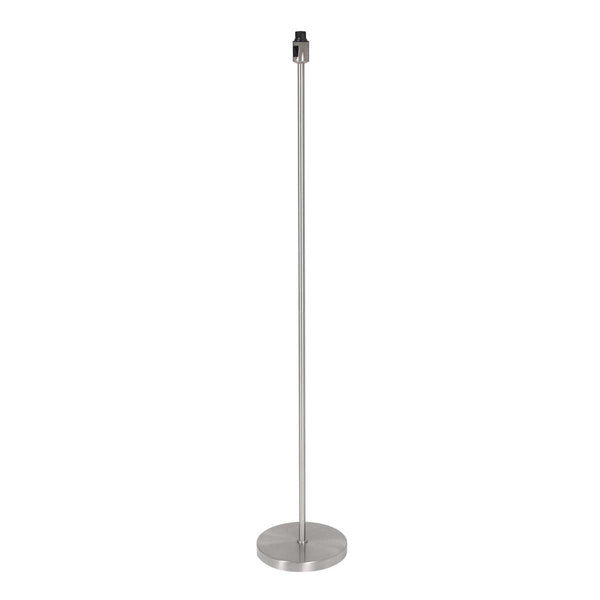
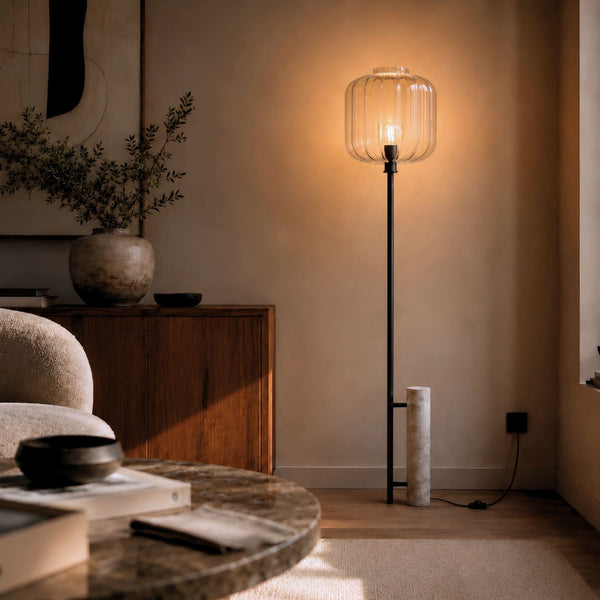
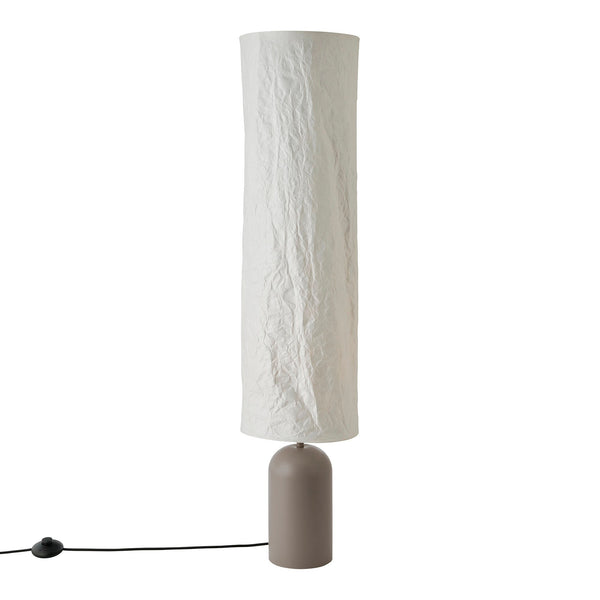
Metal is the most common material here, often brushed or powder-coated, with a black or taupe finish depending on the model. The versions with a metal structure take a linen, fabric or glass shade. Glass, rarer, gives a crisp shine: that is the case with the floor lamp with a taupe linen shade, whose brushed steel stem keeps a very slim line.
Which socket and which bulb for a halogen or LED floor lamp?
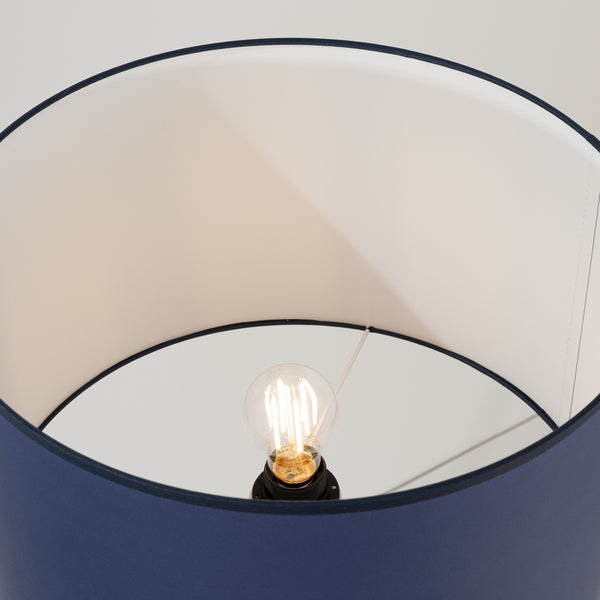
The E27 socket is the most common in this selection, ahead of models with integrated LED, then a few references in GU10 and E14. A floor lamp with an E27 socket takes a halogen bulb as well as an LED bulb, whereas a model with integrated LED cannot be replaced.
Halogen living room floor lamp: E27, GU10 or LED?
A halogen living room floor lamp requires an E27 socket, found on around half of the models. A halogen E27 bulb therefore fits without difficulty, but it heats up and uses more than an LED of equivalent power; conversely, a model with integrated LED is never changed and switches on instantly. GU10 and E14 sockets remain marginal and mainly concern adjustable spotlights or compact bulbs.
Power and dimmer: what changes day to day
The most common power on models with an E27 socket is 40 W, well ahead of the lower values of LED versions. The dimmer, for its part, equips roughly a quarter of the selection: it lets you lower the intensity in the evening without changing the bulb. Find these references in the models fitted with a dimmer and in the selection of LED floor lamps.
| Element | What the selection offers | What it changes |
|---|---|---|
| E27 socket | The largest share of models | Replaceable bulb, halogen E27 possible |
| Integrated LED | Several models | No bulb to change, instant switch-on |
| GU10 and E14 sockets | A few references | Adjustable spotlights or compact bulbs |
| Warm white 2700 to 3500 K | The most common temperature | Warm mood, suited to the evening |
| Dimmer possible | Some of the models | Adjustable intensity depending on the moment |
| IP20 | Almost all models | Indoor use in a dry room |
What space to allow and how to care for your brown floor lamp?
Allow for the total height, the shade diameter and the base diameter before confirming the position. The heights recorded in the selection range from around 132 cm for slim stems to 240 cm for large arcs.
Height, base and IP protection rating
Shades measure 30 to 45 cm in diameter depending on the model, on round or tripod bases. Allow a clearance of at least the width of the shade around the axis, and check that the head is not in your line of sight when you are seated. On protection, almost the whole selection is IP20, so for dry indoor use; only a few references move to IP44 or IP65 for damp rooms and outdoors. You will find them in all our lighting families.
Assembly, cleaning and warranty
Assembly stays simple: base, stem, head, then the bulb. For care, a soft dry cloth on the metal is enough; textile and bamboo are dusted dry, without any product. The warranty varies by model, at two, three or five years, with the two-year period remaining the most common. Compare this point between two similar references, it matters more than the finish.
How to choose without getting it wrong and where to find an original floor lamp?
Start from the constraint of the room, then work back to the style. A model that fits the available space and whose light matches the use will be more useful than a silhouette seen in a photo in a large volume.
Original floor lamp: moving away from models seen everywhere
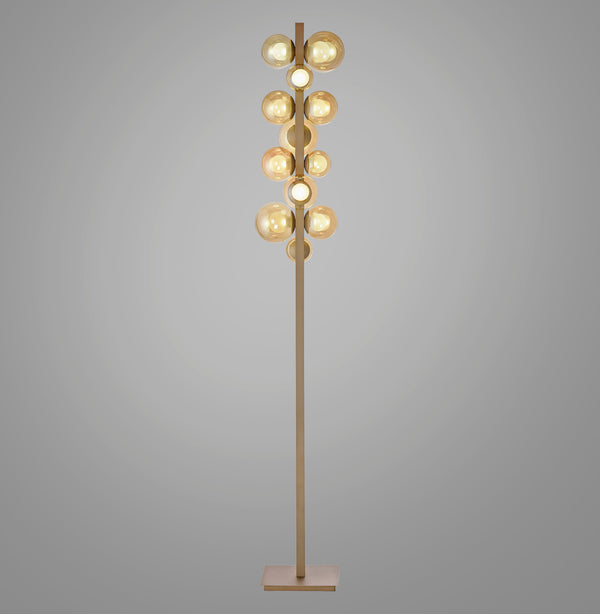
Originality comes from the silhouette and the finish, not from the effect: a long arc, a very slim stem, a round head, a woven shade or brown glass. The contemporary line gathers the most pared-back shapes, while the design selection brings together the more elaborate pieces. The five curved arms model with brown heads, for example, changes how a living room reads without adding anything to the floor.
Tracked delivery, returns and secure payment
At Designix, orders go through secure payment and shipping is by tracked delivery, with returns possible if the format does not suit once in place. Customer service answers questions about dimensions and sockets before purchase. When budget is the main criterion, look at the floor lamps at the most accessible prices and the modern line: the difference lies mainly in the shade material and the height. Also browse the full range of floor lamps to compare shapes side by side.
Frequently asked questions about the brown floor lamp
What makes an original floor lamp for a living room?
An original floor lamp is recognisable by its silhouette: a long arc, a slim stem, a round head or a woven bamboo shade. In this selection, the brown models stand out through their finish, in brushed metal, taupe linen or brown glass, rather than through heavy decoration.
What is the colour complementary to brown?
Blue and its derivatives, from midnight blue to blue-grey, are the colour complementary to brown on the colour wheel. In practice, a brown floor lamp also sits very well against a beige, taupe or off-white wall, with a touch of black for the structure.
Which complementary colour for dark brown should you choose for an interior?
Against dark brown, you look for a light contrast rather than a bright colour: off-white, sand beige or taupe. A dark brown floor lamp with a white or beige shade brings that contrast without weighing the room down and keeps a soft light in the evening.
Can a halogen floor lamp suit a living room?
Yes, provided you choose a model with an E27 socket, present in the collection alongside the integrated LED versions. A halogen E27 bulb remains replaceable and gives a warm light, but it heats up and uses more than an LED of equivalent power.
Which floor lamp on a stem should you choose for a small living room?
A model with a slim profile, on a thin stem, with a round head or a cylindrical shade, takes up little floor space. Contained heights, around 132 to 156 cm, slip in next to an armchair. Check the base diameter before buying.