
Alabaster floor lamp
This selection is also available in our French store: Lampadaire en albâtre


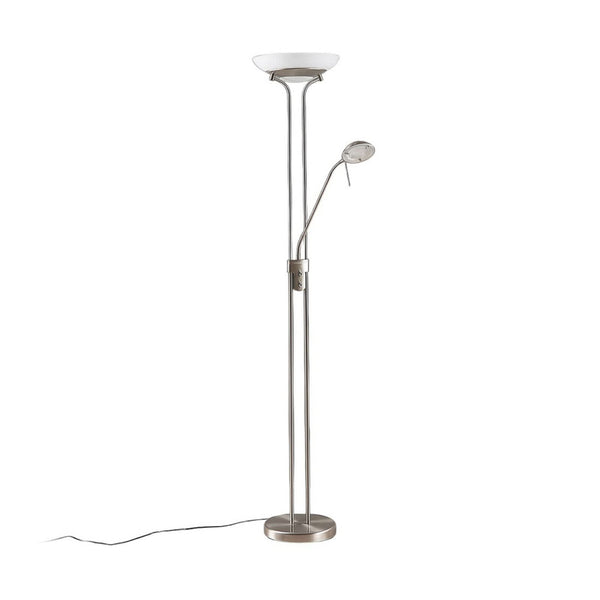

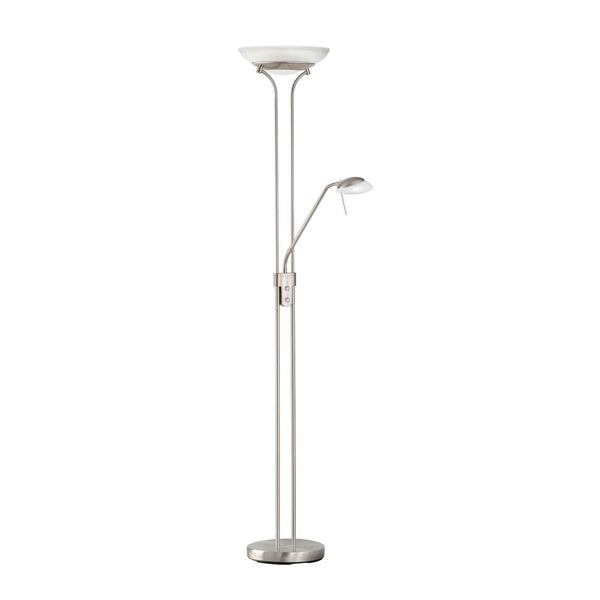

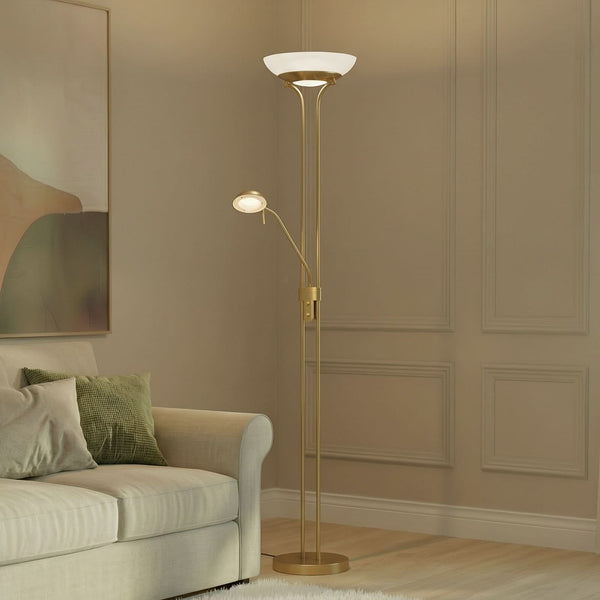

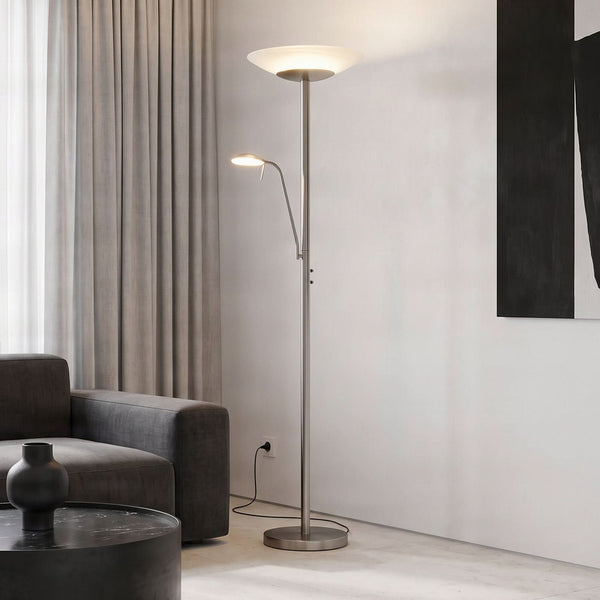





- Tracked delivery to your country Tracked delivery
- Secure payment at checkout Multiple payment methods
- 14 days to change your mind 14-day returns
- Secure payment Secure payment
Not sure of your style? Find it in 30 seconds
A few questions, and we will show you the pieces made for you.
Frequently asked questions
How do I choose the right product?
What are the delivery times?
Can I return an item?
Can I pay in instalments?
An interior that reflects who you are
Carefully selected pieces, shipped from our warehouses. Our team advises you before you buy, so you choose with confidence.
- Tracked delivery
- Pay in instalments, where available
- 14 days to change your mind
- Advice & showroom in Lyon, France
To choose an alabaster floor lamp, first decide on the place and the height: the shade should reach roughly the shoulder of a seated person, next to the sofa or the bed. The material comes next, because alabaster filters light and makes it veiled rather than directed, which changes the way a room is lit.
Contents
- The light of an alabaster floor lamp
- Where to place it
- Height and stability
- Alabaster or crystal
- Choosing the bulb
- Matching materials
- Small rooms and WCs
What light does an alabaster floor lamp give?
Alabaster filters light and makes it veiled, less direct than clear glass. An alabaster floor lamp therefore lights mainly through proximity: near a sofa or an armchair, it provides accent light without glare. This collection contains no product: no socket, no wattage and no bulb compatibility need checking.
A veiled light, never dazzling
The translucent stone diffuses the output instead of projecting it. The result: no visible hot spot, no harsh reflection on a screen or a page. That is what makes this light comfortable in a reading corner or late in the evening. On the other hand, it lights less far than an opaque shade open downwards: count on it for atmosphere and close reading, not for lighting a whole room. For more clearly directed light, compare with glass light fittings, whose transparent shade lets the beam through.
Alabaster chandelier and ceiling light: the same material, another format
The stone is also worked as a pendant or ceiling light. The difference lies in distance: fixed high up, the source lights widely and grazes the walls; on a stand, it stays within reach of hand and eye, with a more intimate result. If you are primarily looking for general lighting, a ceiling light will be more effective; if you want to define a corner, the floor format is more accurate. The rest of the range can be browsed in the world of light fittings.
Where to place an alabaster floor lamp in the living room or bedroom?
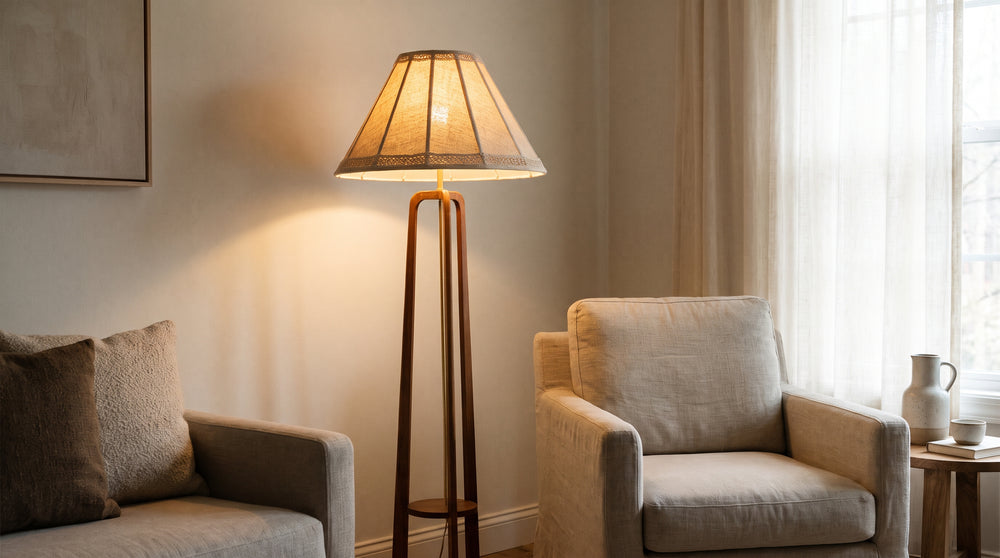
In the living room, place the alabaster floor lamp next to the sofa or behind an armchair, so that the light falls on a book without dazzling the seated person. In the bedroom, prefer a compact model near the bed or in a reading corner, with a switch within reach. The hallway and the study are also possible spots if floor space allows.
Original living room floor lamp: where to place it near the sofa?
The right position is at the end of the sofa, on the side opposite the window, so the light does not compete with daylight. Leave a clear passage around the base: you should be able to stand up without brushing the foot. If the sofa is against a wall, a slim model slipped into the corner casts less shadow than a large shade. To compare formats, see a floor lamp for the living room.
Bedroom floor lamp: bedside or reading corner?
Near the bed, the goal is to read without waking the other person: a low shade and a low-power bulb are enough. In a reading corner, an armchair and the floor lamp form a self-contained pair, provided the switch can be reached while seated. A floor model often replaces a cluttered bedside table; find the low silhouettes in bedroom floor lamps. For a workspace, aim the shade towards the surface instead, as with a desk floor lamp.
Alabaster floor lamp: how to choose height and stability?
An alabaster floor lamp must first stand firm: check the weight of the base, the width of the foot and stability on a smooth floor. Height is chosen in relation to the seat and the reading point, so that the shade reaches near the shoulder without getting in the way of movement. Exact dimensions are given on each product page.
Check the foot, the base and the floor footprint
A narrow base on heavy stone needs a very level floor; on thick carpet, it may lean. Measure the footprint of the foot on the floor before buying, not just the diameter of the shade: it is the foot that decides the real space needed. A wide-based model can be brushed past without tipping, a slim-footed model slips into a corner. Reading floor lamps can be found in this selection of floor lamps.
Adapt the height to the seat and the reading point
Sit down, then look: the bottom of the shade should sit above the shoulder, without blocking the view of the person opposite. Too low, it dazzles; too high, it no longer lights the page. On a low sofa frame, a slender model balances the line; near a tall armchair, a shorter stem is enough. The rest of the families can be seen in the floor lamp section.
| Use | Preferred format | Point to check | Desired effect |
|---|---|---|---|
| Living room, near the sofa | Floor lamp at seat height | Stability of the base, clear passage | Veiled light for reading without glare |
| Bedroom, bedside | Compact model or reading lamp | Switch reachable from the bed | Soft lighting for the evening |
| Study | Upright or adjustable floor lamp | Orientation of the shade | Light directed onto the desk |
| Small room or WC | Narrow model | Floor footprint and IP rating | Discreet and stable presence |
Alabaster floor lamp or crystal floor lamp for an original living room?
Alabaster and crystal do not give the same light: alabaster veils it, crystal reflects it more. For an original living room, choose according to the atmosphere you want, then match the stem and colour to the rest of the furniture. A single alabaster floor lamp can be enough to mark a corner without overloading the room.
Alabaster for soft light, crystal for a brighter effect
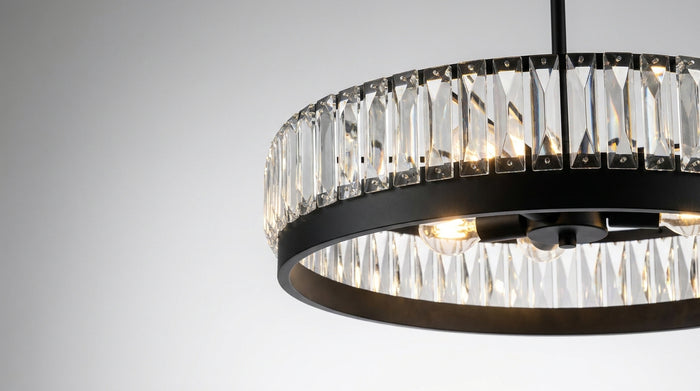
Cut crystal catches the light and produces sparkles, which suits a classic decor or a deliberate jewel effect. Alabaster stays matte, almost powdery, and stands out for its shape rather than its reflections. In a room that is very bright by day, alabaster keeps a sculptural presence without glittering. Both materials are also chosen for the stem and stability, not only for the shade.
Play with material without multiplying styles
An original living room does not need three strong materials. If alabaster is the highlight, keep the rest understated: a plain sofa, a neutral rug, a single metal finish. To find lines that hold without clutter, look at models with a crafted design and the contemporary selection in the catalogue.
Halogen or LED floor lamp: how to choose the bulb for an alabaster floor lamp?
Before choosing the bulb, read the socket and maximum wattage given on the floor lamp's product page. A halogen-compatible model can also take an LED if the socket and internal volume allow it. The warm light of a halogen and the restraint of an LED change the result in the alabaster, without altering the material.
Check the socket and maximum wattage before choosing the bulb
Two pieces of information matter: the type of socket and the wattage the fitting can handle. A bulb that is too powerful heats up and can mark the stone or the holder; stay within what is stated. Also check the space available inside the shade, because a bulb that is too long will not fit. If in doubt about compatibility, it is better to ask before screwing it in.
Halogen, LED or dimmable: what changes day to day
A halogen gives a warm, immediate light, but heats up and uses more energy. An LED heats little and comes in several colour temperatures: around 2700 K for a warm light close to halogen, towards 3000 to 4000 K for a more neutral result on a desk. If you want to vary the intensity in the evening, a dimmer changes everything: see dimmable floor lamps, or an LED floor lamp for a fitting that is already equipped.
Alabaster, driftwood or gold floor lamp: how to match materials?
Alabaster works with driftwood if both stay understated: a raw texture, a veiled light, no accumulation. With a gold floor lamp, the metal finish brings an accent; alabaster calms the shine. Choose a single highlight per corner, then repeat the same colour family in the room.
Driftwood: keep a simple line and soft light
Driftwood has an irregular texture that draws the eye. Paired with alabaster, it works when the stem stays slim and the tone light, otherwise the two compete for attention. A light wood piece of furniture, a neutral wall and the floor lamp are enough to hold the room. Browse wooden floor lamps to compare the grains.
Gold floor lamp: match the finish without making the whole room shine
Gold reflects daylight and can be enough on its own as an accent. Keep it to a stem, a ring or a small base, and let the alabaster occupy the volume. With a white wall, the whole stays bright without becoming flashy; on a dark wall, the contrast is sharper. Compare gold finishes with white models before deciding.
| Material | Light | Style | Care |
|---|---|---|---|
| Alabaster | Veiled | Sculptural | Soft cloth, no abrasive product |
| Crystal | Brighter | Classic | Watch for marks |
| Glass | Transparent | Modern | Regular cleaning |
| Driftwood | Filtered | Natural | Simple dusting |
Original floor lamp in a small room or a WC: what precautions?
In a small room or a WC, an original floor lamp must stay compact: check the footprint of the base and the stability before placing it near a door. Alabaster is decorative; in a damp area, the protection rating of the fitting must be suitable. If the room is dry, a small floor lamp can be enough.
WC floor lamp: favour a compact and stable model
A WC leaves little floor space: the foot must fit in the corner without blocking the door opening or the way to the toilet. A slim stem, a heavy base and a shade placed high avoid knocks. For narrow spaces, the understated silhouettes of the contemporary range slip in more easily than a large round shade.
Measure the floor footprint and check the protection rating in damp rooms
In a bathroom or a damp WC, the IP rating of the fitting matters as much as its style: the more the room is exposed to splashes, the higher the rating must be. Alabaster dislikes abrasive products and stagnant moisture; a soft, dry cloth is enough for routine care. If space is really lacking, a wall light or a ceiling light remains easier to install. Tight budgets turn to entry-level models.
Frequently asked questions
Original living room floor lamp: how to choose an original floor lamp?
First find the place for the floor lamp in the living room, then the light you want: a reading corner calls for directed light, an atmosphere calls for veiled light. Alabaster brings a sculptural presence without necessarily shining. Then check the foot, the footprint and the socket before choosing.
Halogen floor lamp: can it be used in an alabaster floor lamp?
It depends on the socket and maximum wattage given on the floor lamp's product page. A model intended for halogen can take a halogen bulb, but the alabaster must stay away from the source if the heat is high. Always check compatibility before screwing in a bulb.
Floor lamp: what criteria should be checked before buying?
Check the stability of the base, the width of the foot, the height of the shade and the floor footprint. A floor lamp must stand without wobbling on a smooth floor and let people move around. Also look at the socket, access to the switch and the weight of the whole.
Crystal floor lamp and alabaster floor lamp: which to choose?
Crystal reflects more light and gives a more sparkling effect; alabaster veils it and creates a more matte presence. Choose crystal for a classic decor or a jewel effect, alabaster for a living room or bedroom with a soft atmosphere. Both are also chosen according to the foot and the footprint.
WC floor lamp: is an alabaster floor lamp suitable?
In a WC, a floor lamp must be compact and stable so as not to get in the way. Alabaster suits a dry room; in a damp area, check the protection rating of the fitting on its product page. If space is very limited, a wall light or a ceiling light remain easier to install.
Before confirming, go back over three points: the height of the shade in relation to the seat, the real footprint of the base on the floor, and the socket given on the product page. These three pieces of information decide daily use far more than the tint of the stone. You can then compare all floor lamps or browse our light fitting catalogue by room.




