
12V LED light bulbs
This selection is also available in our French store: Ampoules LED 12V
No products in this selection.
- Tracked delivery to your country Tracked delivery
- Secure payment at checkout Multiple payment methods
- 14 days to change your mind 14-day returns
- Secure payment Secure payment
Not sure of your style? Find it in 30 seconds
A few questions, and we will show you the pieces made for you.
Frequently asked questions
How do I choose the right product?
What are the delivery times?
Can I return an item?
Can I pay in instalments?
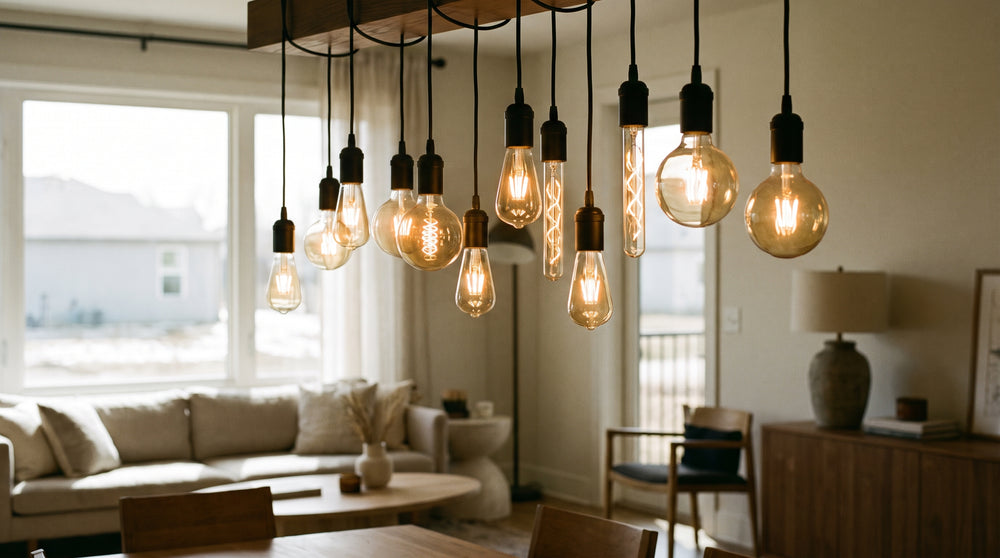
An interior that reflects who you are
Carefully selected pieces, shipped from our warehouses. Our team advises you before you buy, so you choose with confidence.
- Tracked delivery
- Pay in instalments, where available
- 14 days to change your mind
- Advice & showroom in Lyon, France
A 12V LED bulb runs on low voltage: a vehicle battery, an existing 12 V circuit or a 230 V to 12 V transformer. It is chosen for a motorhome, a van, a caravan, a boat or battery-powered lighting, first noting the socket base and the space available inside the fixture.
What is a 12V LED bulb and where should you use it?
A 12V LED bulb uses little power and produces little heat, which matters on board a vehicle or on a battery-powered circuit. It fits ceiling lights in the living area, recessed spotlights, boot and storage compartment lights, strips and batten lights. It is also found on boats and in garden sheds connected to a panel and a battery.
What all these uses have in common: the source delivers 12 V, not 230 V. A low-voltage bulb fitted into a mains socket is destroyed immediately. So the choice comes down first to voltage, then to the base, then to the light you want. To see all the available formats, browse our entire lighting range.
12V or 220V LED bulbs: what is the difference?
The supply voltage drives everything else: the type of socket, the way it is wired and the safety of the installation. The table below sums up what changes. If your project concerns a home connected to the mains, it is better to look at switching to 220 V LED bulbs rather than improvising a transformer.
| Criterion | 12V LED bulb | 220V LED bulb |
|---|---|---|
| Power supply | Battery, 12 V circuit or transformer | Directly on the home mains |
| Where used | Motorhome, van, caravan, boat, battery lighting | Ceiling light, chandelier, wall light, recessed spotlight |
| Common bases | Small formats such as G4, E27 depending on the model | E27, E14, G9, GU10 |
| Dimming | Depends on the transformer and the power supply | Depends on dimmer compatibility |
| Installation | Very low voltage, wiring to be adapted | 230 V home installation |
| Light | Warm or neutral depending on use on board | Depending on the mood of the room |
12V LED lighting on battery: what you need to plan for
Three things matter before the bulb: a source that really delivers 12 V, wiring whose cross-section takes the length into account, and circuit protection between the battery and the light points. Check the polarity before connecting and tighten the terminals. A tired installation gives weak or flickering light, even with a good bulb.
12V LED bulbs for motorhome, van and caravan: how should you organise the lighting?
On board, lighting is thought of by area rather than by room: a general point on the ceiling of the living area, spotlights under the upper cabinets for the worktop, a boot or storage compartment light, and targeted light for reading. Each area has its use, and therefore its bulb. Replacement is done bulb by bulb, without touching the original wiring.
Before ordering, note the circuit voltage, the shape of the socket and the space available under the diffuser. That is the only way to be sure the model will fit. The collection the shop's 12 V bulbs groups the relevant formats.
12V LED lighting in a motorhome: where should the light points go?
Two or three points are better than a single strong source: a ceiling light for living, an adjustable spotlight above the kitchen, a wall light near the berth. This way the lights overlap without dazzling. For the small sockets of ceiling spotlights, G4 bases and other specific formats are the first thing to check.
12V LED lighting in a van or caravan: replacing the original bulb
In a converted van as in a caravan, the original bulb often gives a yellow light and uses more power. Replace it with an LED of the same base and the same size, keeping the same voltage. The gain shows in both consumption and visual comfort, without modifying the existing circuit.
12V LED bulbs G4, E27: which base should you choose?
The base is the first criterion, before power and colour: a bulb of the wrong format will not screw in, or will not fit inside the fixture. So read the socket, note its shape, then choose. A bulb designed for 12 V is never fitted into a socket supplied at 230 V, and vice versa.
The table below matches common uses with the base to check and the associated point of caution.
| Use | Power supply | Base to check | Point of caution |
|---|---|---|---|
| Motorhome or van | Vehicle 12 V circuit | G4 or original socket | Size inside the fixture |
| Caravan | 12 V circuit or auxiliary battery | Base of the original ceiling light | Polarity and tightness of the terminals |
| Car | Vehicle 12 V network | Base of the original socket | Type of bulb specified for the light or ceiling light |
| Battery lighting | 12 V battery with circuit protection | Depending on the socket of the holder | Total consumption of the lit points |
| 12 V recessed spotlight | 230 V to 12 V transformer | Small base such as G4 | Compatibility with the existing transformer |
| 12 V strip or batten light | Dedicated 12 V power supply | None: direct connection | Cut marks and polarity |
12V LED bulbs G4: for which fixtures?
The G4 fits small low-voltage spotlights, very common in living areas and shallow recessed ceiling lights. Two pin contacts, a reduced format, light that can be directed depending on the holder. As space is limited, check the diameter and length of the model before sliding it under the protective glass. These are also the G4 LED bulbs you look for to replace a tired spotlight without changing the fixture.
12V LED bulbs E27: in which cases should you screw them in?
An E27 socket in 12 V is found on boat ceiling lights, portable battery lamps and some fixtures in converted vehicles. In that case, you find the same models as at home: E27 base models come in several light outputs. For small sockets, look instead at E14 bulbs for small sockets, and for a pin base, G9 base bulbs concern other devices still.
12V LED bulbs 5W: which power for which use?
The power figure indicates what the bulb consumes, and that is what weighs on a battery's runtime. A moderate power is enough for accent lighting, reading or a boot. To light a whole living area, compare models with each other and add up what stays on at the same time, because it is the total that drains the battery.
Power does not tell the whole story of perceived light: the diffusion of the fixture, the colour and the mounting height matter just as much. Among the LED bulb range, compare at equal use, not on the watt figure alone.
12V LED spotlight: power, flux and dimensions
A 12 V recessed spotlight imposes its constraint: the available depth and the diameter of the cut-out. Note these two measurements, then look for the bulb that fits. A 12V LED spotlight that is too wide will not fit, even with the right voltage and the right base. Power is then chosen according to use: general lighting, worktop or accent light.
Reading the label of a 12 V LED bulb before buying
Four pieces of information are enough to decide: voltage, base, power consumption and colour temperature. Add the protection rating if the fixture is outdoors or in a damp room, and the dimensions if space is limited. Reading this avoids returning parcels and placing a second order.
How do you run an LED on 12 volt?
Power the bulb with a source that really delivers 12 V: battery, vehicle circuit or 230 V to 12 V transformer. The expected current is direct. Respect the polarity on models with terminals, check the voltage before screwing in the bulb, and check the tightness. A reverse connection or an unsuitable voltage gives weak light, flickering, or nothing.
The dimmer deserves a separate check: not all bulbs are controlled in the same way. If your circuit is dimmed, go for bulbs compatible with a dimmer and test the behaviour at low intensity.
12V LED transformer: direct or alternating?
A 230 V to 12 V transformer may output direct or alternating current depending on its design. Some bulbs handle both, others do not: the information appears on the product or on the transformer's instructions. If in doubt, note the reference of the 12V LED transformer before ordering the bulb, rather than replacing it at random when flickering occurs.
Cuttable LED strip: how does it work?
A cuttable 12V LED strip has regular cut marks: only separate it at these marks, because each section contains its components. Cutting elsewhere breaks the circuit and the following part goes out. Then connect the sections with the intended connectors, respecting the polarity. The same principle applies to an LED batten light or an LED bar.
Can you put a 12 V LED bulb in a ceiling light, a chandelier or a wall light?
Yes, on one condition: that the fixture is supplied at low voltage or connected to a suitable transformer. On a 230 V home installation, choose a screw-in bulb compatible with the socket, not a 12 V model. Low voltage mainly concerns vehicles, boats and battery circuits. The voltage of the fixture should be read before any purchase.
The rest is a matter of mood: light colour and diffusion do more for visual comfort than the stated power. For an interior, the first thing to look at is all our LED bulbs designed for the mains.
LED ceiling lighting: when should you switch to 12 V?
You switch to 12 V when the ceiling light is itself a low-voltage fixture: boat cabin, living area, converted vehicle, room powered by a battery. In a home, LED ceiling lighting stays at 230 V and the choice comes down to base and colour. A warmer bulb suits a rest room better than a worktop.
LED wall light and LED chandelier: which bulb for a living room?
In a living room, a powerful LED wall light on the wall and a living room LED chandelier on the ceiling complement each other: one lights a reading corner, the other provides general light. Match the colour temperatures to avoid mixing yellow and white. Bulbs designed for the living room and those suited to the bedroom follow this logic, with warm or more neutral outputs.
What are the drawbacks of LED bulbs?
An LED bulb needs a good power supply: poorly supplied, it flickers or lights dimly. Its rendering depends on the colour temperature chosen, warmer or cooler. Some do not work with all dimmers or all older transformers. Finally, it releases its heat and copes badly with a totally enclosed fixture. These points are solved by checking, not by replacing blindly.
To choose the light, two simple references: 2700K bulbs with warm light for relaxation areas, and more neutral 3000K bulbs for work areas. Style matters too: a filament look or retro-style models dress a visible pendant light.
Why does a 12 V LED bulb flicker?
Flickering almost always comes from the power supply, not the bulb: tired transformer, unstable voltage on the circuit, loose terminal, or a bulb that is not compatible with the dimmer in place. First test the tightness and the voltage, then the transformer's compatibility. If doubt remains, the bulb can be checked on a stable source.
12 V LED car bulb: mistakes to avoid
Three mistakes come up again and again: ordering without checking the base of the original socket, forcing a bulb that is too long into a light or ceiling light, and closing the optic before testing that it lights up. Replace bulb by bulb, without touching the wiring. Indicator lights follow their own rules and are not treated like cabin lighting.
12V LED lighting on battery: which transformer and which protection should you choose?
Between the battery and the light points, you need a stable power supply, circuit protection and wiring whose cross-section matches the length of the run. The transformer is chosen for the whole circuit, not for a single bulb. Note the polarity at every connection, and check everything before switching on.
Outdoors or in a damp environment, the protection rating decides: our outdoor bulbs are designed for these situations. The same reflex applies to a storage compartment, a boat locker or an unheated shed.
12V LED lighting: indoors or outdoors, which protection rating?
The IP rating describes resistance to dust and water, and it is what allows or prevents installation outside. In a dry interior, a low rating is enough. Outdoors, under an awning or on a boat, go up a notch. It is not the bulb alone that protects: the fixture, its seals and its glass matter as much as the stated IP reference.
Connecting a 12V LED strip or batten light to a battery
First connect the protected power supply to the battery, then the strip or batten light to that power supply, respecting positive and negative. Cut at the marks if the length needs adjusting. A test before final fixing avoids re-sticking a strip fitted the wrong way round.
So the choice comes down to three readings: the circuit voltage, the socket base and the colour temperature. Once these three points are noted, replacement happens without surprises. At Designix, payment is secure, delivery is tracked, returns are possible and customer service answers compatibility questions before ordering.
Frequently asked questions about 12V LED bulbs
12V LED bulbs for a motorhome: what should you check?
Note the circuit voltage, the shape of the socket and the space available inside the fixture. The model is then chosen according to use: general ceiling lighting, reading or boot. Light colour and power consumption complete the choice, without exceeding what the battery can supply over an evening.
Can you fit 12V LED bulbs in a car?
Yes, if the circuit concerned is 12 V and the base matches the original socket. Replace the bulb without touching the rest of the wiring and test before closing the light or ceiling light. Cabin lighting is concerned; indicator lights follow other rules.
Cuttable LED strip: how does it work?
A cuttable strip has cut marks: only separate it at these marks, because each section contains its components. Cutting elsewhere breaks the circuit and the following portion no longer lights up. Then connect the sections with the intended connectors, respecting the 12 V polarity.
Living room LED ceiling light: do you need a 12 V or 230 V bulb?
It all depends on the ceiling light's power supply. If it is connected to the mains, you need a 230 V bulb with the right base; a 12 V bulb cannot be fitted directly. A 12 V ceiling light mainly exists in vehicles, boats and battery installations. So check the voltage before choosing the power.
12V LED lighting on battery: how should you plan consumption?
Look at the power in watts stated on the bulb and the battery capacity, then add up the light points switched on at the same time. Reducing the number of points or the power consumed extends the runtime. The transformer and the wiring must also support the whole circuit.




