Kitchen lighting: distributing light properly, zone by zone
This article is also available in French: Conseils Pour un Bon Eclairage de Cuisine
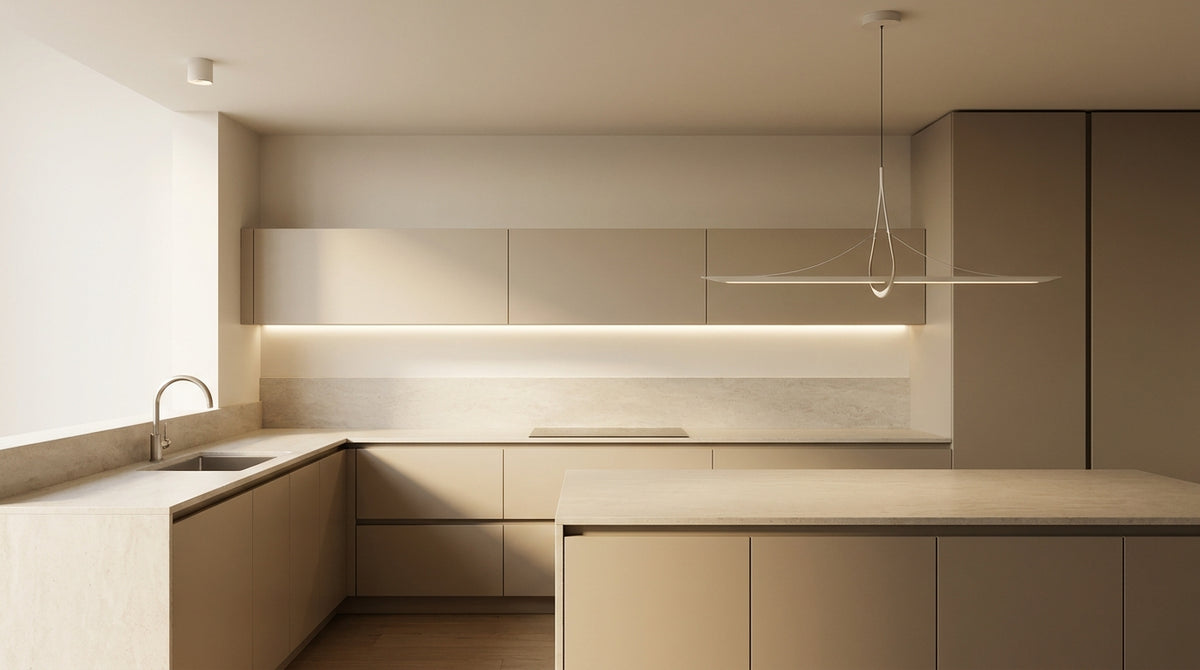
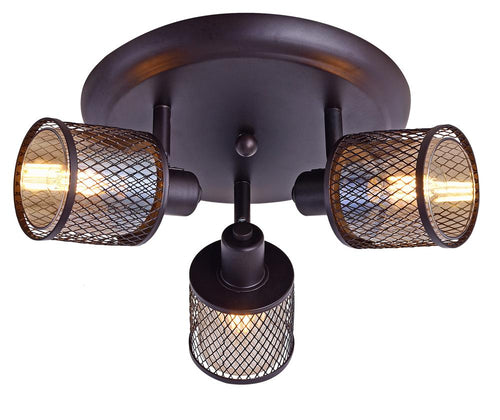
Layer three sources at three heights: a ceiling light or spotlights for moving around, a strip under the upper cabinets to cut shadows on the worktop, a pendant above the island for ambience. Then set the colour temperature zone by zone, more neutral above the cooking area, warmer above the eating area.
What is the ideal lighting for a kitchen?
Count on three layers: general light on the ceiling so you can move around without cast shadows, grazing light under the wall units for the worktop, and a low source above the island or the table. A single central point flattens the room and leaves the worktop in the shadow of your back.
That is the order in which our kitchen lighting is put together: general first, functional next, ambience last. A room fitted in that order stays pleasant at noon and at midnight.
Kitchen ceiling lighting: how many points to plan?
One central point is enough in a closed kitchen. As soon as an island or a return of the worktop splits the room, plan at least two sources, otherwise the area behind you stays dark.
Then there is sizing. The number of lumens depends on the floor area, the ceiling height and the wall colour: our guide on how many lumens for a kitchen sets out the calculation.
An LED ceiling light with a wide diffuser spreads light without patches on the floor, which matters above a stainless steel or pale stone worktop.
How many spotlights per m² in a kitchen?
It all depends on the spacing and the wattage of each unit. A low ceiling takes closely spaced, low-power spotlights, a high ceiling calls for the opposite: fewer points and more output per point.
The benchmark that really counts: the light must fall in front of you, never behind your back. Our page on how many spotlights per m² in a kitchen details the calculation and the most common layout mistakes.
Kitchen lighting without upper cabinets: how to manage?
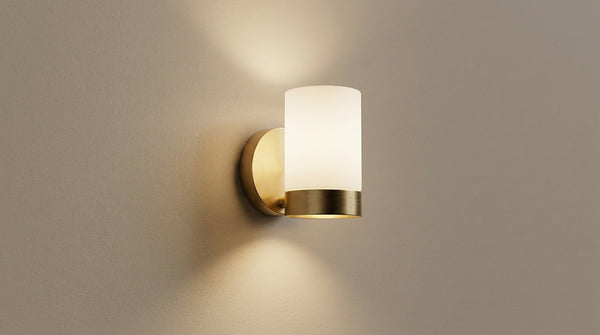
Put the light on the wall rather than the ceiling. An adjustable wall light or a strip fixed under a shelf lights the worktop at an angle, without cast shadows. It is often more effective than a second ceiling light, and lighter than a spotlight aimed downwards.
Kitchen under-cabinet lighting: what if there is no cabinet?
Without upper cabinets, three supports replace the classic under-cabinet light. LED bars for kitchens are among the simplest to fit on an existing splashback.
- Open shelf: a strip stuck under the shelf, invisible once the shelf is loaded.
- Splashback: a flat wall light or an aluminium profile fixed to the top of the tiles.
- Wall rail: an LED bar that follows the whole length of the worktop without multiplying drill holes.
The result depends above all on the installation. Our tutorial on the LED strip under a kitchen cabinet details fixings, connectors and finishes.
Kitchen worktop lighting 220 V: what power supply?
220 V remains the standard for fixed lighting: a strip or bar plugged into a switched socket comes on with the room. 12 V requires a transformer, to be housed in a ventilated and accessible place.
Near the sink and the extractor hood, humidity and splashes are permanent. In a survey of 58 luminaires from our catalogue as of 5 October 2026, 41% state Kitchen as the room and 95% are IP20 against 5% IP65. An IP20 is suitable above a dry worktop, not within direct reach of a sink.
This selection is commented on by buyers, and the Designix Google listing lets you check what comes up most often before choosing a shape.
The selection for lighting a kitchen, worktop by worktop


What is the best lighting colour for a kitchen?
Two temperatures, not one. Warm white above the table, a more neutral white above the worktop, on two separate controls. It is the only setup that handles both a quick lunch and a Sunday dinner in the same room.
| Zone | Temperature | What it changes |
|---|---|---|
| Worktop | Neutral white | Vegetables and meat keep their true colour |
| Dining area | Warm white | Flattering complexions, an ambience that dims in the evening |
| Circulation | Intermediate | All-purpose, without harsh contrast |
White or yellow light: how to decide?
Cool white lights brighter, warm white makes food look more flattering. Neither is better in absolute terms: it all depends on what you are looking at in that precise spot.
Our article white or yellow light compares the two renders on the same surfaces. One practical point: above the worktop, keep a fixed temperature and do not mix sockets, otherwise the room becomes inconsistent.
What temperature to adopt above the dining area?
Dining tolerates a lower, more amber light, provided it is dimmable. Without a dimmer, a fixed warm light becomes tiring over time in a room where you also work.
3000K bulbs are the most common compromise in our kitchens: neutral enough to cook, soft enough for a dinner.
Cooking, eating and tidying do not call for the same light, and wiring everything to a single switch forces compromises all year round. A kitchen and dining room lighting project handled as a whole settles this question before the work, not after.
Pendant above the island: what height, how many points?
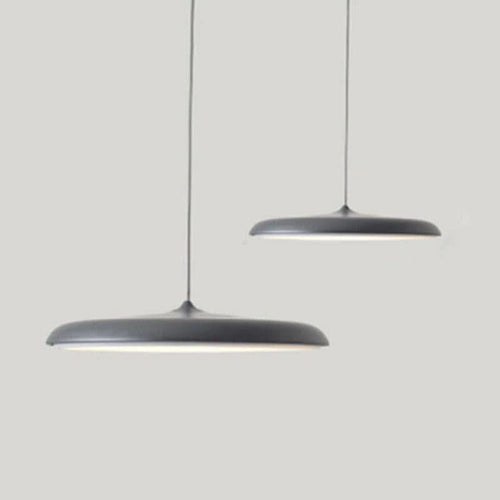
Count one pendant point every 60 to 80 cm of worktop, set between 75 and 85 cm above the surface. Too low, the pendant blocks the view towards the other side of the room; too high, it no longer lights the worktop and becomes a simple decorative object.
At what height should the pendant be set?
The right reference is not the floor but the worktop: measure from the work surface, never from your feet. The height then depends on the diameter of the shade and the width of the beam.
Our guide to choosing the ideal pendant for your kitchen gives the benchmarks according to the size of the luminaire.
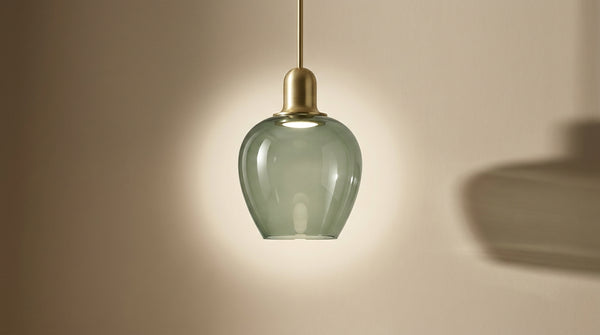
A kitchen pendant in glass or pierced metal projects a wide halo: it forgives a few centimetres of difference, unlike an opaque, closed shade.
Multiple pendants above an island: how many and how to balance them?
Two pendants over a two-metre island is balanced; three over the same length is cramped. The number follows the length of the worktop and the spacing between the light sources.
Our page on multiple pendants above an island shows how to distribute the points and align the heights with each other.
What is your kitchen like?
You would rather have it fitted than drill it yourself: describe your kitchen in two lines, and we will come back to you with a coherent selection and the mounting heights.
What are the kitchen lighting trends in 2026?
Three directions are emerging: light hidden in the furniture, low sources replacing the ceiling light, and materials that are looked at as much as they light. The single central point is losing ground to several separately adjustable sources.
Are brass and glass still at the top?
Antique brass and smoked glass are among the most requested finishes above an island, including in very minimalist kitchens, because they warm up a cold stone worktop.
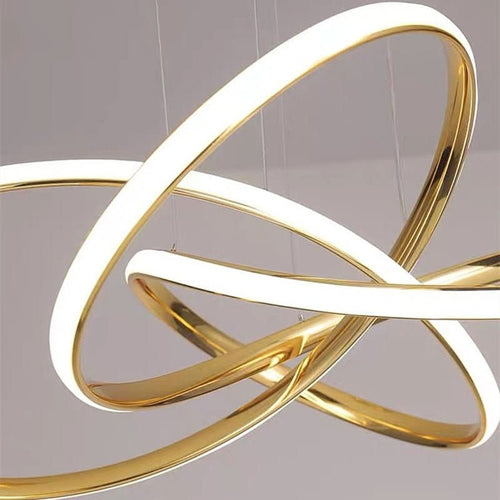
A kitchen chandelier with slender arms above a narrow island solves the same question with a more airy design than a cylindrical pendant.
Towards invisible and dimmable lighting?
Profiles recessed into niches and drawers are multiplying, but the real novelty lies in the controls: dimming, zone-by-zone switching, presence detection under the worktop. Our article on the kitchen lighting trend details what is actually being installed.
On the same subject
In stock · shipping costs shown at checkout · up to 30% off in your cart
Ready to turn inspiration into reality?
Tell us about your room, your style and your budget, and we will show you the pieces that truly suit your project.
Get guidance in 30 seconds →