Recessed spot diameter: drill it right the first time
This article is also available in French: Diametre spot encastrable
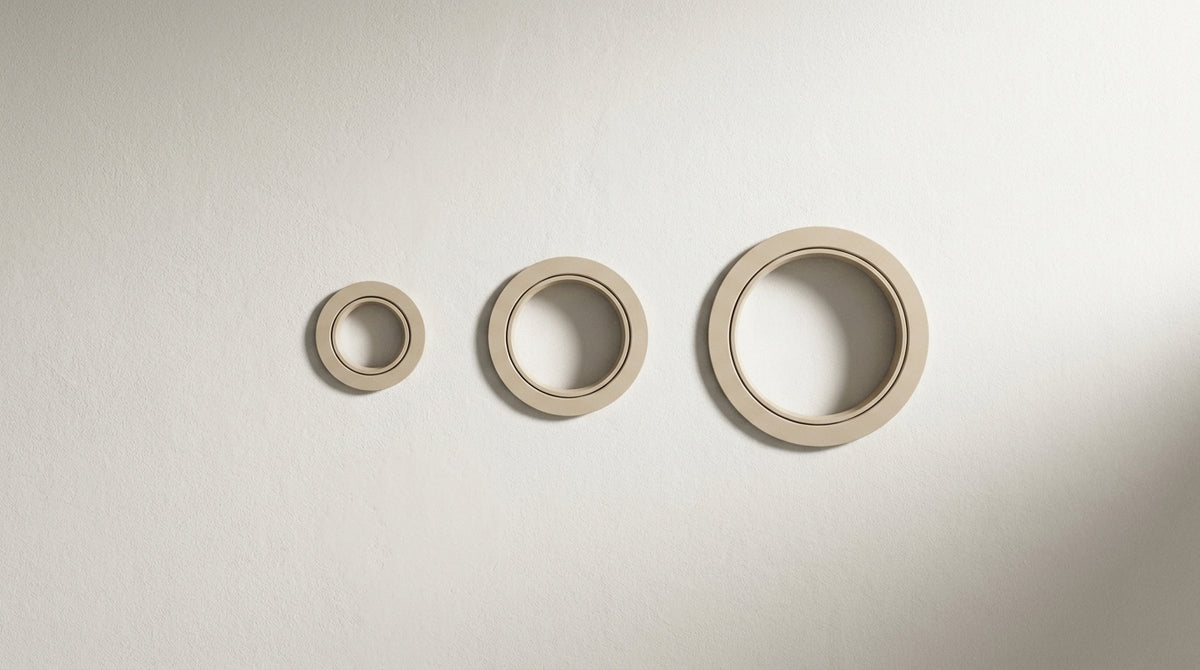
Measure the hole diameter with a tape measure, from one edge to the other, then note the free depth behind the plate. That measurement is what decides, not the figure shown on the product sheet. A standard GU10 spot requires a 68 to 75 mm cutout, a compact model 55 mm.
What is the diameter of a recessed spot?
Most often, count 80 to 90 mm of overall diameter for a GU10 spot, for a hole of 68 to 75 mm. Compact models go down to around 55 mm cutout, large versions exceed 90 mm. The figure that matters when ordering is still the hole size.
The trim is visible once fitted on the ceiling; the cutout, however, cannot be undone. The same spot advertised as "90 mm" may require a 75 or 83 mm hole, because manufacturers do not all measure the same thing. The thinner the trim, the closer the cutout gets to the overall diameter. Our recessed LED downlights show both dimensions on each product sheet.
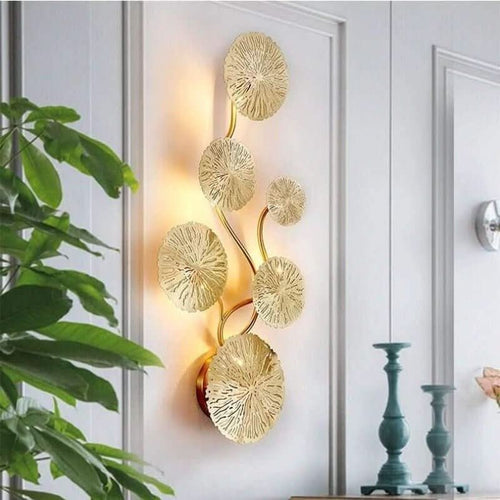
A spot is not chosen on its own: it takes its place in a living room lighting plan, where recessed points draw the grid and a wall light or floor lamp adds the accent. The diameter is decided at that point, not after drilling.
Three format families, three uses
| Family | Cutout | What it brings |
|---|---|---|
| Compact | 50 to 55 mm | A discreet line above a worktop or mirror |
| Standard | 68 to 75 mm | The GU10 base, replaceable without tools, on most ceilings |
| Large | 90 mm and more | Large volumes, halls, high ceilings |
The compact model is chosen for its design as much as its size: in a tight grid, it disappears where a 90 mm would make spots. Conversely, a large room benefits from spacing the points out and going up in diameter. The detail is in our article on the 55 mm recessed LED spot.
Overall diameter or cutout diameter: how not to get it wrong?
The overall diameter measures the visible face, trim included. The cutout measures the hole in the plaster, and that is what blocks or lets it through. A sheet that states only one figure leads to mistakes, especially with a hand-drilled hole, rarely perfectly round. Both measurements are detailed in this guide on the cutout diameter of a spot.
Recessed ceiling spot diameter: how to measure it before buying
Slide a tape measure into the hole, from one edge to the other, without forcing. Then note the free depth, from the ceiling to the first obstacle: a 75 mm cutout spot may need several centimetres of height behind the plate. These two figures are enough to choose.
There is no point drilling wide: the recess depth is checked before marking, as our guide reminds you for installing spots in the ceiling.
Ceiling already drilled: measure before buying the same again
Take the existing hole, then compare it with the stated cutout of the model you want. A difference of a few millimetres is enough for a spot to fall out or leave a ring of light around the edge. The full method is described here for replacing a recessed GU10 spot without touching the plaster.
Hole too small: how to avoid enlarging the ceiling?
- Switch to the compact format: a 55 mm body fits into a 55 mm hole, with no rework.
- Choose a wide trim: it covers the surround, provided the body stays narrower than the hole.
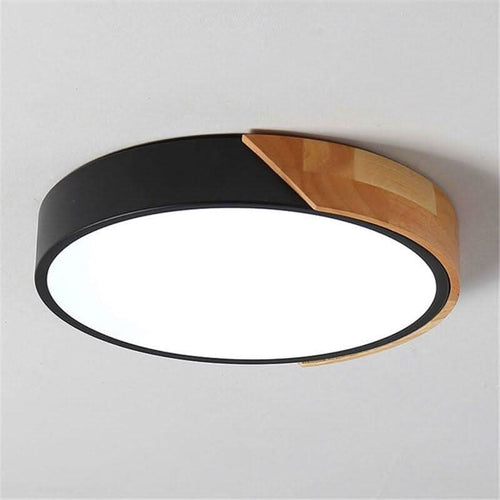
- Give up on the cutout: when the ceiling is not suitable, a surface-mounted LED ceiling light illuminates the same area.
Once you have measured the hole diameter, send us the measurement and the number of points planned: we will confirm the format that fits without enlarging the ceiling. Homeowners and installers alike, simply write to us with your layout.
What is your recessed spot project?
Recessed bathroom spot diameter: what really changes
The diameter does not change: a bathroom GU10 spot still requires a 68 to 75 mm cutout. What changes is the ingress protection rating, the space available above the mirror and the shade of white. A 55 mm compact often proves more useful above a vanity unit.
The IP rating matters more than the size
In front of a mirror or a bathtub, water decides the model before the millimetre does.
- IP44: resists splashes, for the area around the sink.
- IP65: withstands jets, above a shower or bathtub.
- Seal: it is on the spot ring or on the bulb, not on the plate.
A bathroom ceiling stays damp even without direct splashing. The models intended for this room are grouped in the bathroom LED bulbs.
How many points above a vanity unit?
Two or three points are enough in most bathrooms, aligned with the mirror axis. The exact calculation depends on the surface area and can be found in our article on the number of spots per m² in a bathroom.
For the shade, stick to a warm white: it flatters skin tones and brings out tiles without turning them blue. GU10 LED bulbs cover this need in most recessed spots.
Do LED spots get hot?
Yes, but through the base and not through the glass. Heat is released through the heatsink, at the back of the spot, and that is why free depth matters as much as diameter. An air gap behind the plate remains the best protection.
What really heats up in a recessed spot
- The heatsink: the rear part, which releases the LED heat.
- The plenum: the space between the ceiling and the joists, often filled with insulation.
- The insulation: laid in contact, it traps heat. The cover is there to keep an air gap.
Does a dimmable spot get hotter?
No: dimming reduces the power sent, and therefore the heat released. A poorly ventilated spot, however, still heats up even at low intensity, because the electronics remain powered. The principle is detailed in this guide on the dimmable spot.
Is a recessed spot cover mandatory?
No, there is no general obligation. The cover becomes useful when insulation or a sensitive material is right behind the plate: it maintains an air gap. Under a concrete ceiling, it serves no purpose. Some manufacturer instructions make it mandatory, others do not.
What a cover really protects
It protects the ceiling material, not the person living below. Three cases justify it:
- Insulated ceiling: mineral wool in contact, with no possible air gap.
- Wood panelling or wooden ceiling: a material sensitive to accumulated heat.
- High-power bulb: more power, more heat sent to the rear.
Why is there no earth wire on an LED spot?
Most LED spots are double-insulated: no conductive part is accessible to touch. The terminal block therefore receives only the live and neutral. If an earth wire exists in the ceiling, it stays connected to the junction box, never cut.
When a cutout is not an option, a designer light fixture provides the same quality of light without a hole in the ceiling.
And for a whole room to redo, recessed LED lighting kits align several points in the same format, with a consistent shade from one end of the room to the other.
In stock · shipping costs shown at checkout · up to 30% off in your cart
Ready to turn inspiration into reality?
Tell us about your room, your style and your budget, and we will show you the pieces that truly suit your project.
Get guidance in 30 seconds →