Accent lighting: definition, role and method
This article is also available in French: Qu'est ce qu'un Éclairage d'accentuation

Direct a narrow beam, 10 to 24°, onto a single element (a painting, a material, a niche) with an intensity around three times that of the ambient light. Tilt the spotlight 30° from vertical to avoid reflections, in a warm colour temperature of 2700 to 3000 K.
What is accent lighting?
A targeted light, clearly more intense than the general lighting, that separates an object from its background to guide the eye. It does not fill the room, it highlights a precise point: a painting, a sculpture, a stone wall. The target ratio with the ambient light is around three to one.
What contrast with the ambient light?
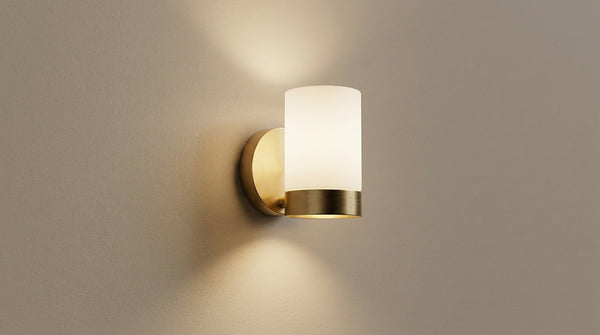
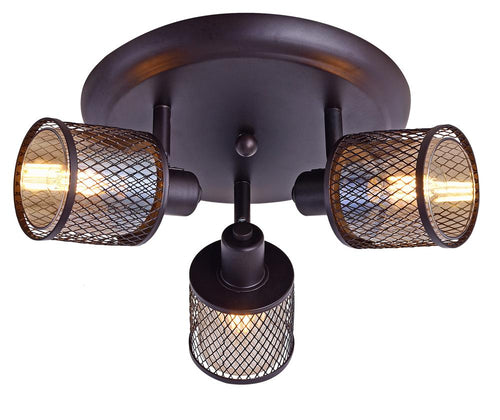
Allow an accented area around three times brighter than the background. Below that, the object does not stand out; above it, the effect becomes a harsh patch. The right spotlight matters as much as the setting: among design light fixtures, an adjustable spot or a dedicated wall light holds that contrast without glare.
Why does it create relief?
By concentrating the light, the accent produces crisp shadows that reveal shapes and textures. It is this interplay of shadow and light that gives rhythm to a flat wall. A successful interior layers three layers of light: general, task and accent.
What are the 3 types of lighting?
General lighting, task lighting and accent lighting. The first provides even brightness, the second lights a specific activity such as reading or cooking, the third highlights an object. Layering these three rather than relying on the ceiling light alone gives a room its depth.
What is ambient lighting for?
It sets the base level, the one that lets you move around and see without effort. Spread across several sources rather than one central point, ambient lighting avoids shadow zones and serves as a backdrop for accents.
What is task lighting for?
It concentrates light where you work: worktop, desk, reading corner. More directional than ambient light, task lighting aims at visual comfort, not staging. Do not confuse it with accent lighting, which targets the viewer's eye, not the working hand.
How to get accent lighting right?
Aim for a ratio of around three to one between accent and ambient light, a narrow beam of 10 to 24°, a tilt of 30° from vertical and a temperature of 2700 to 3000 K. Adjust the number of sources to the surface and the objects to highlight, never to the centre of the ceiling.
What angle and orientation avoid reflections?
Position the spotlight so the beam hits the object at 30° from vertical, the rule applied in museums. Too vertical, the light flattens the relief; too grazing, it reveals every flaw in the wall. Adjustable LED spots let you correct that angle to the millimetre.
To highlight a wall material or mark out a corridor, the same logic guides the choice: installing well-aimed recessed spots is better than uniform frontal lighting.
How many lumens and what temperature should you choose?
A narrow beam concentrates the lumens: a few hundred are often enough for a painting, where a whole room calls for several thousand. The useful benchmark is not raw power but the contrast achieved. To size a whole room, it is better to first calculate the required lumens.
On the hue side, stay with warm white, 2700 to 3000 K, which flatters wood, brass and skin. The choice of colour temperature changes everything: too cool a light hardens a warm object.
How do you light a painting or a wall?
Two options: a spot aimed from the ceiling or a source fixed to the frame. LED wall lights of the picture light type light the canvas from above without annoying reflections. For a single work, the picture light remains the cleanest solution.
In a survey of 250 light fixtures from our catalogue on 24 September 2026, 94% carry the IP20 rating, so designed for dry interiors, and 78% of the survey mention LED; the GU10 base appears in 10% of the survey, a common format for an accent spot.
Accent spots and light fixtures
 Suspension Luminaire Naturel | Erel
 Dallas Suspension luminaire doré
 Puntes Suspension luminaire doré
 Erich Suspension luminaire argenté
 Lustre Chic et Moderne | Lueur Fluxion
 Erich Suspension luminaire doré
See the whole selection: Light Fixtures, Home Lighting, Online Lighting Store
What do you want to highlight in your home?
Unsure about the number of spots, the beam angle or the temperature to use room by room? You can talk to our advisers before choosing.
Our light fixture collection has 23578 references as of 24 September 2026, selected and reviewed by buyers from our address in Vaulx-en-Velin; the Designix Google listing gathers their feedback. Finally, a few accent lights in the living room are enough to change the atmosphere of an already furnished room.
Related reading
In stock · shipping costs shown at checkout · up to 30% off in your cart
Ready to turn inspiration into reality?
Tell us about your room, your style and your budget, and we will show you the pieces that truly suit your project.
Get guidance in 30 seconds →