Lighting decor: matching your light to your interior style
This article is also available in French: Déco Luminaire : une Ambiance Lumineuse en Harmonie avec votre Style
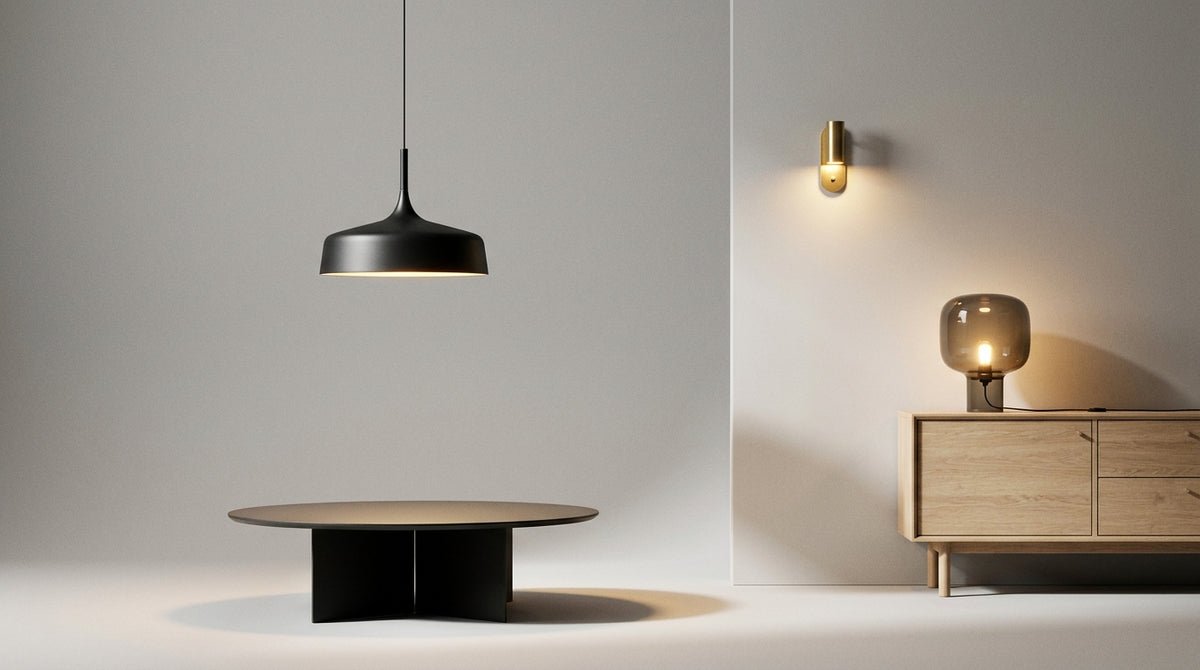
Count on three sources per room, at three heights: a ceiling light or pendant above, a wall light on the wall, a table lamp on a piece of furniture. Set the same colour temperature on all three, around 2,700 K for a relaxing living room, then vary the intensity rather than the hue. Harmony comes from repetition, not from a single object.
How do you match a light to your style without getting it wrong?
Start with the dominant material and colour of the room, then repeat them across two or three lights. In a sample of 250 product pages from our catalogue on 5 October 2026, metal appears in 82% of references and black in 57%: two reference points are enough to tie an interior together.
Which material and which colour should you look at first?
Look at what is already there: pale wood flooring, a linen sofa, a dark splashback. The light picks up one of these tones and does not invent a third. Gold stands out in 56% of the pages sampled, white in 48%. A living room lighting project starts with this sorting, not with a catalogue.
How do you bring two styles together in the same room?
Keep the structure on one side and the colour on the other. A black iron base and a pale linen shade work just as well in a contemporary living room as in an older interior. To combine lighting styles without a matching-set look, limit yourself to two visible materials per room.
When the decor and its light are planned together, the result lasts longer than a room patched up piece by piece. That is the principle behind a renovation and home staging project carried out in the right order.
What is the warmest and brightest colour?
Below 2,700 K, light leans amber and relaxes. Above 4,000 K, it turns distinctly white and stimulating. The warmest hue sits between 2,200 K and 2,700 K, and the brightest to the eye remains a well-diffused 3,000 K, which lights a room without yellowing colours.
Is 4,000 K white or yellow?
4,000 K is white, with no yellow cast. It is the temperature of an office or a worktop, not of a living room in the evening. A 2,700 K slightly yellows cream wallpaper, a 4,000 K neutralises it. The details of both renders are explained in our guide on white or yellow light.
Which light brings out white?
A matt white stands out between 3,000 K and 4,000 K, with a high colour rendering index. Below that, it turns cream. Above 5,000 K, it cools the room. To keep an interior soft in the evening, it is better to play with intensity than with hue, as our article on creating a warm atmosphere shows.
| Temperature | Render | Recommended room |
|---|---|---|
| 2,200 K | Marked amber | Night light, evening mood |
| 2,700 K | Warm white | Living room, bedroom, dining room |
| 3,000 K | Soft white | Kitchen, hallway, bathroom |
| 4,000 K | Crisp white | Office, worktop, workshop |
| 6,500 K | Cool white | Garage, technical lighting |
What is the best light for the eyes?
For reading, aim for 300 to 500 lux on the page, a source the eye does not see directly, and a warm white. 2700 K bulbs cover this need in the living room as well as the bedroom, and a dimmable version is enough to lower the mood in the evening.
What are the 6 families of lights, and which one for which room?
Six families cover a home: the pendant, the ceiling light, the wall light, the floor lamp, the table lamp and the recessed spotlight. The pendant lights the table, the ceiling light the circulation areas, the wall light the walls, the floor lamp the corners, the table lamp the side surfaces, the spotlight the worktops.
Which family for the living room, the bedroom and the kitchen?
A pendant above the table, two wall lights either side of the bed, a discreet ceiling light in the hallway. A kitchen pendant is set 75 cm above the worktop to light without dazzling the person cooking.
In the bedroom, an adjustable bedroom light replaces the ceiling light above the bed. The light stays low and grazing, which lets the eyes rest before sleep.
How many families are there in a catalogue?
Our catalogue contains 21,689 references as of 5 October 2026. Of the 250 pages sampled, 38% are wall-mounted and 35% are suspended: these two mounting types clearly dominate. The lighting collection brings the six families together, and the Designix Google listing can be checked in one click.
Why is 94% of our sample rated IP20?
Because the IP rating follows the use. Of 250 pages sampled on 5 October 2026, 94% state IP20, the class of a light intended for a dry room. IP20 protects against finger contact and dust, not against water splashes: a bathroom requires IP44 at minimum, a terrace IP65.
IP20, IP44, IP65: what does each rating protect against?
- IP20: fingers and dust, living room, bedroom, hallway
- IP44: water splashes, around the washbasin, outside the shower zone
- IP65: water jets, terrace, outdoor entrance
The rest of the sample confirms this distribution: IP65 at 3%, IP44 at 2%, IP45 at 1%. A light for a wet room or outdoors is therefore chosen outside the vast majority of the catalogue, page by page.
Why does this finding change your project?
To set these three heights on your plan rather than on a model, the team reviews your layout room by room, IP rating included. The details are described via the page to describe your project to the team.
Lights to match your decor
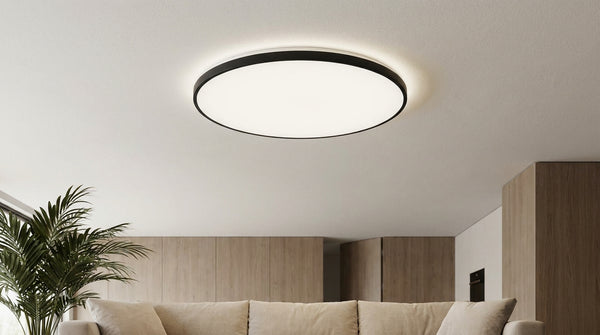
 LED ceiling light | Lumière Zenith
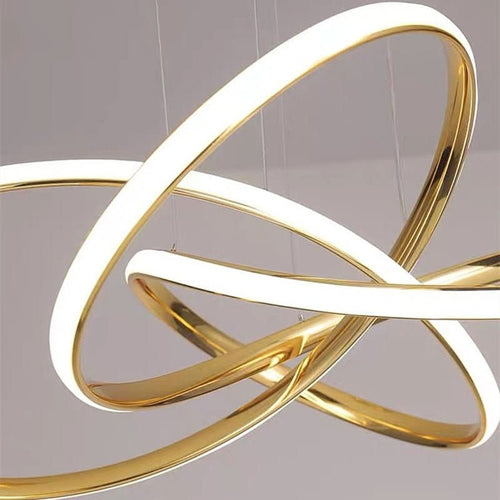
 Chandelier | Essence Lumineuse
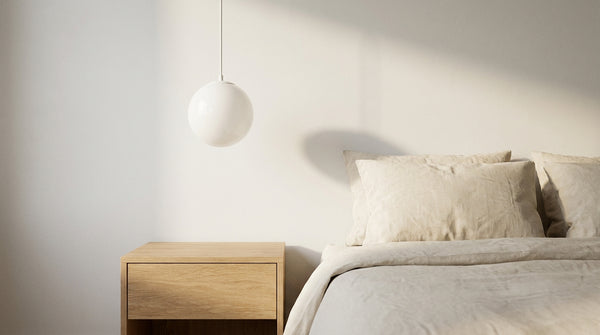
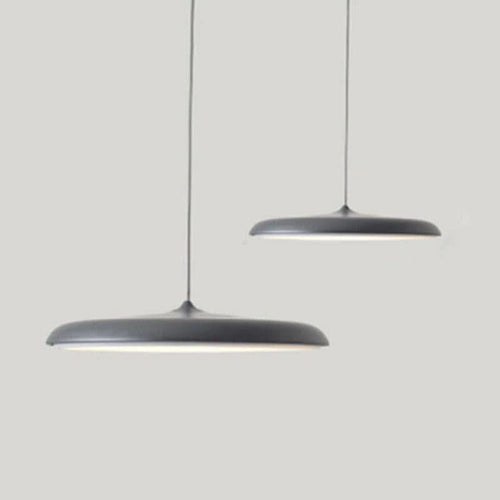
 Pendant light | Mirdanissa
 Pendant light | Uther
 Pendant light | Velarena
 Living room floor lamp | Foglia
See the whole selection: Alternative Keria Luminaires: your new destination | Designix
How do you layer three levels of light in the same room?
Stack a high layer, a wall layer and a low layer, then switch them on together. The pendant provides general lighting, the wall light shapes the walls, a floor lamp creates the reading corner. Three sources are better than one central point pushed to the maximum.
At what height should each layer be placed?
Allow 75 to 85 cm between the table and a pendant, 1.60 m from the floor for a wall light, 1.20 m from the seat for a floor lamp. These reference points prevent glare and shadows on the worktop.
- High layer: pendant or ceiling light, general lighting
- Wall layer: wall light at shoulder height
- Low layer: table lamp or floor lamp, within reach
How do you balance the intensity between the three layers?
Keep the same colour temperature everywhere and vary the levels. A 20 m² room works with 2,000 to 3,000 lumens spread out, never concentrated on a single point. The exact calculation is detailed in our article on lux explained simply.
How many sources should be switched on at the same time?
Two out of three are enough in the evening: the low layer and the wall layer. The high layer is only switched on during the day or when entertaining. This gradual balance is covered in our guide to lighting your living room.
In stock · shipping costs shown at checkout · up to 30% off in your cart
Ready to turn inspiration into reality?
Tell us about your room, your style and your budget, and we will show you the pieces that truly suit your project.
Get guidance in 30 seconds →