Dimmable wall light: choosing the right light
This article is also available in French: Applique murale dimmable
Check three things before buying: the socket (E27, G9, GU10 or integrated LED), the words "dimmable" on the product page, and the compatibility of the dimmer already on the wall. Across a survey of 218 references in our catalogue on 5 October 2026, 87% stated they were dimmable.
What is a dimmable wall light, and what is it really for?
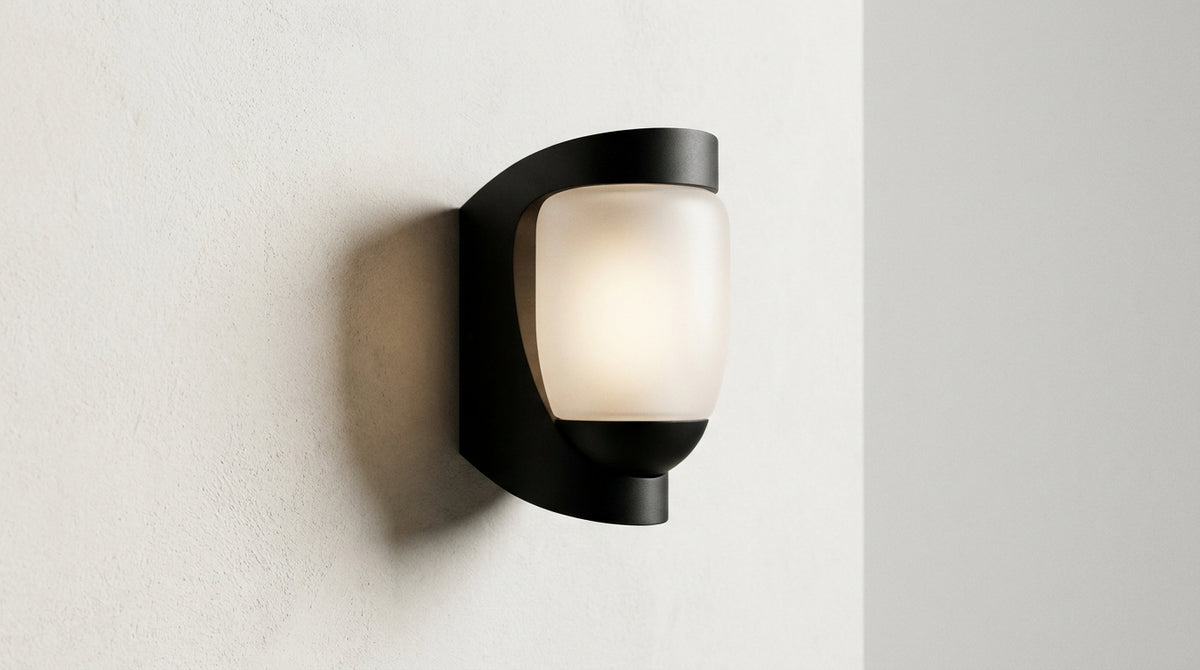
A dimmable wall light is a wall-mounted fixture whose brightness can be adjusted continuously, using a wall dimmer, a remote control or the bulb itself. It changes the mood of a room without adding another light source, from a bright setting for reading to a low setting for the end of the evening.
The dimmable wall light collection contains 2,750 references as of 5 October 2026, filterable by room, socket and finish. This depth lets us answer with a specific model rather than general advice.
Integrated LED or socketed bulb?
The socket keeps the advantage: it lets you choose the colour temperature and replace the bulb alone. Integrated LED offers a slimmer profile, but its module cannot be changed.
- E27: the widest choice of bulbs, including filaments.
- G9: compact format for slim wall lights.
- GU10: directional beam, for targeted lighting.
- Integrated LED: fixed output at purchase, flatter fixture.
On 208 of the 218 product pages surveyed on 5 October 2026, sockets break down as LED 34%, E27 30%, G9 21%, GU10 4%. The other pages state nothing on this point. A dimmable spotlight follows the same principle, with a narrower beam.
What dimming changes in a room
The same wall light goes from task lighting to a night light depending on the setting. That is the difference between a room that is simply lit and a room that feels lived in.
The dimmable wall lights bring together the models that accept this continuous dimming, with the right driver behind the LED.
Which dimmable wall light should you choose for each room?
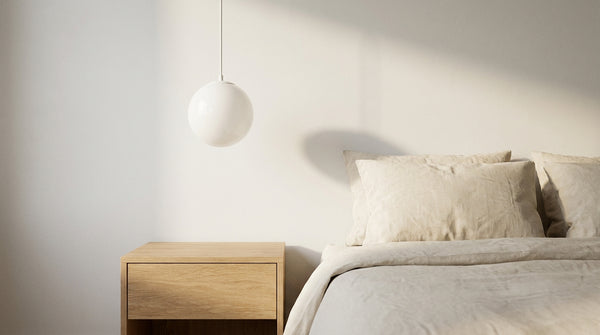
In a bedroom, look for low light close to the bed; in a living room, a warm accent that eases the ceiling light; in a hallway, a light that guides without dazzling. The room stated on the product page remains the first useful filter.
Across the 218 product pages surveyed on 5 October 2026, the room is stated on every one: bedroom 91%, living room 81%, hallway 48%, entrance 33%. The same reference can target several rooms, so these shares do not add up.
Bedroom: read without waking anyone
An adjustable or offset wall light keeps the light out of your bed partner's eyes. Our selection of wall lights includes articulated shapes and offset sockets.
Living room: the accent that eases the ceiling light
Two wall lights framing a bookcase or a sofa are often enough to turn the ceiling light down a notch in the evening. The tone matters more than the power: white or yellow light tells a different story at 8 pm.
If you are starting from a room plan rather than a model, a living room lighting project is drawn up around several points, and the wall light finds its place there instead of being added afterwards.
Hallway and entrance: guide without dazzling
A hallway is lit from the lower part of the wall, never at eye level. Set the dimmer to a medium level and let the wall light punctuate the passage. Buyers describe their installation on the Designix Google listing, which often helps more than a catalogue photo.
Dimmable wall lights: the selection


Indoor or outdoor dimmable wall light: which should you choose?
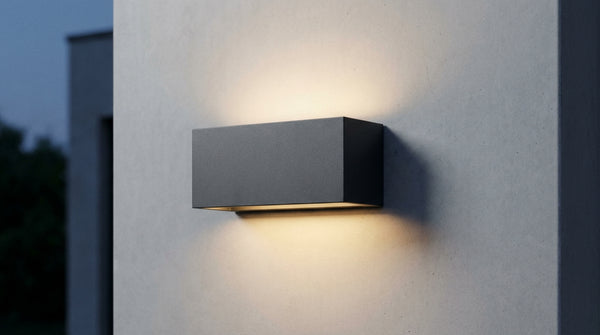
The IP rating decides. IP20 is enough in a dry room, IP44 becomes the minimum under a covered terrace or in a bathroom. Across 218 product pages surveyed on 5 October 2026, IP20 accounts for 93% and IP44 for 6%: dimming is therefore first and foremost an indoor consideration.
| Criterion | Indoor | Outdoor |
|---|---|---|
| IP rating | IP20 | IP44 minimum |
| Material | Metal, glass, fabric | Aluminium, treated steel |
| Control | Wall dimmer or remote control | Dimmer built into the fixture |
For a wet room, an IP44 bathroom wall light should be installed outside the shower zones.
A wall lamp with integrated LED then simplifies wiring: a single cable and no socket to protect.
The black finish, why it dominates
Black disappears on a light wall and structures a dark one. Across the 218 product pages surveyed, it is stated on 61% of them. The 2026 wall light trends continue this movement towards tube shapes and asymmetrical shades.
And if you prefer wood?
Wood softens the light and warms a white wall, provided the metal finish does not clash. A brass wall light plays this role on a wood or rattan wall light.
Which room is your dimmable wall light intended for?
At what height should a dimmable wall light be installed?
Allow 1.80 m from the floor for general use, 1.20 m to 1.40 m for a bedside wall light, and 2.10 m on a staircase. The measurement is taken from the finished floor to the centre of the fixture, never to the edge of the shade.
The height that prevents glare, room by room
- Hallway: 1.80 m, at eye level.
- Headboard: 1.20 m to 1.40 m, offset from the edge of the mattress.
- Living room: 1.70 m to 1.90 m, aligned with the back of the sofa.
- Staircase: 2.10 m, so shoulders pass without hitting it.
The height is decided before the drill comes out, because a wall light that is too high lights the wall and not the room. Detailed heights by surface are covered in our guide on at what height to install a wall light.
How it is controlled afterwards
Three solutions coexist: the wall dimmer, the remote control supplied with the fixture, and the dimmable bulb when the socket is standard. The first is prepared at installation, the third is changed in thirty seconds. The fixing steps are detailed in our method for installing a wall light.
If you prefer to start from a room plan rather than a model, describe your setup to the team: they will send back the right format, the right socket and the right height via the contact form.
Which dimmer for a dimmable LED wall light?
You need a dimmer stated as LED-compatible, not a recycled halogen module. A dimmer designed for halogen does not go low enough in load to handle an LED of a few watts, and adjustment then shrinks to two or three settings.
Why some LEDs flicker with an old dimmer
The old dimmer chops the current at the start and end of each cycle. The LED, powered by a driver, no longer has enough load to stay stable: it blinks, hums or jumps from one setting to another. The wall light is not at fault.
Understanding what a dimmable LED really changes avoids buying a new fixture for nothing.
The test before buying
Note the minimum power stated on the dimmer in place, then compare it with that of the intended bulb. A poorly chosen dimmable or variable bulb produces exactly the flicker described above.
Two benchmarks from the 218 product pages surveyed on 5 October 2026: 2-year warranty on 71% of them, CE certification on 100%.
Related reading
In stock · shipping costs shown at checkout · up to 30% off in your cart


Ready to turn inspiration into reality?
Tell us about your room, your style and your budget, and we will show you the pieces that truly suit your project.
Get guidance in 30 seconds →