
Portholes
This selection is also available in our French store: Hublots


- Tracked delivery to your country Tracked delivery
- Secure payment at checkout Multiple payment methods
- 14 days to change your mind 14-day returns
- Secure payment Secure payment
Not sure of your style? Find it in 30 seconds
A few questions, and we will show you the pieces made for you.
Frequently asked questions
How do I choose the right product?
What are the delivery times?
Can I return an item?
Can I pay in instalments?
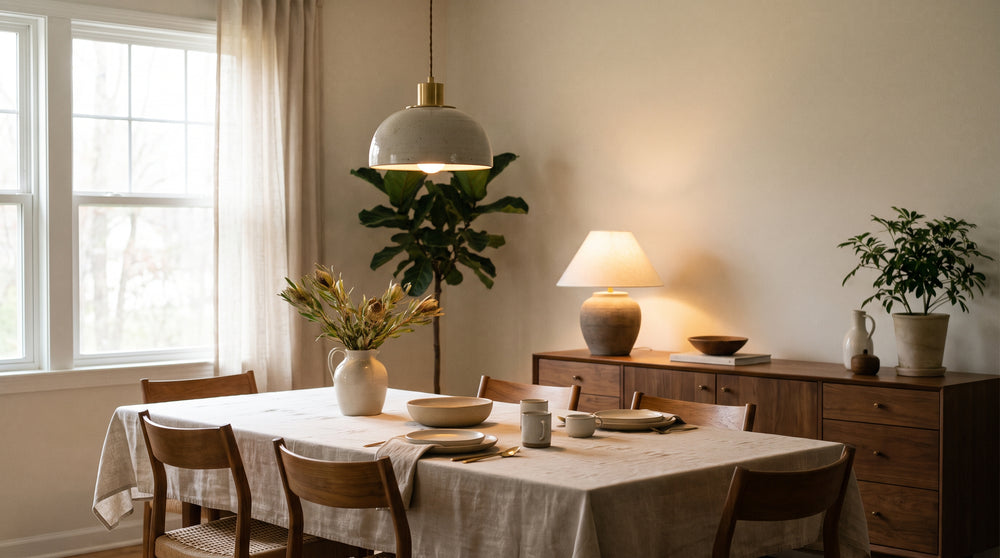
An interior that reflects who you are
Carefully selected pieces, shipped from our warehouses. Our team advises you before you buy, so you choose with confidence.
- Tracked delivery
- Pay in instalments, where available
- 14 days to change your mind
- Advice & showroom in Lyon, France
A porthole light is a ceiling fixture with an oval shape, closed by a ribbed glass on a grey metal frame. Mounted flush to the ceiling, it protrudes only 8 cm, softens the light and hides the bulb. E27 socket, 40 W maximum bulb, IP20 rating: this light is intended for a hallway, an entryway, a garage or a workshop, never for a damp room.
- What is a porthole light and what light does it give?
- Which rooms is it suitable for?
- What features should you check?
- Motion sensor or LED version?
- Installation and maintenance
- Indoor or outdoor?
- Frequently asked questions
What is a porthole light and what light does it give?
A porthole light is a ceiling fixture with an oval shape, closed by a ribbed glass on a grey metal frame, inspired by boat openings. Mounted flush to the ceiling, it softens the light and hides the bulb. E27 socket, 40 W maximum bulb, IP20 rating, height 8 cm.
The effect comes from the ribbed glass: the ridges diffuse the light and the source disappears behind the glass, with no dazzling point on the ceiling. As the unit protrudes only 8 cm, it leaves room for a tall door and clears the view in a narrow hallway. The grey metal frame and transparent glass create an industrial style that pairs well with concrete, brick or raw walls. This type of fixture is part of all our lights.
Where does the name porthole come from in lighting?
The word comes from maritime vocabulary: the porthole is the oval opening that lets daylight into a ship's hull. Marine portholes take this closed shape, with a metal frame and glass. The same word refers to the fuselage window in aviation and the dial opening on watch portholes, but in lighting it is the oval shape of the ceiling fixture that remains.
What is the difference between a boat porthole and a ceiling porthole?
A boat porthole is a through opening: it lets in daylight and air. A ceiling porthole is a closed fixture, mounted on the ceiling, that produces its own light with an E27 bulb. The resemblance is visual, not functional: a porthole ceiling light does not open and does not ventilate anything.
Which rooms to install a porthole light in: hallway, entryway, garage or workshop?
The porthole ceiling light is designed for four dry rooms: hallway, entryway, garage and workshop. It is suitable where you want ceiling light without bulk, with only 8 cm of height. The IP20 rating reserves it for an indoor room protected from water splashes.
| Room | What you look for | Porthole configuration | Point to check |
|---|---|---|---|
| Hallway | light a narrow passage | oval ceiling light mounted flush, 8 cm height | the E27 socket and 40 W maximum bulb |
| Entryway | see the threshold and the first metre | ribbed glass that softens light and hides the bulb | keep to a dry room, the rating is IP20 |
| Garage | general light in a work space | grey metal frame, transparent glass, E27 socket | no exposure to water splashes |
| Workshop | light above the workbench | soft diffusion through ribbed glass, glass and metal | choose the E27 bulb according to use, 40 W maximum |
How to light a hallway or entryway with a porthole light?
In a hallway, a fixture placed in the centre of the passage already outlines the path; over a long distance, several are distributed. In an entryway, mounting above the first metre lights the threshold and the area where you put your keys. A 40 W maximum E27 bulb is enough for general light. For a passage room without an easy switch, look at porthole lights with motion sensor.
Why is the porthole light suitable for a garage door or a workshop?
On garage door portholes or on a workshop ceiling, you want general light that does not eat up the available height. The grey metal frame stands up to everyday use in a work space and the ribbed glass softens the effect above a workbench. If the space is really damp, prefer waterproof porthole lights for damp rooms.
What features should you check before buying a porthole ceiling light?
Five points are enough: the E27 socket, the 40 W bulb power, the IP20 rating, the 8 cm height and the material. The Designix porthole light combines a transparent ribbed glass with a grey metal frame, oval in shape, in an industrial style, with a two-year warranty.
Which E27 bulb to put in a porthole ceiling light?
The E27 base accepts most bulbs on the market, provided you stay at 40 W maximum. The ribbed glass softens the effect: a warm light, around 2700 K, gives soft ambient lighting for circulation, while a whiter light, around 4000 K, makes details sharper on a workbench. The bulb can be chosen and replaced freely, which is the advantage of the socket.
What does IP20 mean on a ceiling light?
The IP20 rating protects against finger contact and medium-sized solid objects. The second digit, zero, means no protection against water. This ceiling light is therefore installed in a dry room, away from a shower, a leak or splashes. For a damp room, change the fixture family rather than forcing the rating.
| Criterion | Value |
|---|---|
| Material | glass and metal |
| Colour and shape | grey, transparent, oval |
| Socket | E27 |
| Bulb power | 40 W maximum |
| Protection rating | IP20 |
| Height | 8 cm |
| Warranty | 2 years |
Porthole light with motion sensor or LED porthole light: which version to choose?
It all depends on use. An E27 socket lets you choose the bulb and replace it easily; an LED version uses an integrated source. If the light should come on by itself when you pass in a hallway, a garage or an entryway, a porthole light with motion sensor saves looking for the switch.
When to prefer an LED porthole light over an E27 socket porthole light?
The E27 socket is suitable if you like choosing the colour temperature or replacing a bulb without dismantling the fixture. The LED version of the porthole ceiling light is for those who do not want to deal with any bulb: the source is integrated into the fixture. Style, oval shape and ceiling mounting remain identical in both cases.
Why choose a porthole light with motion sensor for a hallway?
In a hallway, an entryway or a garage, your hands are often full. Automatic switch-on when you pass solves this without any gesture, then the light goes out by itself. To combine integrated source and detection, there are LED porthole lights with sensor. All these families can be browsed from the Designix lighting range.
How to install and maintain a porthole ceiling light?
Switch off the power, fix the base to the ceiling, connect the wires, screw in an E27 bulb of 40 W maximum, then switch the power back on. For maintenance, a soft cloth is enough on the ribbed glass and abrasive products should be avoided on the metal frame. The warranty covers two years.
How to change the bulb of a porthole ceiling light?
Switch off the power at the circuit breaker and let the bulb cool. Unscrew the E27 bulb, screw in the new one without forcing, then close the glass properly if the fixture requires opening it. Check that the glass is correctly repositioned before switching the light back on: if badly replaced, it lets light through at an angle instead of diffusing it.
How to clean a glass and metal porthole light?
With the power off and the bulb cold, wipe the ribbed glass with a soft, slightly damp cloth. On the grey metal frame, avoid abrasive powders and scouring pads that dull the finish. A visual check of the glass tightness once or twice a year is enough for a ceiling-mounted fixture.
Indoor porthole light or outdoor porthole light: how not to get it wrong?
An IP20 porthole light is not installed outdoors: it is intended for a dry room, protected from water splashes. A very damp garage, a canopy or a facade require a waterproof light or an outdoor model. The choice is made on the protection rating and exposure, not on style.
Can an IP20 porthole light be installed under a canopy?
A canopy protects from direct rain but not from humidity, fog or lateral splashes. An IP20 fixture offers no protection against water: it is better to reserve it for a hallway, an entryway, a dry garage or a workshop. For a sheltered but damp area, turn to waterproof lights.
What is the difference between a waterproof porthole light and an outdoor porthole light?
The waterproof version responds to water: laundry room, damp garage or canopy, where humidity rises. Outdoor porthole lights add resistance to bad weather and temperature variations, for a facade, a terrace or a porch. This family also exists as outdoor porthole lights with sensor for exposed entryways.
Frequently asked questions about porthole lights
What is an airplane porthole?
The airplane porthole is the oval window of the fuselage, closed by a thick glass. In lighting, the word refers to a ceiling light whose oval shape and metal frame recall this opening: a ribbed glass, an E27 socket and a soft light cast on the ceiling.
What is the difference between a window and a porthole?
A window is a glazed opening that lets in daylight; a porthole is a round or oval opening with a closed frame. In lighting, the porthole is a ceiling light closed by a ribbed glass: the E27 bulb lights the room, nothing comes from outside.
Which porthole ceiling light to choose for a hallway or entryway?
An oval porthole light in ribbed glass is suitable: it protrudes only 8 cm from the ceiling and softens the light of a 40 W maximum E27 bulb. Check the socket and the IP20 rating, as the model is intended for a dry room and not for a damp space.
Can an IP20 porthole light be installed in a damp garage or outdoors?
No. An IP20 rating protects against finger contact and solid objects, not water. The porthole light stays in a dry room, indoors. For a damp garage, a canopy or a facade, you need a waterproof light or an outdoor model.
Which bulb to put in a porthole light with E27 socket?
The ceiling light accepts an E27 base bulb of 40 W maximum. As the ribbed glass diffuses the light, a warm bulb gives soft ambient lighting and a whiter bulb a sharper effect in a workshop or garage.
Is there a porthole light with motion sensor or an LED version?
Yes. The porthole light family comes with motion sensor, in LED version with integrated source, or LED with sensor, for hallways, garages and entryways where the light must come on without a switch. Waterproof and outdoor models exist for exposed areas.
Which porthole light model to choose at Designix?
The Hublotia porthole ceiling light brings together the collection's criteria: grey metal frame, transparent ribbed glass, oval shape, E27 socket, 40 W maximum, IP20 and 8 cm height. This is the format to choose for a hallway, an entryway, a garage or a dry workshop. If the use requires an integrated source or automatic switch-on, first compare the families in our range of ceiling lights.
Once the model is chosen, ordering is done with secure payment, tracked delivery and possible returns. The Designix customer service team answers questions about installation and bulb compatibility before purchase. Add the porthole light in ribbed glass and grey metal to your basket, the collection grid shows the price of the day, and you will know at a glance if the fixture matches your room.




