
Orange lampshades
This selection is also available in our French store: Abat jours coloris orange
No products in this selection.
- Tracked delivery to your country Tracked delivery
- Secure payment at checkout Multiple payment methods
- 14 days to change your mind 14-day returns
- Secure payment Secure payment
Not sure of your style? Find it in 30 seconds
A few questions, and we will show you the pieces made for you.
Frequently asked questions
How do I choose the right product?
What are the delivery times?
Can I return an item?
Can I pay in instalments?
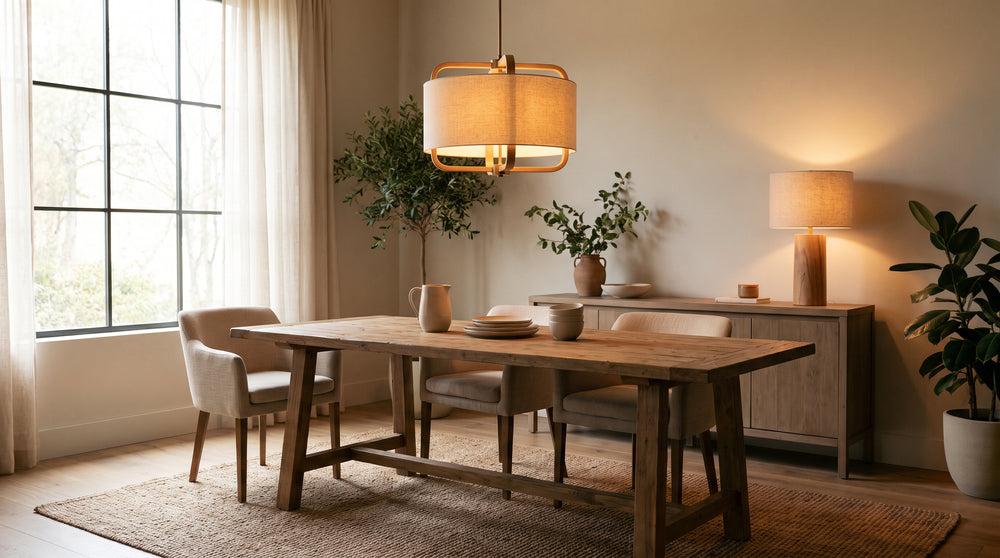
An interior that reflects who you are
Carefully selected pieces, shipped from our warehouses. Our team advises you before you buy, so you choose with confidence.
- Tracked delivery
- Pay in instalments, where available
- 14 days to change your mind
- Advice & showroom in Lyon, France
Check three things before ordering: the shade (light or deep orange), the size relative to the lamp base and the socket type. An orange lampshade warms a room with neutral tones and becomes its colour accent, on a bedside lamp, a floor lamp or a pendant light.
- What colour goes with orange?
- How do you choose the colour of a lampshade?
- Which type of lampshade should you choose for each light?
- Which lampshade colour is the most suitable?
- How do you change the fabric of a lampshade?
- How do you hang a lampshade from the ceiling?
- Where should you put an orange lampshade in the home?
What colour goes with orange?
Orange pairs with blue and teal, its complementary colours, for a strong contrast, or with beige, taupe and light grey for a softer result. In a room that is already colourful, a single orange lampshade on a neutral background is enough: the colour stays readable without saturating the space.
What colour goes with orange in a living room?
On a beige, taupe or light grey background, orange sits easily and keeps its presence. With a teal wall or a midnight blue sofa, the contrast is stronger and the lamp becomes the anchor point of the room. Light wood works very well too, it softens the shade. To extend the match, look at the living room lampshades and play with materials before changing colour.
What is the complementary colour of orange?
On the colour wheel, blue sits opposite orange: placed side by side, the two reinforce each other. Teal, close to turquoise, gives a slightly softer result. If the contrast feels too sharp, stay with warm neutrals and let the lampshade carry the colour on its own. The white lampshades then serve as a reference to measure the light difference between the two shades.
How do you choose the colour of a lampshade?
You start from the light you want and the decor already in place: a light orange shade diffuses a warm, soft light, a deeper orange makes more of a statement. You then check the size relative to the lamp base and the socket type before deciding.
Light orange or deep orange lampshade: what is the difference?
A light fabric lets more light through: the room stays bright and the shade reads as a warm beige. A deep orange, close to terracotta or ochre, filters more and concentrates the light under the shade. As a rule, the lighter shade goes in rooms you light often, the denser one in reading corners or for evening moods. The fabric lampshades compare well on this point, the density of the fabric doing most of the work.
A colourful, original lampshade for which room?
A bold shade goes where there is space around it: a neutral living room, a hallway, an office. In a room already busy with patterns, it competes for attention. The safest starting point is a lamp you switch on every day: you will see straight away whether the colour lasts. Take inspiration from the contemporary selection to cross shapes with the question of shades.
Which type of lampshade should you choose for each light?
The type of lampshade follows the light: a compact model, fairly closed at the top, for a bedside lamp; a wide, flared format for a floor lamp; a cone or a cylinder open at the bottom for a pendant light. The socket type and the ring diameter decide compatibility.
Glass lampshade for a bedside lamp: is it suitable?
Glass works when you want a crisp light, more directed than with a fabric, and easy cleaning. It lets the bulb show, weighs more and needs a stable base. Check the socket (E14 or E27 depending on the lamp) and the ring diameter before buying. For a softer result in the evening, bedroom lampshades in fabric are gentler on the eye.
Lampshade for a floor lamp: which size should you choose?
A large flared lampshade lights a wide area and suits reading, a narrow cylinder reaches less far down and lights more locally. The height of the base matters as much as the diameter: a lampshade that is too wide on a slim base unbalances the whole. Measure the height between the socket and the floor to locate the lit area. See also the lampshade guide to compare pendants, table lamps and floor lamps.
| Light | Lampshade shape | What to check | Light result |
|---|---|---|---|
| Bedside lamp | compact cylinder or cone | socket type and ring diameter | warm light directed downwards |
| Floor lamp | large flared lampshade | height and stability of the base | wide light for reading |
| Pendant light | cone or cylinder open at the bottom | ceiling fixing and cable height | light concentrated on the table |
| Decorative table lamp | small round lampshade | stability of the base | accent light |
Which lampshade colour is the most suitable?
There is no universally better colour: it all depends on the room and the light you want. A white lampshade diffuses a clear, discreet light, a black one marks the contrast and reflects less light, an orange one brings warm light and a colour accent. You choose the mood first.
When should you prefer a white or black lampshade?
White suits small rooms and light interiors: it does not eat the light and goes unnoticed. Black structures a graphic room or an office, but you have to accept a more contained light under the shade. Compare the black models and the white ones side by side in the same room before deciding, the difference shows most in the evening.
Orange colour pairing: with which furniture?
Light wood, rattan, cane and gold or brass metals go with orange without dulling it. Very dark furniture works too, as long as you light more strongly. Avoid piling orange on top of several other bright shades on the same wall: let one strong colour lead. Linen lampshades bring a matt texture that calms the shade.
| Room | Shades to pair | Desired effect | Lampshade size |
|---|---|---|---|
| Living room | beige, taupe, light grey | warm colour accent on a neutral background | large format for a floor lamp, cone for a pendant |
| Bedroom | off-white, midnight blue, light wood | soft light for the evening | compact format for a bedside lamp |
| Nursery | white, pale grey, natural linen | gentle, reassuring night light | small format, fairly closed at the top |
| Hallway or office | teal, dark green, black | strong contrast with orange | cylinder or cone depending on the fitting |
How do you change the fabric of a lampshade?
You remove the lampshade from the socket, peel off or unpick the old fabric, use it as a pattern to cut the new one, then glue or staple it onto the frame. The work is done with the power off, using a material that lets light through.
How do you revamp a lampshade without replacing it?
Switch off the power at the breaker, take off the lampshade and lay the old fabric flat: it gives you the exact pattern, including the slope of a cone. Allow a few centimetres of overlap at the top and bottom to staple or glue it neatly. A trim hides the edges. Moving from a neutral to a light orange is often enough to change the mood of a corner without buying anything else, as the contemporary selection shows.
Which fabric should you choose for a colourful lampshade?
Linen and cotton diffuse a soft, matt light, with no glare. A fabric that is too thick dims the lamp and turns the orange towards brown; a very thin one lets the bulb and the frame show. Pull the fabric taut to avoid creases that mark the light. Textile materials are therefore chosen as much for their shade as for their transparency.
How do you hang a lampshade from the ceiling?
A pendant light is fixed to the ceiling by its bracket or hook, with the power off at the breaker. You mark the fixing point, screw the bracket into solid material or with a suitable plug, then the lampshade clips or screws onto the socket.
At what height should a pendant hang above a table?
As a rule, allow between 75 and 85 cm between the bottom of the lampshade and the tabletop, a little higher if the table is wide or if you want to see your guests without being dazzled. Above a worktop, the pendant sits rather around 70 to 80 cm. These heights are guidelines: adjust them to the height of the people and the diameter of the lampshade. A cone open at the bottom concentrates the light on the table.
Pendant lampshade: which ceiling fixing?
A screw-on bracket suits concrete and solid slabs; in a hollow ceiling, a plug suited to the fitting is required. Check that the weight of the lampshade stays within what the fixing accepts, especially with a glass model. Once the cable is adjusted, the ring or the locking screw holds the lampshade on the socket. Find the relevant formats in the lampshade guide.
Where should you put an orange lampshade in the home?
The living room and the bedroom are the simplest rooms to add colour to: orange creates a warm accent on a neutral background there. In a nursery, a soft, indirect light is better than a directed beam. A floor lamp or a bedside lamp is enough to test the shade.
Orange lampshade in the living room: what effect?
In a living room with light walls, the lamp becomes the only warm accent in the room and the eye stops there without anything else changing. A large format on a floor lamp lights the sofa corner, a cone on a pendant concentrates the light on the coffee table. Cross the shade with the living room lampshades to adjust the size before the colour.
Lampshade for a nursery: what matters
You want a low, diffuse light, never directed at the bed: a small format, fairly closed at the top, limits glare. A very light orange works better than a dense orange in a room with pale walls. Also plan for easy cleaning. Nursery lampshades are chosen first for the softness of the light, then for the shade.
How do you dress your light when you are still unsure about the colour?
Go back over the four criteria in order: the shade, the size, the socket and the material. If orange feels like too much of a commitment, compare it with a white or a black in the same room, at the same time of day. After that, only the size decides.
Comparing orange with the other colours
White brightens and goes unnoticed, black contrasts and reflects less light, orange warms and adds colour. Between the two extremes, a light orange remains the easiest compromise for everyday living. Browse white lampshades and black models to gauge the light difference, then come back to orange if warmth is what you are missing.
Choosing by material: linen, cotton or fabric
Linen gives a matt, textured result, cotton a more even light, glass a crisp light that is easy to clean. The material changes the perceived colour as much as the shade itself. To keep the orange warm without it turning, choose a fabric that is neither too thick nor too thin. Find all the shapes and materials in our full range of lights, then refine with linen lampshades.
Secure payment, tracked delivery, returns and Designix customer service: you can test the shade at home and confirm your choice on all lampshades or in the Designix catalogue.
Frequently asked questions about the orange lampshade
How do you choose the colour of a lampshade?
Start from the mood of the room and the light you want, then from the decor already there. A light shade diffuses a soft light, a deep shade becomes a focal point. Finally check the size relative to the base and the socket type.
What is the complementary colour of orange?
Blue and teal are the complementary colours of orange: placed side by side, they reinforce each other. For a calmer result, prefer beige, taupe or light grey, which let the orange lampshade become the only accent in the room.
Which type of lampshade should you choose for each light?
Compact for a bedside lamp, large and flared for a floor lamp, cone or cylinder open at the bottom for a pendant. Check the socket type and the ring diameter before buying: that is what decides compatibility.
How can I revamp a lampshade?
The simplest way is to change the fabric: remove the lampshade, peel off the old fabric, use it as a pattern, then glue or staple the new one onto the frame. Moving to a lighter orange is often enough to transform the mood of a corner.
At what height should a pendant hang above the dining table?
As a rule between 75 and 85 cm between the bottom of the lampshade and the tabletop, a little higher over a large table. Adjust to the height of the people and the diameter of the lampshade, then tighten the cable for good.




