
Neon tube light
This selection is also available in our French store: Lampe néon tube
No products in this selection.
- Tracked delivery to your country Tracked delivery
- Secure payment at checkout Multiple payment methods
- 14 days to change your mind 14-day returns
- Secure payment Secure payment
Not sure of your style? Find it in 30 seconds
A few questions, and we will show you the pieces made for you.
Frequently asked questions
How do I choose the right product?
What are the delivery times?
Can I return an item?
Can I pay in instalments?
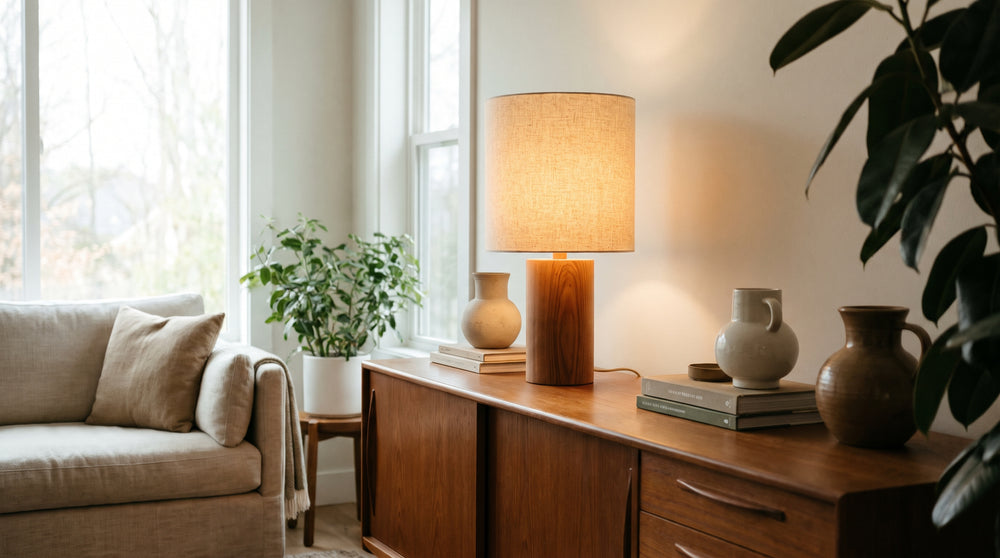
An interior that reflects who you are
Carefully selected pieces, shipped from our warehouses. Our team advises you before you buy, so you choose with confidence.
- Tracked delivery
- Pay in instalments, where available
- 14 days to change your mind
- Advice & showroom in Lyon, France
First choose the colour temperature, then the length: a neon tube light is used to highlight a wall, a shelf or a worktop, not to light a room on its own. Warm white suits relaxation areas, neutral white suits work, and the format is decided by measuring the furniture or the stretch of wall to be outlined.
What kind of light does a neon tube lamp give?
Around 2700 to 3000 K, the white is warm and restful, suited to a bedroom or a reading corner. From 4000 K upwards, the white becomes neutral then cool, crisper, suited to an office or a workshop. A neon tube light casts a linear, direct light: it draws a clean line, creates little shadow and highlights a volume more than it lights a whole surface.
Neon tube light: warm or cool?
In a bedroom or behind a sofa, a warm white makes wood and textiles feel softer and is less tiring on the eyes in the evening: it is the usual choice for bedroom lighting. Over a worktop or in a hallway, a neutral white keeps colours accurate and stays easy to read by. Cool white is reserved for garages and utility rooms, where the light needs to be sharp.
Is a neon tube enough to light a room?
No, in most cases. A neon tube remains accent lighting: it creates an atmosphere but leaves dark areas, and its output at face height does not help with reading or cooking. It is complemented by a ceiling light or an adjustable table lamp, and the neon is kept for the decorative effect.
Where to install a neon tube lamp in the home?
The right spot is a free, visible wall with a socket within reach. A short neon replaces a small lamp on a shelf, a long one highlights a stretch of wall. The room decides the format and the colour of light.
| Room | Location | Format | Light |
|---|---|---|---|
| Living room | Behind the sofa or above a low sideboard | Long | Warm white |
| Bedroom | Headboard or shelf | Short to medium | Warm white |
| Office | Along the worktop, without glare | Long | Neutral white |
| Hallway | Free wall facing the door | Short | Neutral white |
| Kitchen | Under the wall units | Short | Neutral white |
| Bathroom | Outside the water zone, moisture-protected model | Short | Neutral white |
Freestanding neon tube lamp: on furniture or on the floor
A self-contained model with a switch sits on a shelf, a windowsill or a low sideboard without drilling. It moves when the decor changes. For a more integrated look, the classic table lamp and the short neon play the same role on a bedside table.
Neon tube on the wall: which fixings to plan
A long tube is heavier than it looks: aim for a solid part of the wall, mark the holes before drilling and check the nature of the surface (plasterboard, brick, concrete). A wired model needs a socket nearby or a supply run. See also wall lights and sconces if you prefer a classic installation.
How to choose the length of a neon tube, from common formats to large models?
Measure the surface to be highlighted before choosing. A 50 cm tube is enough for a shelf, a bedside table or a small desk. A 150 cm model covers a whole stretch of wall, behind a sofa, a headboard or a sideboard. As a rule, leave a little space between the end of the tube and the corner of the wall.
150 cm neon tube lamp: for which wall?
The large format goes on a clear surface, with no tall furniture masking the line. Behind a sofa, above a sideboard or along a corridor, it creates a continuous stroke. Its length calls for a solid fixing and, often, a dedicated socket: check both before deciding. See lighting a living room.
50 cm neon tube: the small spots that change everything
The small neon slips into a niche, onto a bathroom shelf or above a narrow worktop. It works alone on a bedside table, as a complement to a reading light. For a corner workspace, compare with desk lamps before deciding.
LED neon tube or fluorescent tube: what are the differences?
The LED neon tube lights up instantly, contains no mercury and is recycled with ordinary electronic waste. The fluorescent tube, on the other hand, needs a warm-up time, contains mercury and must be taken to a recycling centre. For home decoration, the LED neon is the easiest to live with day to day, including on daily use or with a timer.
| Criterion | LED neon tube | Fluorescent tube | LED strip |
|---|---|---|---|
| Switching on | Instant | Warm-up time | Instant |
| Mercury | None | Present, take to recycling centre | None |
| Shape | Rigid tube, clean line | Rigid tube | Flexible strip, bends |
| Care | Dry cloth, dust the ends | Dry cloth, handle the tube with care | Dust the mounting surface |
| Where it suits | Wall, shelf, furniture | Utility room, garage | Furniture, niche, outline |
An LED neon tube cannot always be controlled with a standard dimmer: check that the supplied transformer accepts this setup. In terms of look, the family of LED models covers both decorative neon and work lighting.
How to wire and install a neon tube lamp?
Switch off the power at the breaker, identify the live and neutral wires, then connect the neon to the supply intended for the model, often supplied with a transformer. Plug-in models simply need a wall socket, with no wiring. In a damp room, check the protection rating before fixing anything.
How to connect several lamps to a single power supply?
Run from the supply to a terminal block or connector, then distribute each lamp respecting live, neutral and earth. Add up the wattage of the lamps and make sure the breaker and wire gauge can cope. If in any doubt, have an electrician check the installation, especially if the circuit already feeds other points.
Bathroom and kitchen: the IP rating to check
An IP rating protects against dust and water splashes. In the kitchen, a model is fixed under the wall units, away from direct steam. In the bathroom, stay outside the water zones and avoid a bare wired model above a bath. The rest of the lighting catalogue follows the same rules.
Which material and finish for a decorative neon tube?
Glass gives a glossy, transparent look that lets the tube show through: it is heavier and is cleaned with a soft cloth. Acrylic, lighter, suits long lengths and strong colours. Metal comes into play on the mount or the casing. The finish, black or white, decides how discreet the neon is in the decor.
Glass neon tube lamp: look and care
Glass catches the light and gives a transparency effect that shows off the tube, especially on a pale wall. It needs a well-fixed wall and two-handed handling on large formats. For cleaning, a soft cloth is enough, with no abrasive product. Exposed frames can be found in the metal frames range.
Black, white or coloured finish: which to choose
A black finish erases the mount and lets the luminous line float: see the black finishes. A white finish blends into a pale wall and stays discreet by day. A bright colour, on the other hand, becomes a decorative object in its own right, best kept for a room where the wall is already bare. Compare with the white versions.
Affordable neon tube lamp: how to choose without getting it wrong?
On an affordable neon, check the included transformer, the cable length, the weight the fixing can bear and the type of wall fixing. A simple model, well sized for the wall in question, is better than a large format that is badly supplied or impossible to fix. A low price should never make you forget the socket and the fixing.
Affordable neon tube lamp: what really makes the difference
An entry-level neon is still an LED neon: check that the transformer is included, that the cable reaches your socket and that the mount can take the weight. Budget models do the same job as a more elaborate piece, provided you measure first. For a more refined effect, well-designed pieces are worth a look.
Mistakes to avoid before buying
- Buying without measuring the furniture or the stretch of wall to be highlighted.
- Forgetting how close a socket or power supply is.
- Choosing a cool white for a bedroom.
- Overlooking the nature of the wall and the weight of the tube.
Secure payment, tracked delivery, returns and Designix customer service: you can compare at your leisure, then confirm your format once the wall is measured. Browse our selection of lamps and the contemporary lines to make your choice, or head to the finest living room lamps if the neon is part of a full scheme.
How to care for a neon tube lamp and make it last?
Unplug before any cleaning, then wipe the tube with a dry cloth and dust the ends and the transformer. Check the fixing once a year, especially on a large format. As soon as flickering appears, cut the power and look for the cause before switching it back on.
Cleaning a glass or acrylic neon
On glass, a slightly damp microfibre cloth is enough, with no abrasive product or solvent. On acrylic, avoid alcohol and scouring pads, which dull the surface. In both cases, never spray directly onto the tube. A wall-mounted model is dusted with a soft duster, like classic wall lamps.
Flickering or buzzing: when to worry
A slight buzzing may come from the transformer, especially on an older model. Repeated flickering, an end that blackens or a transformer that overheats abnormally signal wear: unplug it and do not tamper with the power supply yourself. A replacement neon is then chosen from the current formats.
Frequently asked questions about the neon tube lamp
Can a fluorescent tube be replaced by an LED neon?
Yes, often. An LED tube fits the same holder as a fluorescent one, but the fitting must be compatible: depending on the case, the starter may need removing or the ballast changing, and sometimes nothing at all. Check the tube instructions, switch off the power, and take the old tube to a recycling centre because of the mercury.
How can you recognise a real salt lamp?
A real salt lamp is cut from a block of rock salt: irregular veins, shades and weight, a matte surface that feels slightly damp. A resin imitation is uniform, light and sounds hollow. The base and cable must be clean and well insulated. This model has nothing to do with a neon tube, but the question comes up often in store.
Is a freestanding neon tube lamp enough for a bedside table?
A short neon placed on a bedside table gives ambient light, not reading light. To read, add an adjustable light. Choose a warm white and check that the neon switch stays accessible once in place.
Can a neon tube be installed in a bathroom?
It depends on the protection rating of the model and the zone of the room. A neon rated as moisture-resistant is fixed outside direct water zones. Never place a bare wired model above a bath or inside the shower volume.
LED neon tube lamp: which light to choose for a living room?
A warm white makes the living room softer and shows off wood and textiles; a neutral white suits white walls and workspaces. The neon remains an accent: it complements a ceiling light or a table lamp rather than replacing them.




