
Cream-colored lampshades
This selection is also available in our French store: Abat jours coloris crème


- Tracked delivery to your country Tracked delivery
- Secure payment at checkout Multiple payment methods
- 14 days to change your mind 14-day returns
- Secure payment Secure payment
Not sure of your style? Find it in 30 seconds
A few questions, and we will show you the pieces made for you.
Frequently asked questions
How do I choose the right product?
What are the delivery times?
Can I return an item?
Can I pay in instalments?
An interior that reflects who you are
Carefully selected pieces, shipped from our warehouses. Our team advises you before you buy, so you choose with confidence.
- Tracked delivery
- Pay in instalments, where available
- 14 days to change your mind
- Advice & showroom in Lyon, France
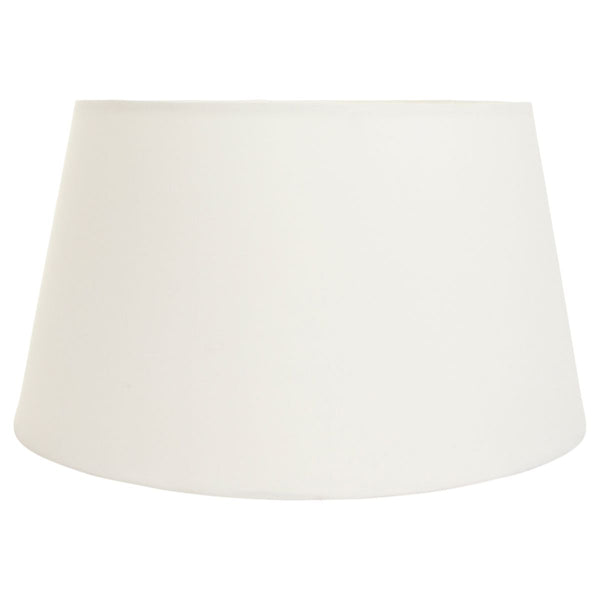
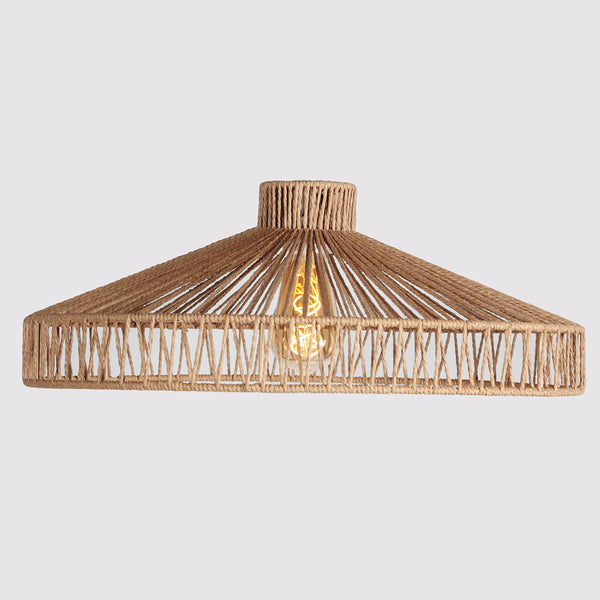
Cream lampshades soften the bulb without tinting the room: the halo stays bright, edges are softened and nothing throws a harsh glare onto the walls. This selection brings together a round shape in chintz fabric and a round shape in braided rope over metal, both fitted with an E27 socket for a bedside lamp, a floor lamp or a sideboard. Competitors also offer conical, drum or large shapes: the conical one concentrates light downwards, the drum spreads it more widely, the large one lights more but takes up more space. The 2 models in this selection stay round.
What light does a cream lampshade give?
A cream lampshade diffuses the bulb without strongly tinting it: the room stays bright and the light falls more softly, with no harsh reflection on the walls. The chintz fabric of Cremora softens the edges, the braided rope of Bremen draws them more clearly. In both cases, the socket takes an E27 bulb.
Cream lampshade: bright or warm light?
Cream is not a coloured filter: it stays close enough to white not to yellow the scene, while absorbing the direct glare of the bulb. So the warm or cool result comes from the bulb you screw into the E27 socket, not from the lampshade. A bulb at a moderate temperature, around 2700 to 3000 K, keeps an ambient light; a higher temperature, towards 4000 K, cools the whole thing and suits a work room better. This is a general guide: the material of the lampshade only changes the way the light comes out.
Braided rope and chintz fabric: two ways of diffusing
Chintz is a dense fabric: it blocks the view of the bulb and sends the light up and down. Braided rope over metal lets lines of brightness through between the strands, which makes the pattern visible and casts a design on the nearby wall. Same gesture, two moods: fabric for a continuous halo, rope for filtered light. To explore the first option, see fabric lampshades, and to compare socket fittings, go through the lampshade family.
Glass lampshade for a bedside lamp: what cream alternative?
Glass lets all the light through and barely marks volumes; a cream fabric lampshade does the opposite, it softens and slightly warms the halo. For a bedside lamp, size matters more than material: Cremora is 18 cm high for 30 cm in diameter, with an E27 fitting.
Cream lampshade for a bedside lamp: the Cremora size
On a bedside table, the constraint is not aesthetic but spatial: the lampshade must stay below eye level when you sit up in bed, otherwise it dazzles. A model 18 cm high and 30 cm in diameter keeps that promise and directs much of the light downwards. The Cremora lampshade in cream chintz screws onto an E27 socket and sits on a small base, with no tools. If the bedroom is already furnished in light wood, this is the size that stands out least. Other size options are gathered under bedroom side.
Why glass changes the look of the light
Clear glass transmits almost all the output and lets the bulb show: the lamp becomes a luminous object rather than a diffuser. The result is a sharp halo, stronger shadows and a room lit more starkly at the same power. Cream fabric, on the other hand, works by subtraction: it lowers the perceived intensity and rounds off the edges. The choice therefore comes down to use: reading in bed on one side, end-of-day atmosphere on the other. Both fittings remain E27 and for dry indoor use.
| Model | Material | Shape and dimensions | Fitting | Use |
|---|---|---|---|---|
| Cremora | Chintz fabric | Round, H 18 cm, Ø 30 cm | E27 | Bedside lamp, table lamp, small base |
| Bremen | Metal and braided rope | Round, H 19 cm, Ø 50 cm | E27 | Floor lamp, dining room |
Lampshade for a floor lamp: which diameter and shape to choose?
On a floor lamp, the lampshade must stay wider than it is tall so as not to crush the line of the base: Bremen is 50 cm in diameter for 19 cm in height, a round, low shape that caps a tall base without unbalancing it. The braided rope filters the light and lets the E27 bulb show through.
Which diameter for a floor lamp shade?
The visual rule fits in one sentence: the diameter of the lampshade must exceed that of the base, otherwise the lamp looks unstable. A tall, slim base carries a large volume, a squat base needs less. Fifty centimetres in diameter for nineteen in height gives a very open cone, which lights widely around the furniture and avoids a pool of light on the floor. Check the socket before ordering too: the Bremen lampshade in braided rope fits an E27, like the rest of the selection. Low silhouettes are compared in modern style lampshades.
Round shape: what it changes above a slim base
A round shape diffuses evenly on all four sides: no blind spot, no dark zone on one side of the base. That is what makes it easy to place in a corner or next to a sofa, without having to aim the lamp. The braided rope adds a texture that stays readable even when the light is off, which counts in a living room where the fixture is part of the decor. On a black metal base, the beige and cream of the rope warm things up without clashing; on a wooden base, the whole blends in. For an overview of the fittings, the full range of our lighting is a good starting point.
How to fit a lampshade?
Cut the power, remove the old lampshade from the socket, screw in an E27 bulb then slot the new one onto the socket and tighten the fitting. The models in this selection fit an E27 socket; check the mounting direction before tightening, the frame must stay level.
E27 lampshade: the order of steps
Unplug the lamp or switch off the circuit, then unscrew the bulb if it gets in the way. Remove the old lampshade by loosening its ring or unscrewing its socket nut. Screw the E27 bulb into the socket, then slot on the new lampshade and tighten again. Finally check the top ring is level by eye, at lamp height: a crooked frame shows immediately when switched on. No work on the wiring is needed.
E27 fitting and IP20 rating: what to check before fixing
Two markers are enough. The fitting first: E27 is the large screw fitting, the one on most household lamps; a lampshade made for E27 will not fit a narrower E14 socket. The protection rating next: IP20 means dry indoor use, away from water splashes. Neither a damp bathroom nor a terrace. The two-year warranty covers the selection. To change colour while keeping the same fitting, see a stronger white.
How to hang a lampshade from the ceiling?
A lamp shade is not hung from the ceiling: it sits on the socket of a base or a table lamp. For a ceiling, you need a pendant or a ceiling light, with its own fixing kit. The cream models in this selection are made for an E27 socket in IP20, so for indoor use on a base.
Lamp shade or pendant shade
A lamp shade is designed to rest on a socket: it has no ceiling collar, no cable, no anchor point. Hanging it from the ceiling would mean holding an object by its weak point. A pendant, on the other hand, comes with its canopy, its cable and its hanging socket: the lampshade screws on from the top and the weight is carried by the ceiling. These are two distinct families, and the models shown here belong to the first.
When to switch to a pendant or a ceiling light
As soon as the light point is high up, you need a pendant or a ceiling light. Above a dining table, a pendant comes down to a height that lights the table without getting in the way of faces: usually count between 75 and 85 cm above the tabletop, adjusted to the height of the guests. In a hallway or an entrance, a flush ceiling light avoids knocks. To find these fittings, go through the lampshade department, which separates pendants, table lamps and floor lamps.
How to change the fabric of a lampshade?
The fabric of a chintz lampshade is stretched and glued onto a frame: peeling it off cleanly takes time and re-covering is rarely neat. Replacing the lampshade is simpler, lets you keep the base intact and move from a cream to a linen or a white depending on the room. It is also the only way to guarantee a perfectly round frame, with no crease or extra thickness where the light passes. If you are hesitating between two light shades, compare a linen version and a black for contrast: the change takes a minute, with no tools.
Cream, beige or white lampshade: how to match it in the room?
Cream goes with almost everything because it sits between white and beige: on a light wall it blends in, on dark wood it brightens. White marks the edges more, a strong beige weighs heavier in the light. Bremen mixes beige, cream and transparency in the same rope.
Coloured or tone-on-tone lampshades: what the colour changes
A light lampshade lets the room breathe; a strong colour becomes a focal point and lowers the perceived brightness. In between, cream is the forgiving choice: it clashes neither with an off-white wall, nor with a grey sofa, nor with a wooden kitchen. If the room lacks contrast, a darker lampshade makes the lamp stand out and frames the light. The plain cream of Cremora's chintz does not catch the eye; the beige/cream/transparent reading of Bremen's rope brightens the halo.
Matching with a beige or off-white lampshade
On a braided rope, the three shades read together: beige dominates, cream brightens, transparency lets the light through. On a chintz fabric, the cream stays plain and does not catch the eye. The practical rule: take a shade one tone lighter than the wall to blend the lamp in, one tone darker to set it apart. Strong shades are compared in a more graphic white and the beige blend can be found in a lampshade for the living room.
| Material | Colour | Light result | Room |
|---|---|---|---|
| Chintz fabric | Cream | Soft halo, softened edges | Bedroom, bedside, living room |
| Braided rope over metal | Beige, cream, transparent | Filtered light, visible pattern | Dining room, floor lamp |
Dining room, living room or bedroom: where does a cream lampshade make a difference?
In a dining room, a large round lampshade on a floor lamp or above a sideboard creates a low, warm halo. In the living room and bedroom, a more contained size is sought for accent lighting. Cream suits both: it does not clash with the furniture and keeps the room bright.
A cream lampshade in the dining room
Around a table, the light must fall without dazzling: a large low diameter like Bremen's lights the tablecloth and the surrounding walls rather than faces. Placed on a sideboard or a corner floor lamp, it accompanies evening meals and stays discreet when switched off. The braided rope adds a relief that fits a modern interior without looking decorative. For other volumes, see our modern style selection.
Bedroom and nursery: which size, which material
In a bedroom, a low halo without reflection is sought: a contained size like Cremora, in dense fabric, avoids direct light in the eyes from the pillow. For the nursery, plain fabric remains the simplest to live with, and dry indoor IP20 use is enough. Cream, close to white, does not colour the light and keeps the room bright on waking. To compare bedroom sizes, go back to bedroom side, and for all rooms, see the full lighting range.
Reassurance and ordering
Payment is secure, delivery is tracked and returns are possible. Designix customer service answers questions about fitting or socket compatibility before and after purchase. To choose, start from the base you own: a small base calls for the low size of the Cremora lampshade, a floor lamp the large diameter of the Bremen lampshade. Both fit an E27 and are guaranteed for two years.
Choose your cream lampshade from the selection
See all the lighting in the house
Frequently asked questions
Glass lampshade for a bedside lamp, what cream alternative?
Glass and fabric do not give the same light: glass lets the full output through, fabric softens it. For a bedside lamp, a cream chintz model like Cremora, 18 cm high and 30 cm wide, with an E27 fitting, stays discreet on a bedside table and avoids dazzle from the pillow.
Lampshade for a floor lamp: which diameter to choose?
On a floor lamp, the lampshade must dominate the base without crushing it. Bremen is 50 cm in diameter for 19 cm in height: a round, low shape that caps a tall base and sends light both down and up, in braided rope over metal.
How to fit a lampshade?
Cut the power, remove the old lampshade, screw in an E27 bulb, then slot the new one onto the socket and tighten the fitting. The frame must stay level. The materials in the selection fit an E27 socket: check the socket diameter before tightening.
How to hang a lampshade from the ceiling?
A lamp shade is not hung from the ceiling: it is fixed on the socket of a base, a table lamp or a floor lamp. For a high light point, you need a pendant or a ceiling light with its fixing kit. The cream models shown here are made for an E27 socket in indoor use.
Cream lampshade: which lamp to match it with?
Cream sits on almost any base: black metal, light wood, brass, smoked glass. Just stay consistent on the fitting, here E27, and on the socket diameter. A slim base calls for a small size, a floor lamp a large diameter like Bremen's.




