Waterproof LED tubes
- Tracked delivery to your country Tracked delivery
- Secure payment at checkout Multiple payment methods
- 14 days to change your mind 14-day returns
- Secure payment Secure payment


Not sure of your style? Find it in 30 seconds
A few questions, and we will show you the pieces made for you.






Frequently asked questions
How do I choose the right product?
What are the delivery times?
Can I return an item?
Can I pay in instalments?
An interior that reflects who you are
Carefully selected pieces, shipped from our warehouses. Our team advises you before you buy, so you choose with confidence.
- Tracked delivery
- Pay in instalments, where available
- 14 days to change your mind
- Advice & showroom in Lyon, France
A waterproof LED tube is installed where the air is heavy: garage, kitchen, bathroom, terrace. It is the IP rating that tells you whether the fixture withstands dust and splashes, not its tubular shape.
This page brings together tubular-shaped fixtures for indoor and outdoor use: wall lights, pendants, an adjustable ceiling light and an outdoor bollard, in metal, aluminium, glass or acrylic. Here you will find the format and protection rating suited to the room, from hallway to garage.
What is a waterproof LED tube and what is it used for?
A waterproof LED tube is a tubular-shaped fixture whose housing protects the electronics from dust and moisture: it is the IP rating that tells you so, never the shape. It is installed where the air is heavy. It gives a continuous line of light, with no hot spot, that highlights a wall, a worktop or a row of shelves. The housing is made of aluminium or steel, the diffuser of opal glass or acrylic, depending on the desired effect and how easy it is to clean.
Waterproof LED neon or fluorescent neon: what is the difference?
Fluorescent neon takes a few seconds to start, heats up and is recycled through a dedicated channel. The LED tube lights up instantly, generates very little heat and comes in several white temperatures. This is also why an LED fixture often replaces the entire old profile rather than just the bulb.
Waterproof LED neon: what does the term mean?
Waterproof means the housing resists water splashes, which is what the IP rating reflects. Useful in a bathroom, a damp cellar or outdoors. In a dry room, an IP20 is enough and leaves more shapes and materials available, as shown in the complete lighting catalogue.
Which IP protection rating should you choose for a waterproof LED tube?
The IP rating indicates resistance to dust and water. An IP20 suits dry rooms, hallway, bedroom or living room, where the fixture receives neither jet nor splash. For a bathroom, a terrace or an exposed area, a high rating is required: the collection offers IP54. The decision rule comes down to one sentence: first look at what can fall or spray onto the fixture, then the style.
| Room or area | Main constraint | Suitable rating | Fixture type | To check |
|---|---|---|---|---|
| Garage, workshop, cellar | Dust and small impacts | IP20 in a dry area | Ceiling tube or batten | Line length and mounting |
| Kitchen, worktop | Vapours and light splashes | IP20 outside the splash zone | Tube or pendant above the worktop | Height above the worktop |
| Bathroom | Humidity and splashes | High rating, IP54 in the collection | Wall light or wall fixture | Location in the room |
| Living room, dining room | No water constraint | IP20 | Ceiling light, pendant, wall light | Number of light points |
| Bedroom, hallway, entrance | No water constraint | IP20 | Wall light or ceiling light | Beam orientation |
| Terrace, outdoor | Rain and permanent humidity | IP54 | Bollard or outdoor fixture | Aluminium and glass material |
IP20: ceiling, wall and dry rooms
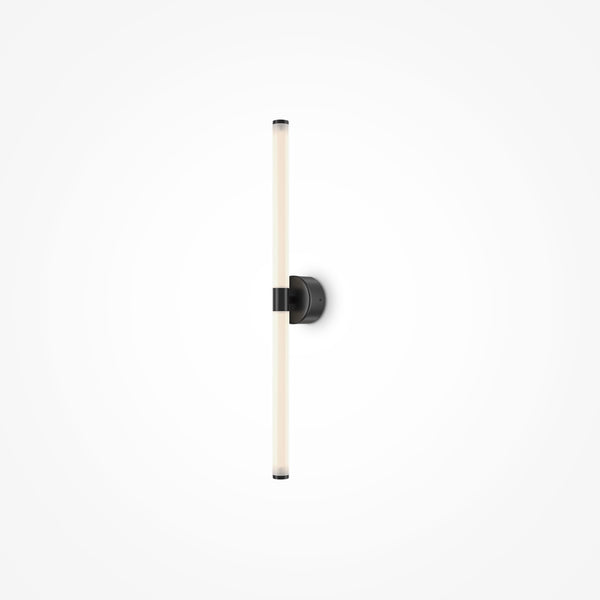
In a dry interior, an IP20 covers almost all needs. The Tubella and Tubess wall lights, in opal glass, illuminate a hallway or staircase without casting hard shadows. To compare the shapes available for a dry room, see all LED tube solutions.
IP54: bathroom, terrace and exposed location
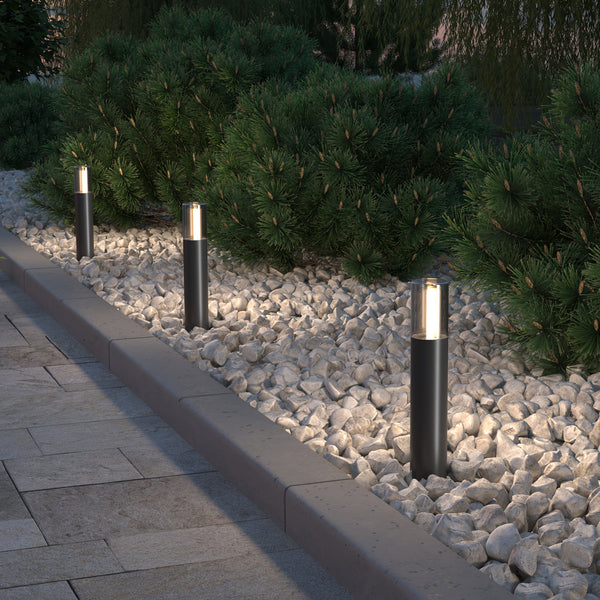
As soon as a fixture can receive splashes, you go up a notch. The Tubel bollard, in aluminium and glass, has an IP54 rating and is installed on a terrace. For a damp room, browse fixtures for damp rooms and bollards and outdoor lighting.
Waterproof LED tube for a garage: how do you install it?
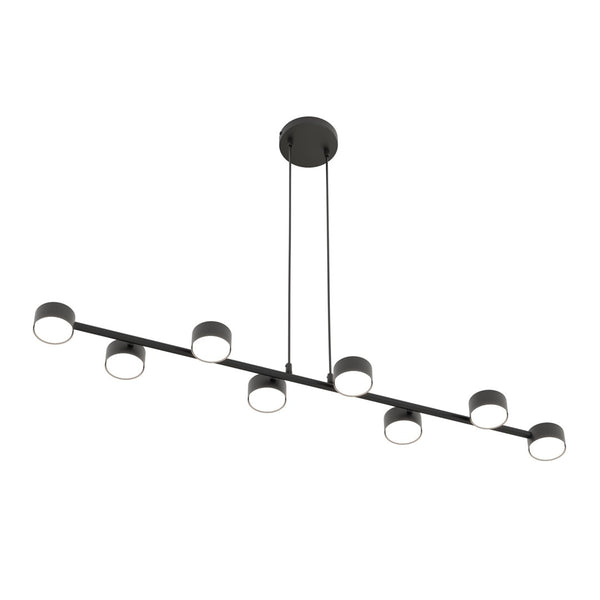
In a garage, the tube is mounted on the ceiling, along the traffic axis or above the workbench, to avoid cast shadows. Aluminium and steel dissipate heat and wipe clean with a cloth. An adjustable model lets you direct the light towards the wall rather than into your eyes: the Tubelis ceiling light, in aluminium, is the most direct example with its multiple spots directed one by one. If the room is damp, you move up to a high rating.
Where should you place the fixture in a garage or workshop?
Two parallel lines are better than a single central one: they remove the shadow of your body on the workbench. Keep about one metre between the work wall and the first row. For detailed configurations, see our selection for the garage.
Do you need a high IP rating in an unheated garage?
Not necessarily. Cold does not damage an IP20; it is humidity and splashes that decide. A dry, covered garage is fine with an IP20 mounted on the ceiling. If the room takes in water or serves as a cellar, move to a high rating.
Waterproof LED neon 120 cm or 150 cm: how do you choose the length?
The length depends on the area to be covered, not the entire room: you add up the lengths of worktop, workbench or row of vehicles. A short module is enough for a traffic area, two aligned modules cover a long length. Each product page gives the exact dimension in centimetres, and that is the value to read before ordering. A pendant such as Tubelle shows its dimensions on its product page.
Measure before ordering: the simple rule
Measure the usable opening, subtract the space needed for the fixings, then compare with the stated format. A module that is too long is visible and constrains the installation; one that is too short leaves a dark area at the end of the line.
Aligning several tubes: how do you avoid shadow areas?
Keep regular spacing and avoid butting two tubes together against a corner. On a long worktop, three distributed points are better than two large modules close together. The kitchen calls for this kind of rhythm, detailed in lighting the kitchen worktop.
Which socket and wattage for a waterproof LED tube?
The collection covers several solutions: integrated LED, G9, E27, GX53 and GU10. Integrated LED avoids changing the bulb, G9 and E27 are easy to replace and let you choose the white temperature. The larger the room, the more you align light points rather than aiming for a single very powerful unit.
| Socket | Source | What it changes | Typical use |
|---|---|---|---|
| Integrated LED | Non-replaceable module | No bulb to change, slim housing | Wall light, floor lamp, vertical tube |
| G9 | Pin bulb | Small format, easy to change | Slim wall light, outdoor bollard |
| E27 | Screw bulb | Wide choice of bulbs and temperatures | Pendant above a table |
| GU10 | Spot bulb | Directional beam | Adjustable ceiling light with several spots |
| GX53 | Flat bulb | Flat diffuser, even light | Pendant with several cylinders |
G9, E27, GU10 or GX53 bulb: which is easiest to replace?
G9 and E27 are available everywhere and can be changed by hand. The flat GX53 needs a quarter turn. The integrated LED module, however, cannot be replaced: you choose your fixture for it to last. The Lumitube floor lamp, for example, runs on integrated LED.
Wattage and number of light points: the right balance
A Tubessa wall light is enough to mark a traffic area; a Tubex pendant lights a large table. You build intensity by addition. To choose models down to the watt, compare LED battens and tubes to compare.
How do you light a living room: LED wall light, LED ceiling light or LED chandelier?
The LED ceiling light provides general light, the LED wall light adds directional accent light and the pendant above the table structures the room. In a living room, the three are often combined: an adjustable ceiling light for the background, two wall lights near the seating, a pendant in the centre. Warm white, around 2700 to 3500 K, unifies the whole effortlessly.
Powerful LED wall light: where should you place it in the living room?
Install it at shoulder height relative to the seating, on either side of the sofa, to read without glare. The Tubella wall light in opal glass diffuses a soft, vertical light that highlights a wall without spotting it.
Modern LED ceiling light or cylinder pendant: which style to choose?
The Tubelis adjustable ceiling light, minimalist and white, suits low ceilings: its spots are directed towards the walls. A cylinder pendant such as Tubelle with gold arms makes more of a vertical statement and requires height. To mix styles, see all our fixtures by room.
How do you install and maintain a waterproof LED tube?
Switch off the power at the breaker, mark the length to be covered, fix the bracket to the ceiling or wall then clip the tube onto its base. Maintenance is limited to a soft cloth on the diffuser. To replace a neon, the simplest solution is to change the complete fixture: the power supply is then integrated into the housing and the old wiring is no longer used.
Can you replace a neon tube with an LED tube?
Yes, by replacing the entire profile rather than just the bulb. Remove the old bracket, drill at the same centres where possible, then connect the new housing. This avoids problems with old wiring and a tired starter.
Cleaning the diffuser: the right approach
Soft cloth, slightly damp, no abrasive or solvent. Wipe opal glass as you would acrylic, and aluminium with a dry stroke to avoid marks. Once a year, before going back up a ladder.
How do you match LED tubes, wall lights and pendants in the same room?
Keep one family of materials and one light colour from room to room: aluminium or black steel for a contemporary look, opal glass to soften. Warm white 2700 to 3500 K unifies the atmosphere. Tubular shapes echo each other between wall light, pendant and ceiling light, which gives the impression of a series rather than a disparate assembly.
Which light temperature for a coherent interior?
The same temperature in living areas, generally between 2700 and 3500 K, is enough. Keep a more neutral white for work areas, kitchen and office. Mixing several temperatures in the same room creates visible patches on light walls.
Mixing black metal, gold and opal glass: what works
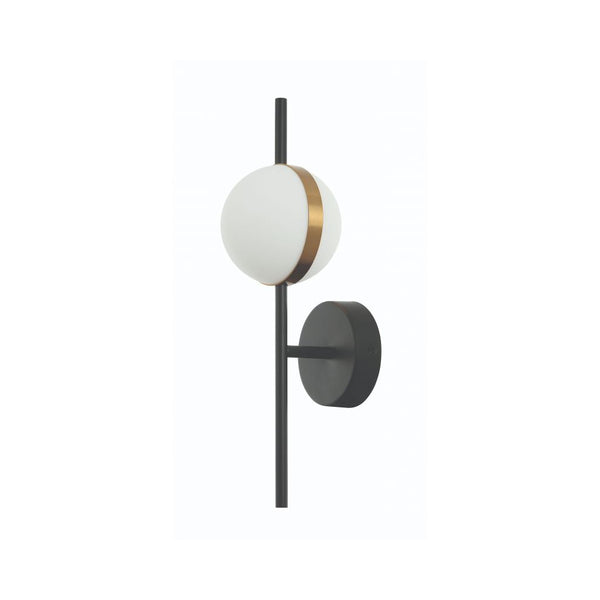
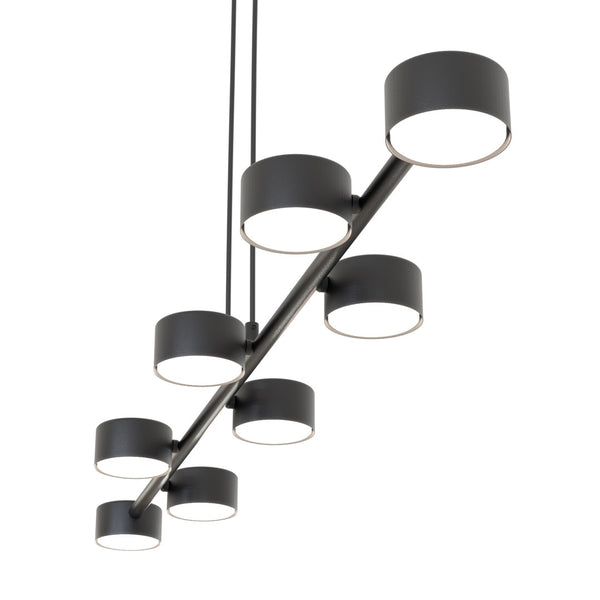
A dominant black with a gold detail holds up well: the Tubess in black and gold plays on this, and the Tubelia eight-cylinder pendant picks up the black without gilding it. For a softer mood, the cork of the Tubex cork pendant warms a Nordic interior.
Frequently asked questions
What is the difference between a neon tube and an LED tube?
Classic neon is a fluorescent tube that heats up and takes a few seconds to start. The LED tube lights up immediately, generates little heat and comes in several white temperatures. Neon is recycled through a specific channel, the LED tube is not.
Waterproof LED neon 120 cm: how do you choose the model?
First choose the area to be covered, then the length available on the ceiling or under a shelf. A short module suits a narrow traffic area, two aligned modules suit a long worktop or a row of vehicles. The exact dimension appears on each product page.
Which powerful LED wall light should you choose?
Look at the wattage and above all the number of light points. A wall light with a tubular profile lights a traffic area, a wall light with an opal globe lights a wider area near seating. The adjustable ceiling light completes the setup by directing the beam towards the wall.
How do you choose an LED chandelier for the living room?
Above a table, opt for a pendant with several arms or cylinders, centred on the furniture. Its height is often adjusted by cable, which lets you fine-tune it once installed. Keep the same light colour as the living room wall lights.
LED ceiling lighting: which fixture should you install?
For general lighting, an adjustable ceiling light distributes light without glare, provided the spots are directed towards the walls. For a through room, align several points rather than a single very powerful one. Light is built in layers: general at the ceiling, accent on the walls.
Waterproof LED tube for a garage: which IP rating and which mounting?
A covered, dry garage is fine with an IP20 mounted on the ceiling, along the traffic axis. If the air is damp or the room receives splashes, a high rating such as IP54 is required. Material matters too: aluminium and steel are easy to clean.
Secure payment, tracked delivery, returns and Designix customer service accompany every order. The Tubessa tubular profile as well as the Tubelis adjustable ceiling light are chosen first for the room to be equipped and the installation height, not for the visual effect alone. Measure your lighting area, then open the page of the model that matches: outdoor lighting, bathroom fixtures and models designed for a workshop can be compared line by line.