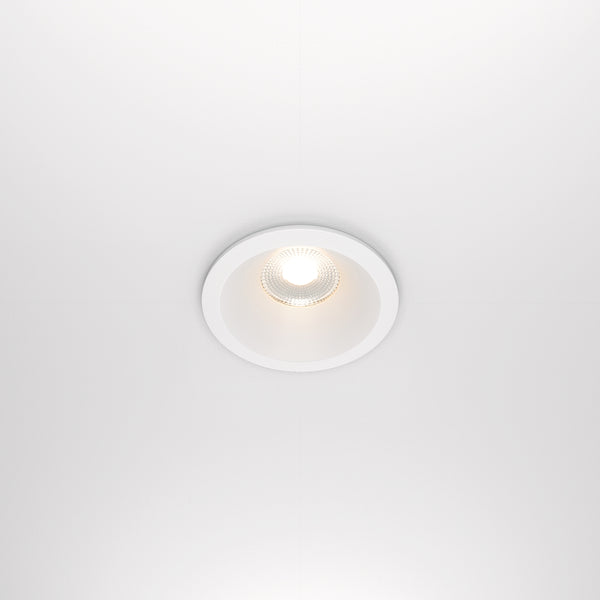
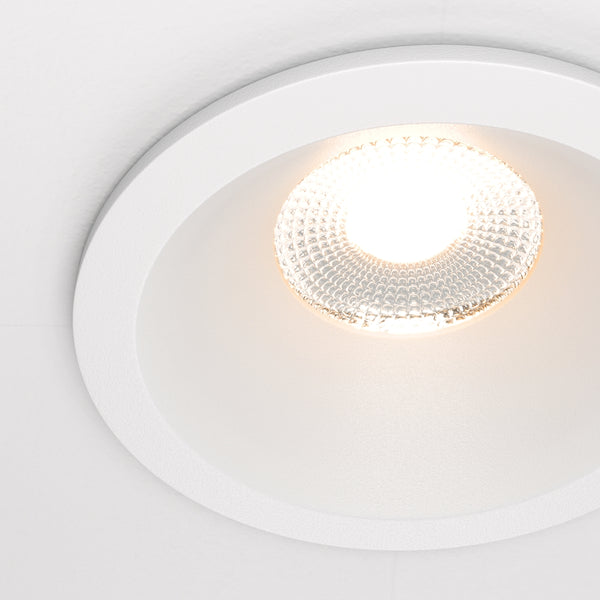
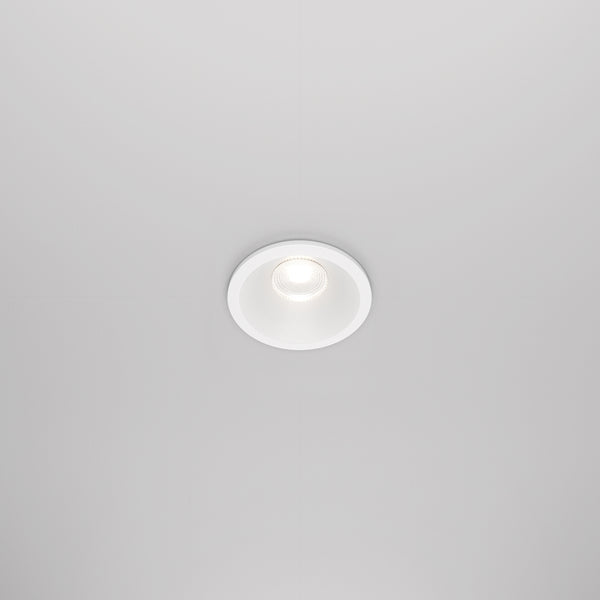
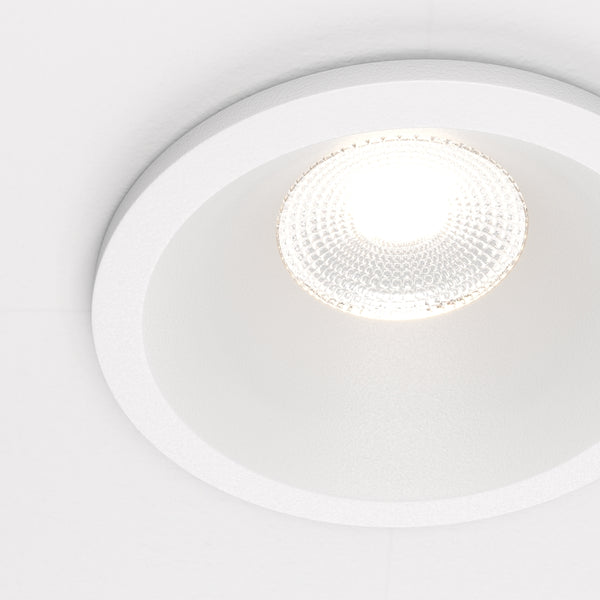
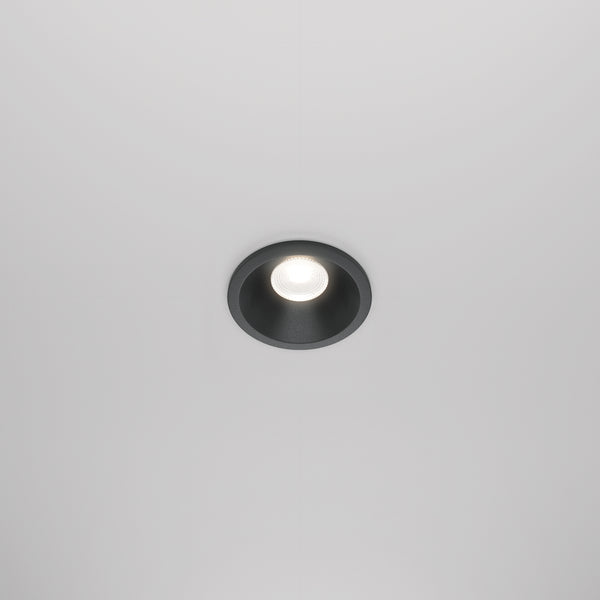
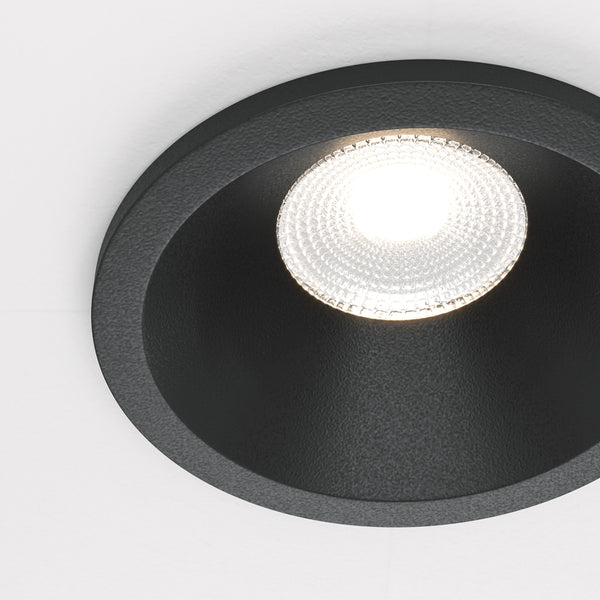
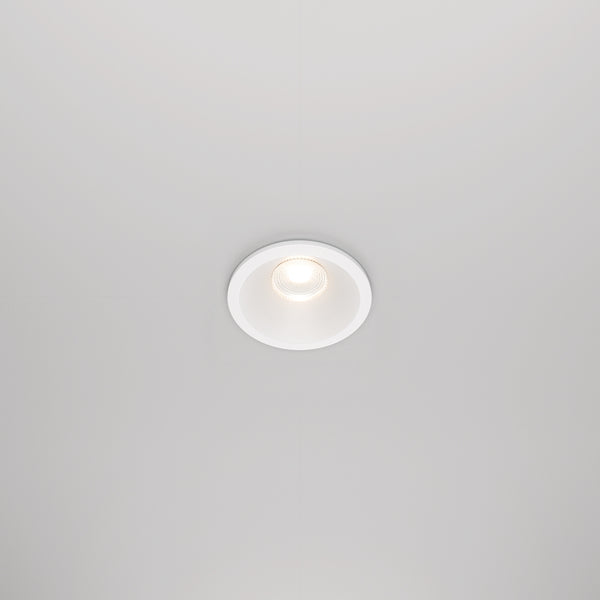
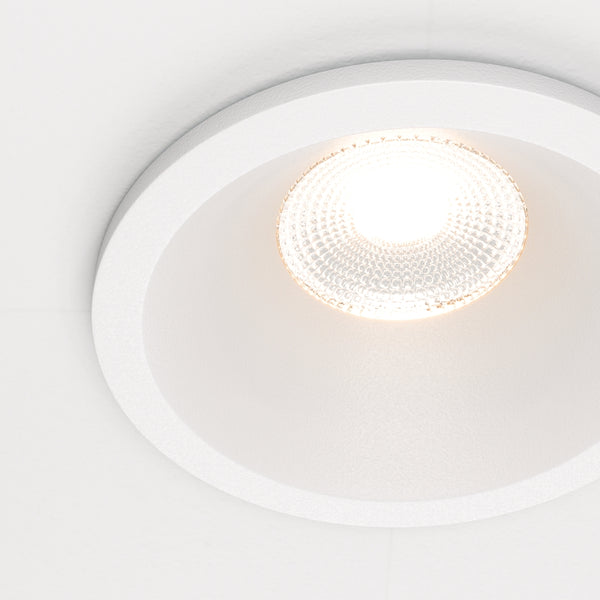
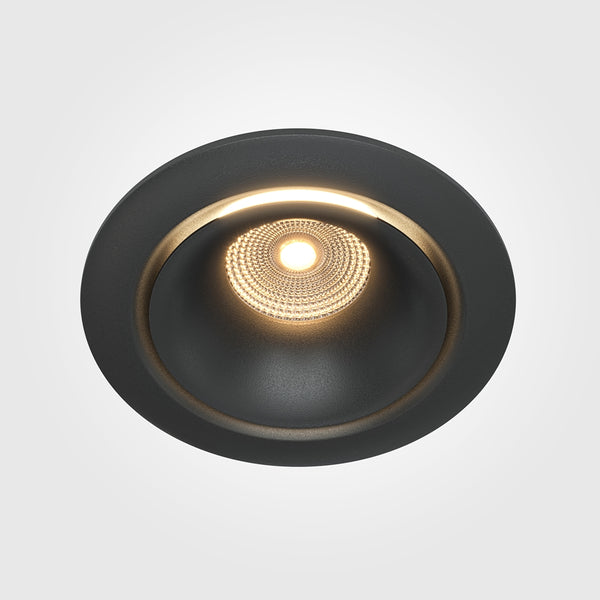
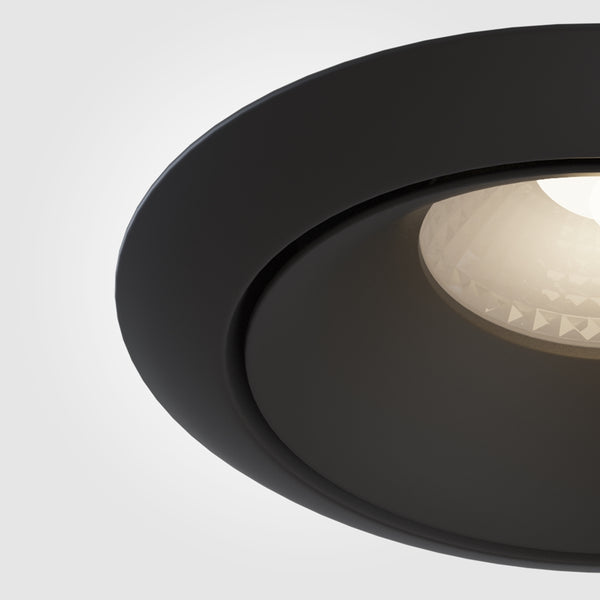
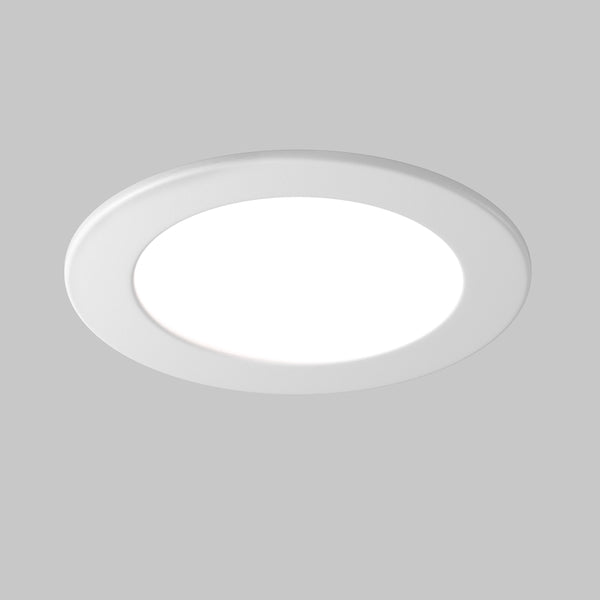
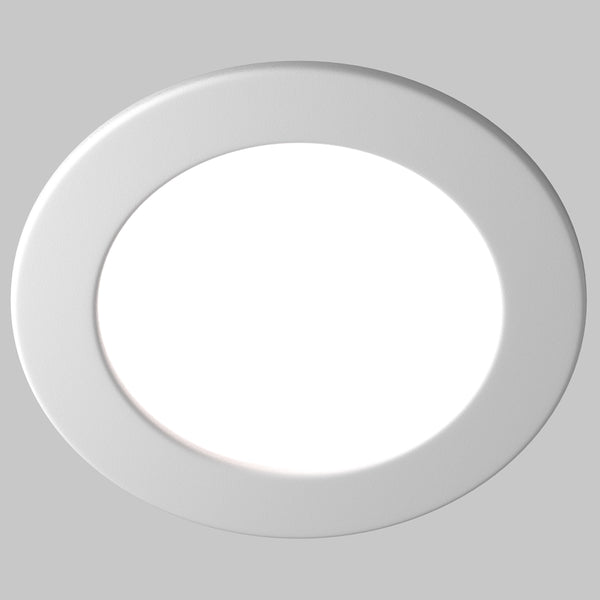
Recessed LED spotlight
- Tracked delivery to your country Tracked delivery
- Secure payment at checkout Multiple payment methods
- 14 days to change your mind 14-day returns
- Secure payment Secure payment


Not sure of your style? Find it in 30 seconds
A few questions, and we will show you the pieces made for you.













Frequently asked questions
How do I choose the right product?
What are the delivery times?
Can I return an item?
Can I pay in instalments?
An interior that reflects who you are
Carefully selected pieces, shipped from our warehouses. Our team advises you before you buy, so you choose with confidence.
- Tracked delivery
- Pay in instalments, where available
- 14 days to change your mind
- Advice & showroom in Lyon, France
Start by identifying the area to be lit and the ceiling height, then the wattage: in this selection, recessed spotlights range from 5 W to 20 W, in warm white or neutral white, with integrated LED or GU10 socket. Plan several points rather than one very powerful fixture.
What wattage of LED downlight should I choose to light my living room?
In this selection, wattages range from 5 W to 20 W. For a living room, 10 W and 12 W models meet most needs when spread across several points. Twin heads, at 14 W and 20 W, light a wider area with a single recessed fixture.
10 W, 12 W or 20 W: what difference in light on the ceiling?
The difference shows in the density of light on the floor. A 10 W casts a crisp pool under the ceiling and is enough for circulation; a 12 W plays the same role with a little more presence; a 20 W is used when a specific area needs to be clearly marked. Ceiling height changes the result as much as wattage.
One powerful downlight or several low-wattage points?
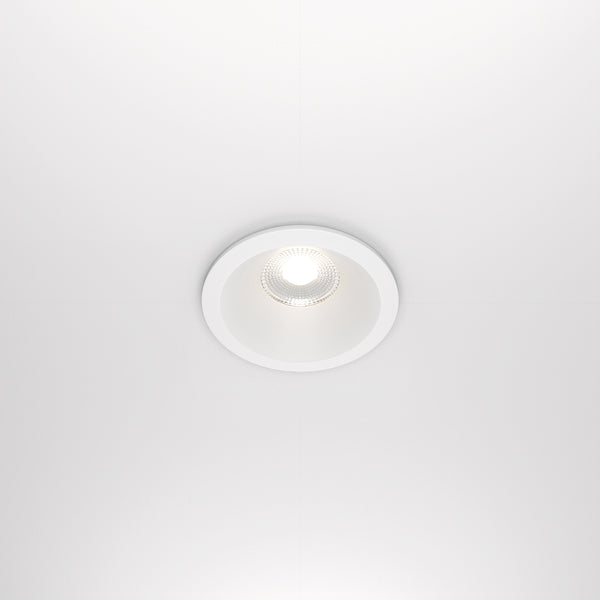
Several moderate-wattage points give more even lighting and fewer harsh shadows than a single point. An isolated 20 W creates strong contrast and leaves the rest of the ceiling in shadow. In a living room, four well-placed 10 W points are better than two 20 W in the centre. White LED downlights blend into the ceiling.
What area does an LED downlight illuminate?
The area covered depends on ceiling height, head orientation and wattage: a recessed downlight lights a limited zone around its axis, not the whole room. It is the distribution of several complementary points that truly lights a living room, not a single model.
Why does a recessed downlight never light the whole room on its own?
Because its beam points straight down or slightly angled, and loses intensity as it moves away from the axis. The higher the ceiling, the wider but weaker the pool of light. An adjustable model lets you shift that pool towards a wall or a piece of furniture, which changes how the lit area is perceived. A selection of adjustable downlights covers this need.
How do I work out how many points are needed in a living room?
Divide the ceiling into useful zones: circulation areas, seating, reading corner, coffee table. Count one point per zone to be lit, then adjust according to the wattage chosen. The same reasoning applies to recessed kitchen lighting, where zones are more densely packed. See also the living room LED downlights.
Ceiling downlight spacing: how to space and arrange downlights in a living room?
There is no single spacing: downlights are placed above the areas to be lit, aligned regularly along walls or around a piece of furniture, rather than in a grid across the whole surface. Regular spacing avoids both shadow zones and over-bright spots, especially in a long living room.
Regularity or targeted zones: which layout should I choose?
The two combine. Keep a constant gap between two points on the same line, so the ceiling stays readable, and shift the lines into the areas actually used. A fully gridded ceiling gives uniform light that is poorly suited to evenings. The arrangement of living room downlights is therefore drawn around usage, not a geometric plan.
How should downlights be arranged on the ceiling of a long living room?
In a long room, work in lines parallel to the long dimension, rather than in squares. Two rows aligned with the walls light the circulation areas, a central or offset row marks the seating. This grid avoids having one side lit and the other in shadow. An adjustable model helps correct the angle once installed.
Recessed downlight, ceiling light or chandelier: which LED ceiling lighting for a living room?
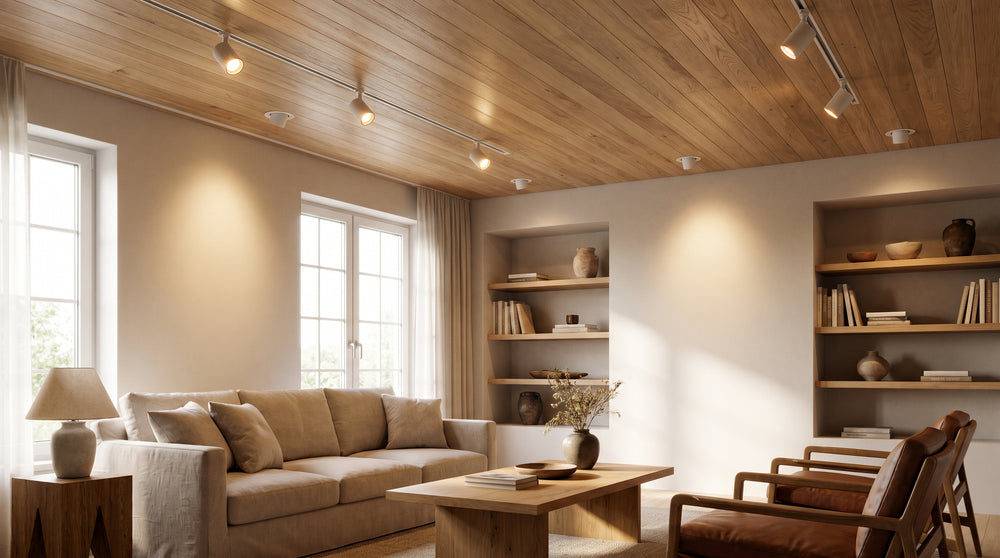
The three complement each other: the recessed downlight integrates light into the ceiling and stays discreet day to day, the LED ceiling light provides general light from a single point, the chandelier or LED wall light plays the decorative role. Many living rooms combine a central point with downlights around the perimeter.
Modern LED ceiling light or recessed downlights: which should I choose?
The LED ceiling light concentrates light at a visible point and stands out on the ceiling; it suits when you want immediate general light. The recessed downlight blends into the surface and spreads out. The first can be changed without touching the ceiling, the second requires a cut-out. Both families can be found in the Designix lighting catalogue.
Living room LED chandelier and LED wall light: when are they preferable?
When the light also has to decorate. A chandelier marks the centre of a room or a generous ceiling height; an LED wall light illuminates a wall, a picture or a circulation area without occupying the ceiling. These sources complement recessed downlights rather than replacing them.
Warm white or neutral white: which colour temperature for a recessed downlight?
The selection is mostly warm white, between 2700 and 3500 K, with a few neutral white models, between 3500 and 4500 K. Warm white gives softer light in a living room or hallway, neutral white a whiter light, useful where more neutrality is wanted.
Warm white 2700-3500 K: what result in a living room?
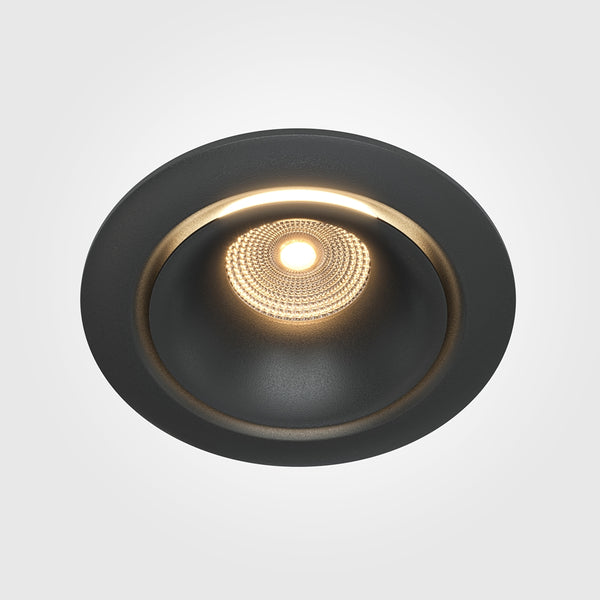
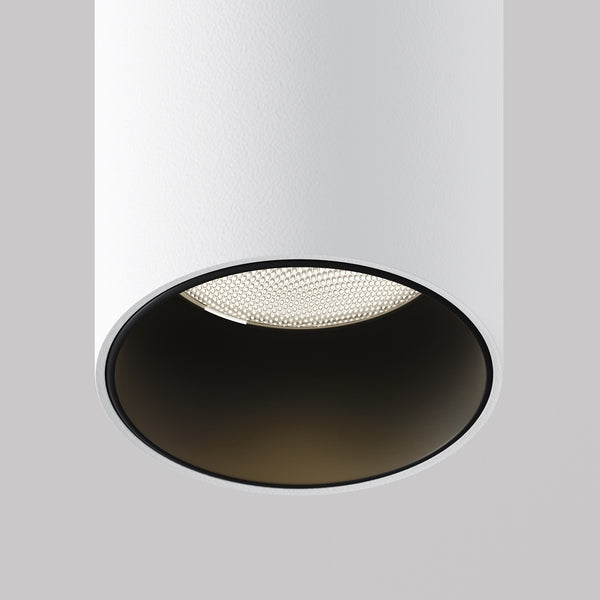
It is a slightly amber light, close to the filament bulb, which warms wood and fabrics. In the evening, it is easier on the eye and leaves warm colours intact. A gold reflector, as on the Calen GU10 model, reinforces this result.
When should I choose a neutral white downlight?
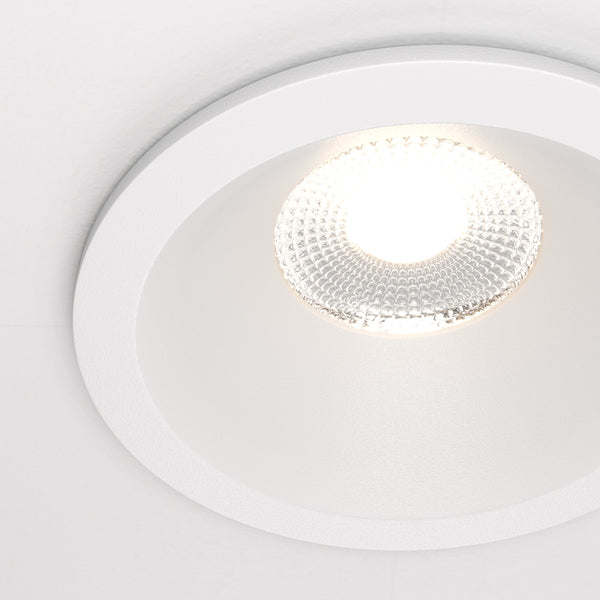
When the room needs whiter reading: a worktop, a hallway without windows, an area where you read or work. Neutral white makes whites crisper but can feel cold in a living room in the evening. The Orbi downlight is in this register, like its neighbour Luno.
Fixed, adjustable or twin-head recessed downlight: how to choose?
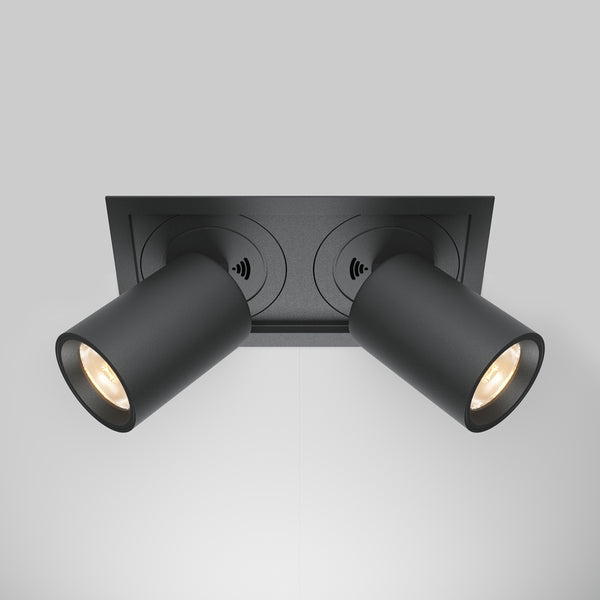
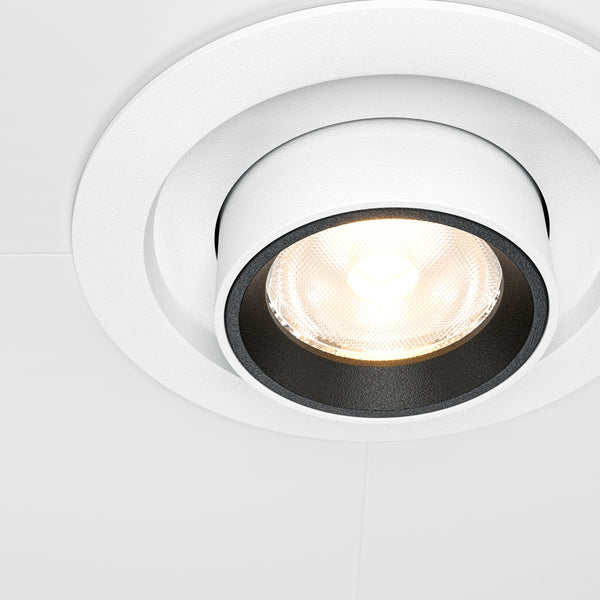
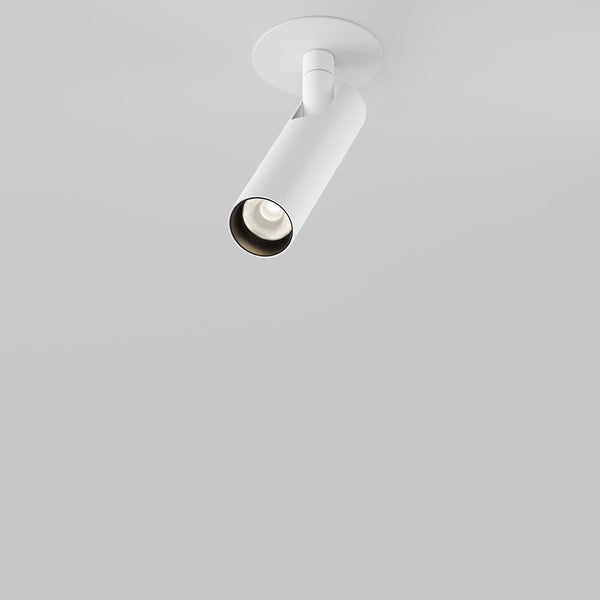
A fixed downlight lights straight below it: handy for regular general lighting. An adjustable model lets you direct the beam towards a wall, a bookcase or a worktop. Twin-head versions, such as Tubal, Lunsameta and Novello, multiply directions from a single recess.
Adjustable recessed LED downlight: for what use?
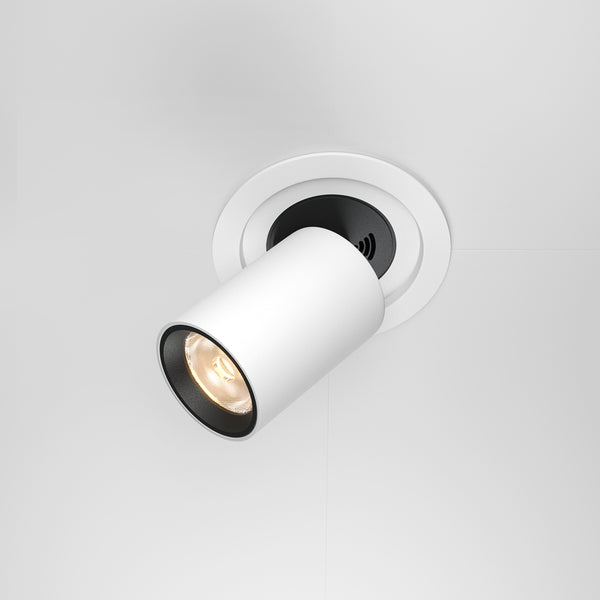
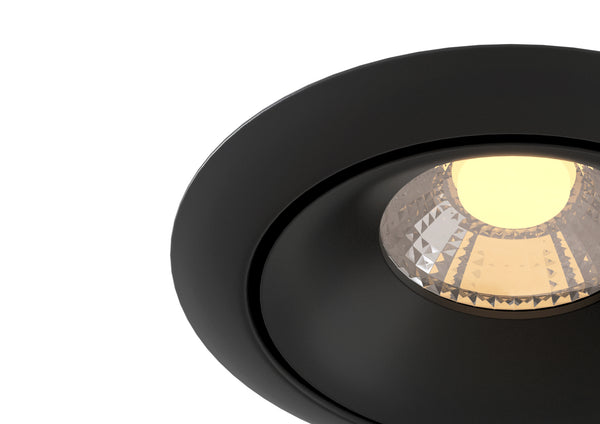
To light something other than the floor. When a wall, a shelf or a picture needs highlighting, adjustability replaces adding an extra point. It also helps correct an installation when the axis falls badly. The collection includes several adjustable recessed downlights.
Two cylindrical heads: when is that useful?
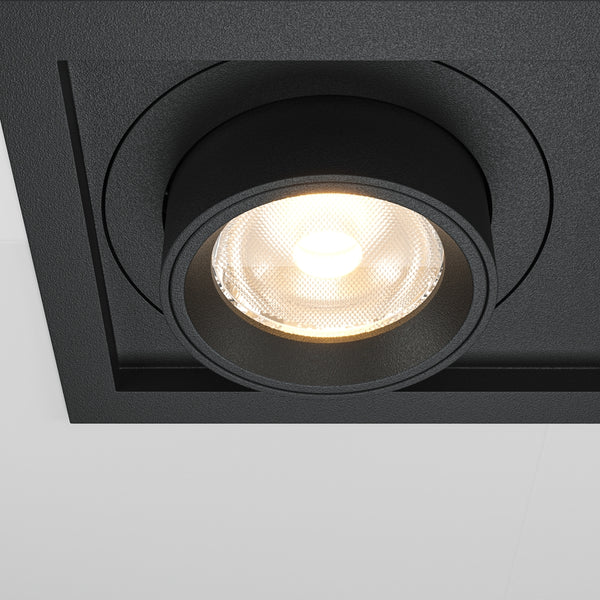
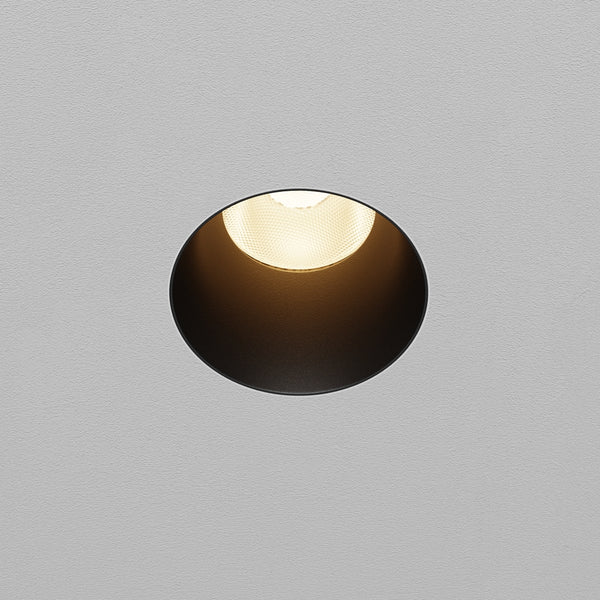
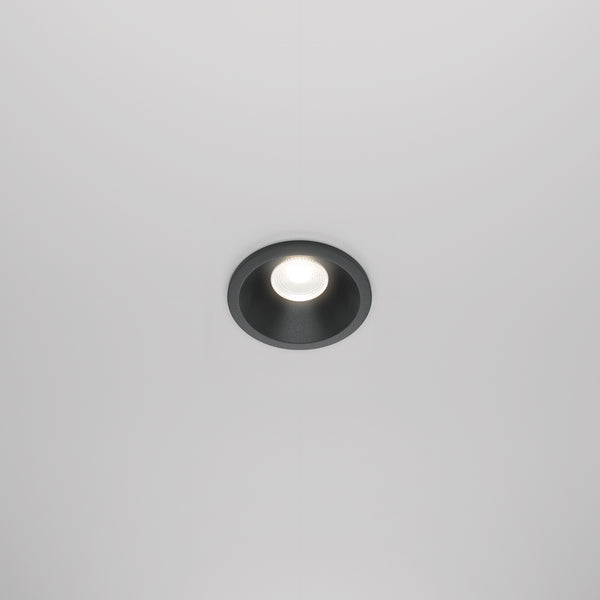
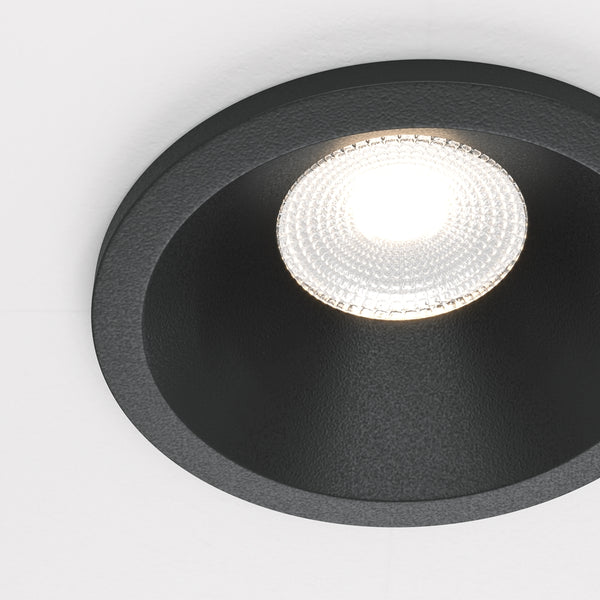
When a single recess has to cover two directions, for example a corner of a room or a wall with two pictures. This avoids multiplying ceiling cut-outs. The black recessed versions create contrast on a white ceiling or blend into a dark surface, as on Tubal and its two heads.
GU10 socket or integrated LED: which recessed downlight should I choose?
Most models in the collection have an integrated LED, which simplifies installation and gives a consistent result. Some use a GU10 socket, which allows the bulb, and therefore the wattage or temperature, to be changed later. Calen, Calira and Cielo are in this case.
Integrated LED: what does that change in use?
Nothing to fit, nothing to choose: the source is already in the housing and the result is identical from one point to another. In return, the temperature cannot be changed after purchase, and replacement is done on the whole downlight. This applies to most of the models in the LED downlight range.
Recessed downlight with GU10 socket: what is the benefit?
Being able to change the bulb, its wattage or its light colour without removing the downlight. This is useful when you want to adjust the lighting after a few months, or replace a worn source without touching the ceiling. See the GU10 socket downlights. To adjust brightness, look instead at the dimmer-compatible recessed models.
How do I install a recessed LED downlight in the ceiling?
Mark the points, drill at the diameter shown on the model's specification sheet, then connect and clip the downlight into its housing. The diameter ranges from 4 cm to 14 cm in this selection: check it before drilling, along with the space available above the ceiling, especially under an insulated ceiling.
Cut-out diameter: where do I find it before drilling?
On each model's specification sheet, never from the product image alone. A Ø 4 cm (Mirane), a Ø 9.8 cm (Orbi) and a Ø 14 cm (Calira) do not have the same footprint or the same clearance. Mark the centres in pencil before drilling, then check the gap between two points. The models are gathered in our downlights.
Insulated ceiling: what should I check on the product specification sheet?
The downlight's suitability for being covered by insulation, and the actual clearance above the ceiling. An 8 cm cut-out may require more depth than another depending on the heat sink. In an insulated ceiling, these two points should be checked before purchase, using the technical sheet of the chosen model.
Recessed downlights in wet rooms and outdoors: what should I check?
In a wet room, the IP rating decides: most recessed downlights in the selection are IP20, reserved for dry rooms, and only IP44 models withstand splashes. Here, Kalynda is IP44; for outdoors, it is better to turn to downlights designed for outdoor use.
IP20 and IP44: what difference for a ceiling downlight?
IP20 protects against solid objects larger than 12 mm and against no liquid: this is for use in a dry room, living room or hallway. IP44 adds protection against water splashes, which allows use in a bathroom or damp room. Kalynda combines this protection with a gold reflector and an adjustable head: Kalynda, adjustable and IP44.
Can an indoor recessed downlight be installed outdoors?
A downlight intended for an indoor ceiling will not last outside: humidity, rain and temperature swings require a housing designed for it. For a terrace or a facade, turn to the outdoor solutions. For a bathroom, first compare the downlights for wet rooms.
Compare the formats, sockets and temperatures in the selection
| Model | Format | Socket | Temperature | Wattage |
|---|---|---|---|---|
| Orbi | Round Ø 9.8 cm | Integrated LED | Neutral white 3500-4500 K | 12 W |
| Encastro | Round Ø 8.3 cm | Integrated LED | Warm white 2700-3500 K | 10 W |
| Calen | Round Ø 10.2 cm | GU10 | Depends on the bulb | 10 W |
| Mirane | Round Ø 4 cm | Integrated LED | Warm white 2700-3500 K | 5 W |
| Bonaventura | Square 9.5 x 9.5 cm | Integrated LED | Warm white 2700-3500 K | 10 W |
| Tubal | Twin head L 16.8 cm | Integrated LED | Warm white 2700-3500 K | 20 W |
Which recessed downlight for which constraint
| Constraint | What to check | Answer in the collection |
|---|---|---|
| Shallow ceiling | Downlight diameter and footprint | Ø 4 cm and Ø 6 cm formats |
| Large area to light | Number of points and orientation | 14 W and 20 W twin heads |
| Wet room | IP rating | Kalynda in IP44 |
| Dimmer control | Dimmer compatibility | Models listed as dimmer-compatible |
| Bulb to replace | Socket type | GU10 socket models |
| Soft light in the evening | Colour temperature | Warm white 2700-3500 K |
A compact model such as Mirane, the smallest format, makes marking out easier when several points have to fit into a small space.
Frequently asked questions about the recessed LED downlight
What wattage of LED downlight should I choose to light my living room?
In this collection, wattages range from 5 W to 20 W. A living room is generally lit with several 10 W or 12 W points distributed across the ceiling. Twin heads at 14 W and 20 W are used when a single area needs more light.
What area does an LED downlight illuminate?
A recessed downlight lights a limited zone around its axis, the extent of which depends on ceiling height, head orientation and wattage. A living room is therefore lit with several downlights positioned above the areas to be lit, not with an isolated model.
What is the distance between downlights on the ceiling?
There is no single distance: the layout is done by area to be lit, with regular gaps between points. Constant spacing along walls or around a piece of furniture avoids shadow zones and over-bright spots in the room.
LED ceiling light or recessed downlights: which should I choose for a living room?
The LED ceiling light concentrates light at one point on the ceiling and stands out; the recessed downlight blends into the ceiling and spreads across several points. Many living rooms combine a central ceiling light for general light with recessed downlights around the perimeter.
Can a recessed LED downlight be installed in a bathroom?
It depends on the IP rating. Most downlights in this selection are IP20 and intended for dry rooms; only IP44 models withstand splashes. Kalynda is IP44. For a heavily exposed wet room, always check the model's specification sheet before purchase.
Every model in this selection comes with a warranty, secure payment, tracked delivery and returns, and Designix customer service remains available to confirm a diameter or a colour temperature before ordering.
To go further, browse our full lighting range, or compare the black recessed versions and the adjustable models directly before making your choice.