LED tubes for kitchen
This selection is also available in our French store: Tubes LED pour cuisine
- Tracked delivery to your country Tracked delivery
- Secure payment at checkout Multiple payment methods
- 14 days to change your mind 14-day returns
- Secure payment Secure payment


Not sure of your style? Find it in 30 seconds
A few questions, and we will show you the pieces made for you.















Frequently asked questions
How do I choose the right product?
What are the delivery times?
Can I return an item?
Can I pay in instalments?
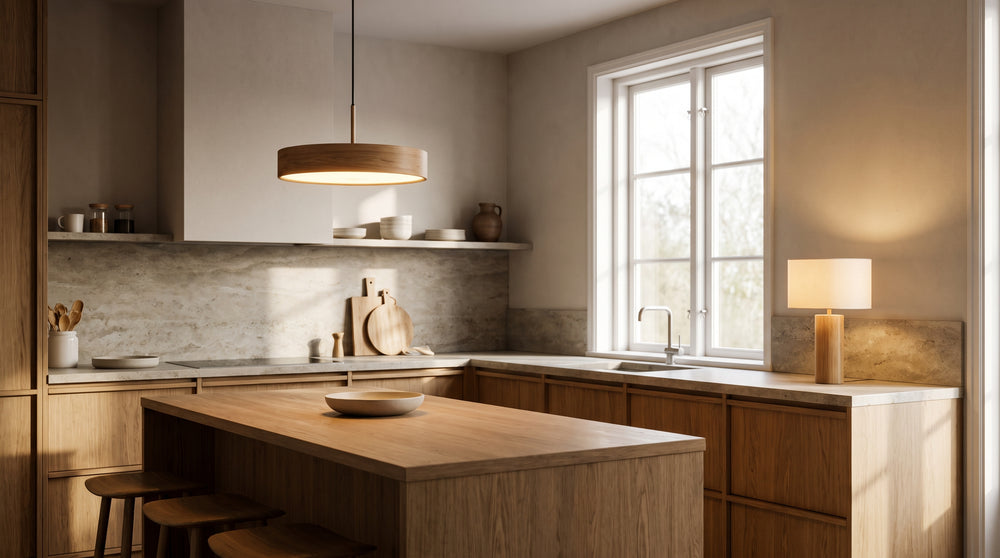
An interior that reflects who you are
Carefully selected pieces, shipped from our warehouses. Our team advises you before you buy, so you choose with confidence.
- Tracked delivery
- Pay in instalments, where available
- 14 days to change your mind
- Advice & showroom in Lyon, France
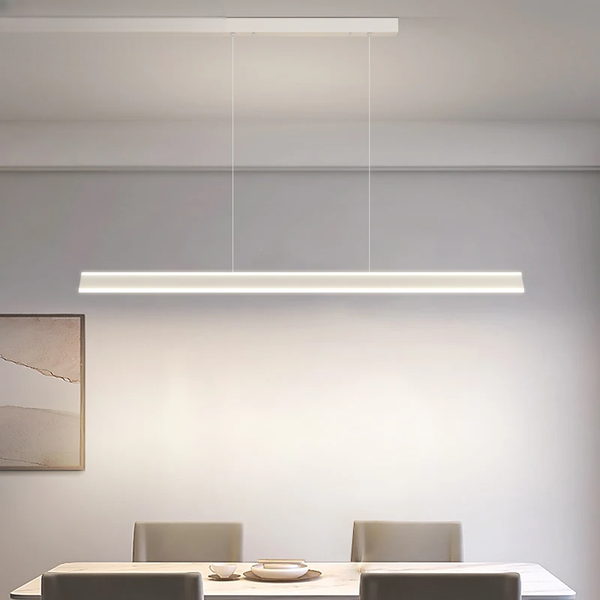
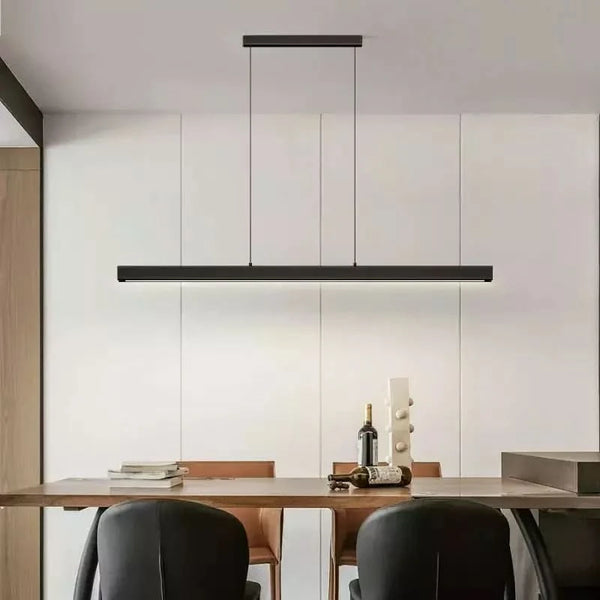
Count three lighting points: general lighting on the ceiling, a line of LED tube or batten under the wall cabinets, and a pendant or tubular wall light near the area where you cook. In this selection, the tubular lights are LED, mostly metal, with GU10, E27, E14, G9 sockets or an integrated LED source, and all IP20 for dry interiors. This page presents 20 of them, chosen from the 168 lights in the Designix collection.
Which type of LED for a kitchen?
In a kitchen, the LED tube or batten is mainly used under the wall cabinets, above the worktop; the pendant, wall light or LED ceiling light take over for general lighting. In this selection, almost every reference is LED, with GU10, E27, E14, G9 sockets or integrated LED.
LED tube light for kitchen or LED neon for kitchen?
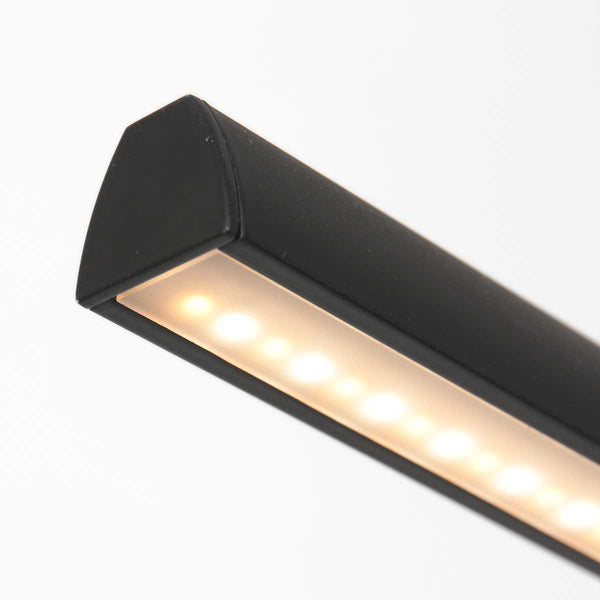
LED neon, LED neon tube and LED tube all describe the same family: a rigid, linear profile that lights along its entire length. The difference lies in the installation, not the light. Look at the usable length available, the mounting and the connection already in place. If the existing support does not match, a complete batten can be fitted without any DIY. Browse all our LED tubes to compare formats.
LED neon batten for kitchen, LED strip or adhesive LED under cabinet?
LED strip and adhesive LED are fitted as a flexible ribbon: handy in a corner, under a thin shelf or behind a worktop return. The batten and the LED tube, being rigid, give a continuous line of light and are easier to fix under a wall cabinet. Both families work very well together in the same kitchen, one for detail, the other for the main line.
Where to install a tubular light in a kitchen?
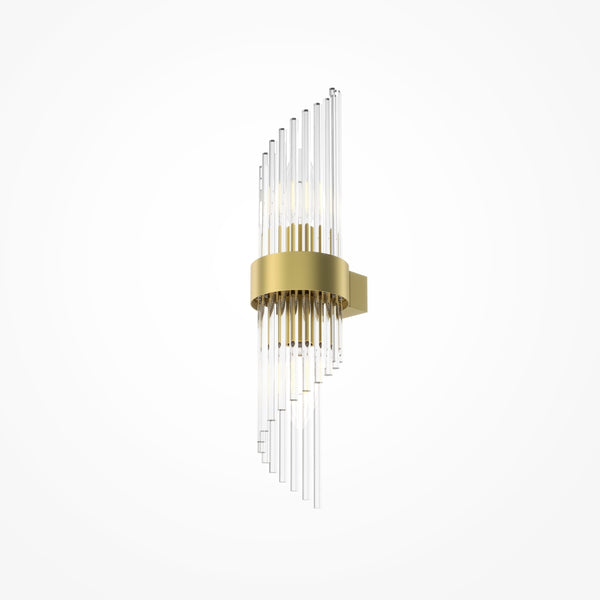
A tubular light is first fitted under the wall cabinet, facing the worktop, then on the ceiling for general lighting. On the wall, a slim wall light such as the Tubara wall light or the Yira wall light completes the light above the worktop, and a pendant is reserved for above the table or the island.
LED neon for kitchen cabinet: worktop, shelf or niche
The right reflex is to fix the source directly above the worktop, not at the back of the cabinet: the light then falls in front of your hands and the worktop stays clear, with no cast shadow. Under an open shelf, a slim batten takes over. A niche or a splashback return is fine with a short profile. For a kitchen open to the living room, extend this line with our entire lighting collection.
Tubes for kitchen: ceiling, wall and dining area
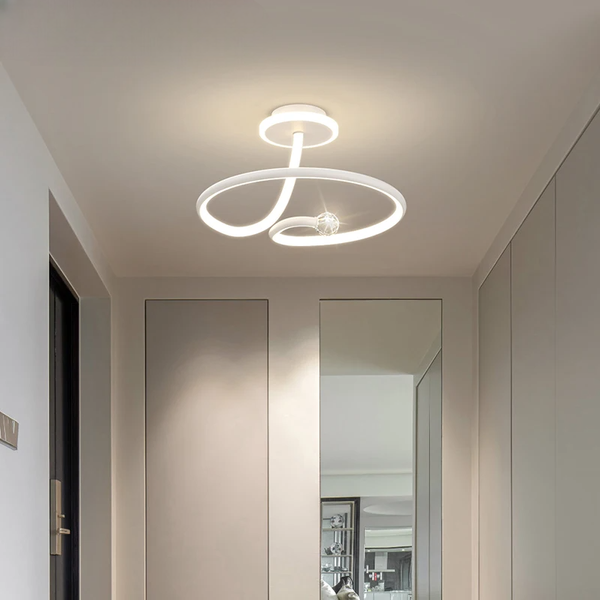
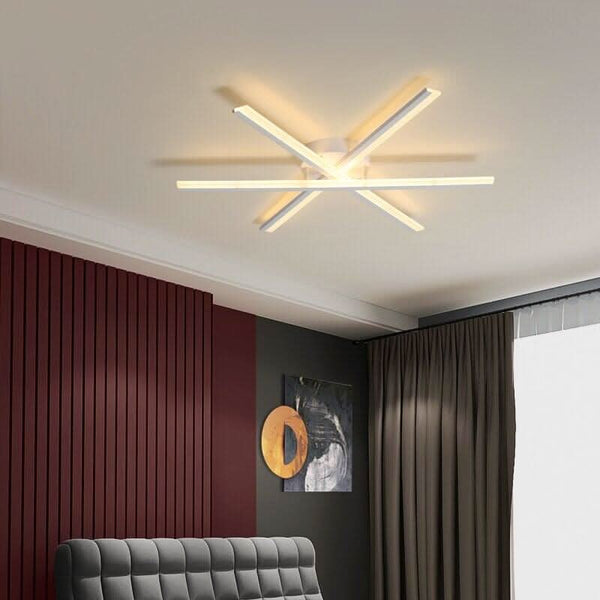
On the ceiling, a sober model provides general light; on the wall, a tubular wall light dresses a long worktop or a passage. Above the table or the island, a cylinder pendant brings the light down close, such as the Dorique pendant or the Norra wall light with its Nordic profile in a hallway or entrance.
| Area | Type of light | Socket or technology | Format noted | Key point |
|---|---|---|---|---|
| Under wall cabinet, worktop | Batten or LED tube | LED | Length to measure on site | Lights the worktop without cast shadow |
| Above the worktop, on the wall | Tubular wall light | G9 or G4 | Tubara H 50 cm, Yira 40 cm | Completes the light on the worktop |
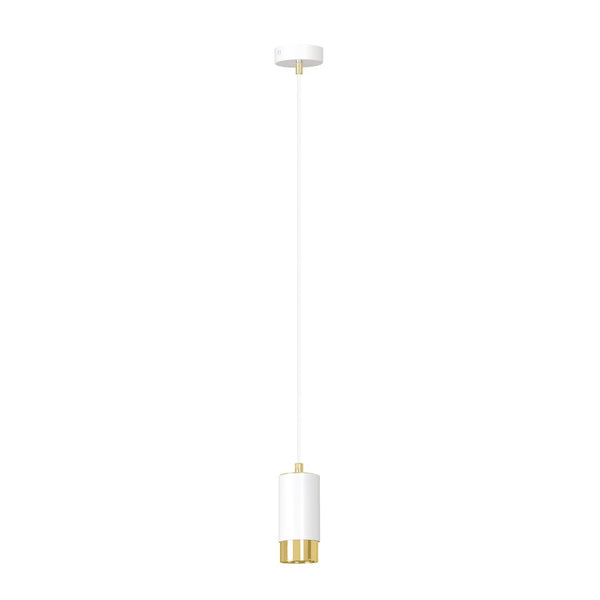
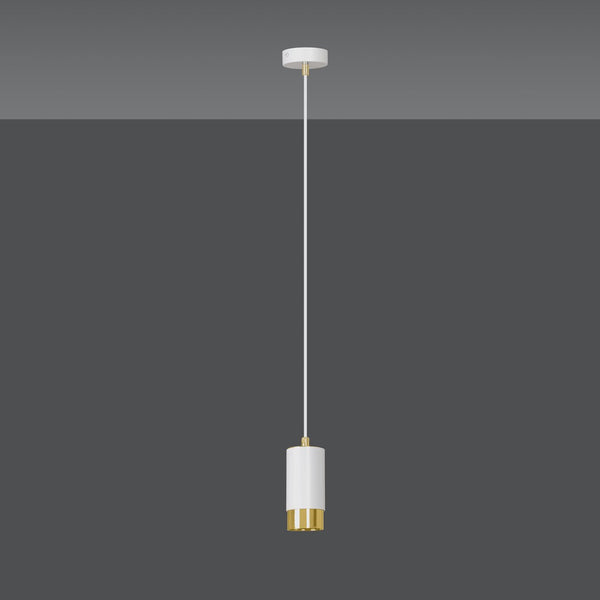
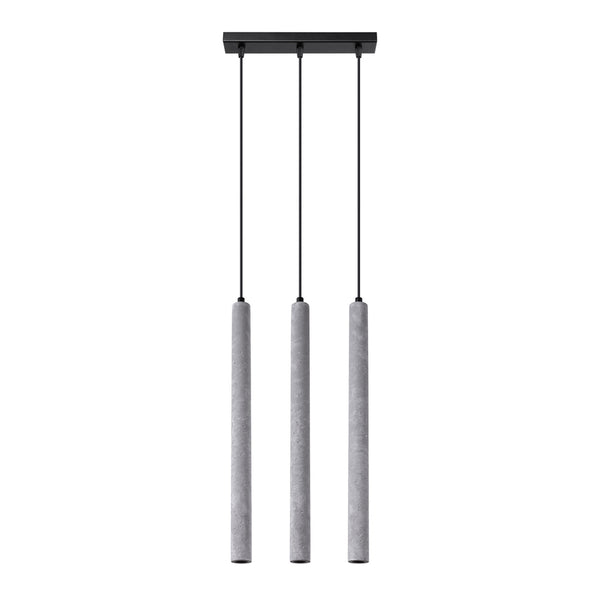
| Island or table | Cylinder pendant | GU10 | One to four cylinders depending on the model | Brings the light down close |
| Room ceiling | Ceiling light or LED chandelier | GU10 or integrated LED | Diameter to adapt to the room | Provides general light |
| Kitchen open to the living room | Glass pendant | Integrated LED | Verencia, H min 39 cm / H max 329 cm | Adjustable height |
Kitchen chandelier, pendant or LED ceiling light: how to choose?
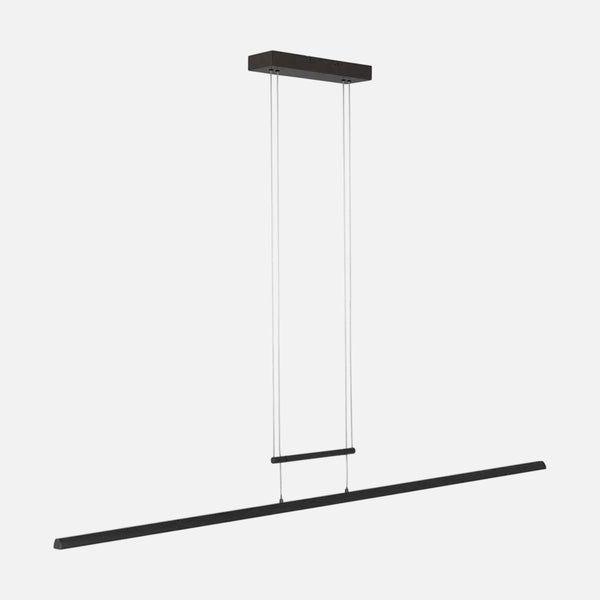
A pendant or chandelier is chosen when the light needs to come down above a worktop or a table; an LED ceiling light stays on the ceiling and suits small rooms and circulation areas. For a high ceiling, a pendant with an adjustable cable is better, such as Verencia, whose height adjusts from 39 to 329 cm.
Italian design kitchen pendant: the codes to recognise
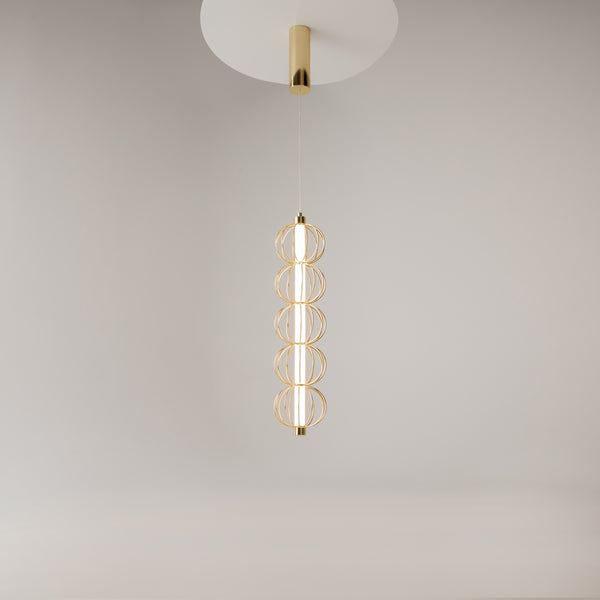
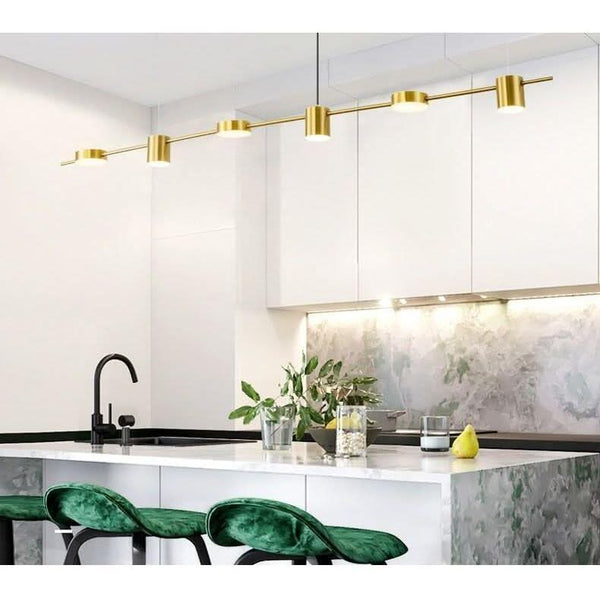
The style associated with this vocabulary comes down to a few signs: slim cylinders, clear glass, golden metal, regular lines rather than ornaments. A fairly long pendant such as the Verencia glass pendant plays this card above an island. A single cylinder, such as the single-cylinder Sivaro, is enough in a narrow room.
Large chandelier for a high ceiling: check the adjustable height
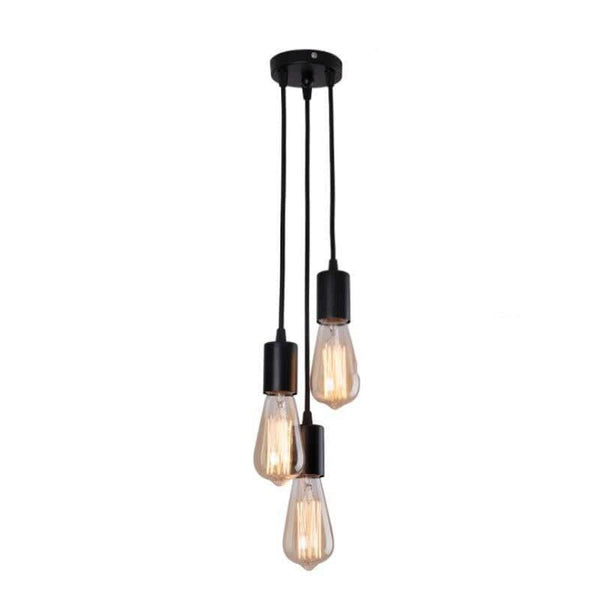
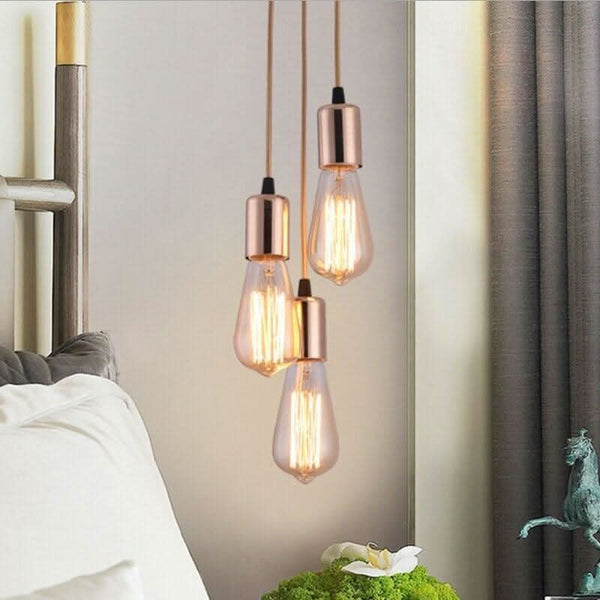
Under a significant height, the question is not the size of the chandelier but the cable length. An adjustable pendant is lowered to the right distance from the worktop, neither too high nor in your line of sight. For several aligned lighting points, the Cylara three-shade pendant fills the width of an island. A ceiling light remains the safe choice in a short kitchen.
Warm white or cool white: which light for a kitchen?
In this selection, two colour temperatures are offered: warm white from 2700 to 3500 K and cool white from 4500 to 6500 K. The first softens meals and rooms open to the living room; the second gives a sharper rendering on a worktop. The Norra wall light comes in both.
Which light temperature above the worktop?
On a worktop, a cooler light makes colours crisper and contrasts easier to read, which helps when preparing food. Warm white, on the other hand, sets a mood: warmer colours, a softer room at mealtime. As a rule, keep the same register across a whole area to avoid a visible break between two nearby sources. Compare the complete LED tubes collection before deciding.
Kitchen open to the living room: match the two moods
When the kitchen opens onto the living room, a single colour temperature for the whole room avoids a lighting border effect. If you combine both, place the cooler one above the worktop and the warmer one on the table side. This reasoning also applies to the lighting catalogue of a living space, and to choosing a light room by room.
Which socket and wattage for a kitchen light?
The GU10 socket is found on most pendants in this selection; there is also integrated LED, E27, E14, G9 and G4 on the wall lights. The wattages noted range from 8 W to 11 W depending on the model. All references are IP20, so intended for dry interiors.
GU10, E27, G9 or integrated LED: recognising the socket
GU10 is a pin bulb, replaceable: handy for adjusting the colour temperature afterwards. Integrated LED, on the other hand, cannot be changed, which simplifies maintenance and avoids buying a new bulb. E27 and E14 are screw sockets, wide and narrow respectively; G9 and G4 are short-pin formats, common on wall lights. Check this point before buying a kitchen light.
Why IP20 is enough in a kitchen, and when you need more
IP20 protects against finger contact and dust, not water: it is enough in a dry kitchen, away from splashes. For a bathroom, a garage or a damp room, a higher rating is needed. In that case, look at waterproof LED tubes and bathroom lighting.
| Socket | Type | Where to find it | What it means |
|---|---|---|---|
| GU10 | Pin bulb | Cylinder pendants Dorique, Eryx, Cylara, Sivaro | Replaceable bulb |
| Integrated LED | Non-replaceable source | Verencia pendant | Nothing to change on the bulb side |
| E27 | Wide screw socket | Present in the selection | Standard screw bulb |
| E14 | Narrow screw socket | Small lights such as Éclat Vigneron | Compact format |
| G9 | Short pins | Tubara wall light | Reduced format, common on wall lights |
| G4 | Very short pins | Yira wall light | Miniature format |
How to install an LED neon or tube in a kitchen?
Under a wall cabinet, measure the usable length, fix the support directly above the worktop, then feed the power through the top of the cabinet. For a pendant, the connection is made at the ceiling point and the cable is adjusted afterwards. Connection to the mains should always be entrusted to an electrician.
Fixing a batten or tube under a kitchen cabinet
First find the length actually available between the cabinet sides, then the point where the power supply will pass. The support is screwed or glued depending on the model, always directly above the worktop and not at the back. Leave a little clearance on each side: a profile touching both sides will warp during installation and then vibrate with the extractor hood.
Connecting a tubular pendant and adjusting its height
A pendant is prepared on the floor: assemble the cylinders, cut the cables to the desired length, then connect at the ceiling point. The final adjustment is made once the table or island is in place, aiming for a comfortable distance between the shade and the worktop. In a garage or workshop, prefer an LED tube for the garage.
How to match modern kitchen decor with tubular lighting?
This selection is overwhelmingly modern in style, in metal, with black, white, gold or silver finishes. A black tube on light fronts stays sober, while gold warms a matt kitchen without overloading it. The same vocabulary works in a living room or an open dining room.
Black, gold, white or silver: the combinations that hold
On light matt fronts, black draws the line without weighing it down; gold adds a warm touch, to be kept for one or two pieces in the same set. White and silver blend into a bright, understated kitchen. A simple rule: two finishes maximum per sightline, otherwise the eye no longer knows where to rest.
Kitchen open to the living room: extend the same thread
When the kitchen shares the room with the dining area, carrying the same range of finishes from one area to the other gives coherence without making everything uniform. A cylinder hanging by the island, a wall light on the wall, keep the same language. To go further, browse the lighting catalogue and our LED tubes. A bathroom model will find its place under outdoor LED tubes if it is for a terrace.
How to maintain a tubular kitchen light?
A kitchen light is maintained with the power off, using a soft cloth and a non-abrasive product: no scouring sponge, no solvent on the metal, glass or acrylic. No furniture stripping recipe should ever be applied to a light. The selection includes 168 references.
Cleaning metal, glass and acrylic without scratching them
Switch off the power at the breaker, let it cool, then wipe with a slightly damp microfibre cloth. On glass, an ammonia-free glass cleaner is enough; on acrylic, warm water and mild soap. Avoid dismantling an integrated LED light: the source is not replaceable, only external dusting is useful. Check the fixing screws are tight once a year.
Grandmother's recipe for stripping furniture: why it does not apply to a light
These recipes target the wood or solid metal of a piece of furniture, with products that attack varnishes and glues. On a light, they affect the finish paint, the diffuser or the electrical contacts. Stick to gentle cleaning, and rather replace the bulb if the brightness drops.
Ordering a kitchen light from Designix
The choice comes down to three points: the area to light, the colour temperature and the socket. Once these markers are set, the rest follows. Your order goes through secure payment, with tracked delivery and the option of a return if the format does not suit the wall or the worktop. Designix customer service answers dimension questions before purchase, which avoids back-and-forth. Browse the lighting catalogue again to compare finishes, or start from LED tubes if your need is first and foremost the worktop.
Frequently asked questions
Can an LED tube replace a neon tube?
Yes, that is the point of most replacements: an LED tube is fitted where a tired neon was, without changing the location. Check the available length, the mounting method and the existing connection. If the support or the power supply do not match, it is better to start again with a complete LED batten.
Can an LED neon be installed under a kitchen cabinet?
Yes, that is the most common use. Measure the usable length under the wall cabinet, fix the support directly above the worktop and run the power through the top of the cabinet. The aim is to light the worktop without casting the shadow of the person cooking.
How to recognise a powerful LED wall light?
Look at the stated wattage and the length of the profile, not the size of the wall light. In this selection, the Yira wall light is rated at 11 W and the Tubara wall light at 8 W. A well-sized wall light lights the worktop without dazzling.
Can a light from this selection be installed in a bathroom?
No, not for a damp area: all references in this collection are IP20, so intended for dry interiors. For a bathroom, a garage or an exposed outdoor area, you need waterproof LED tubes, whose protection rating is higher.
How many lighting points should be planned in a kitchen?
In practice, three levels are enough: general lighting on the ceiling, a line of tube or batten under the wall cabinets for the worktop, and a point above the table or the island. A wall light completes the whole if the worktop is long.