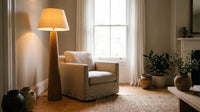
LED spotlights for living room
- Tracked delivery to your country Tracked delivery
- Secure payment at checkout Multiple payment methods
- 14 days to change your mind 14-day returns
- Secure payment Secure payment


Not sure of your style? Find it in 30 seconds
A few questions, and we will show you the pieces made for you.

















Frequently asked questions
How do I choose the right light output?
At what height should the light be installed?
What type of bulb?
Compatible with LEDs and dimmers?
Light changes everything
From statement chandeliers to discreet wall lights, we help you choose the right brightness, height and style for every room.
- Tracked delivery
- Pay in instalments, where available
- 14 days to change your mind
- Advice & showroom in Lyon, France
Start with the possible installation: a LED living room spotlight recesses into a false ceiling, mounts on the ceiling when there is no void, or fits on a track. Then come the colour temperature, warm white 2700-3500 K for ambience and neutral white 3500-4500 K for reading, then the wattage, from 7 to 24 W depending on the surface to cover.
Which LED living room spotlights to choose?
To choose, start from the constraint of the room: a false ceiling calls for a recessed model, a concrete ceiling a surface mount, a high ceiling a track. The light colour follows the use, the surface to light gives the wattage.
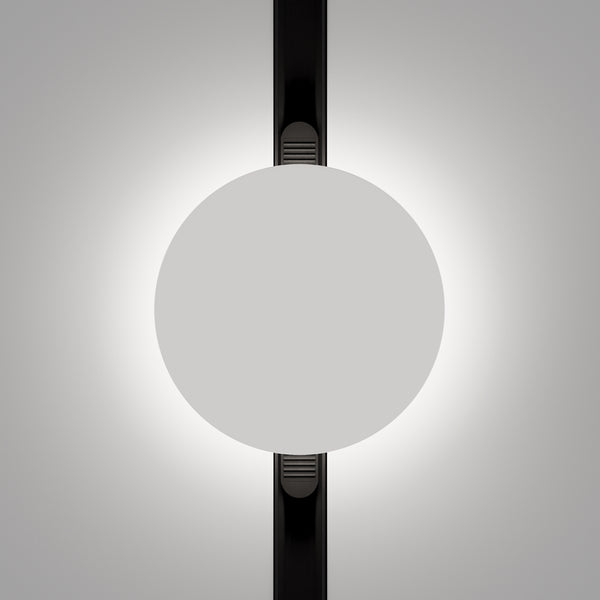
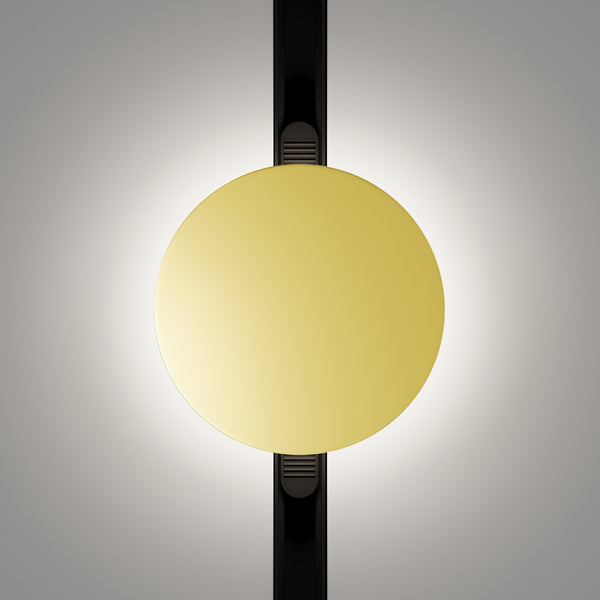
The rest supports that choice. The whole selection is in aluminium, in IP20, so designed for dry interiors, and in LED technology. That is why a 12 W spot is enough to hold a corner of the room without heating up or running up the bill. The Luno round spot shows the spirit well: a ribbed diffuser that softens the light point and a round shape that blends into a ceiling. To compare the families before deciding, see all the home's light fixtures gives the overview.
LED lamp for living room or recessed spot: what is the difference?
An LED lamp moves, comes close to an armchair and lights at seat height. A recessed spot lights from above, frees the floor and stays fixed. The two do not answer the same need: the lamp for reading and ambience, the spot for general light and circulation.
LED light fixture for living room: what an integrated LED changes
An integrated LED removes the bulb question: nothing to buy again, a single block to replace the day it weakens. The GU10 base, present on a small part of the selection, on the contrary lets you choose the bulb and replace it alone. That is the criterion that weighs most on long-term maintenance.
What wattage of LED spot should I choose to light my living room?
Wattage is chosen by use: 7 W suits an accent or an adjoining corridor, 10 to 15 W a distributed lighting of a living room, 18 to 24 W a large living room or a high ceiling. Better to multiply moderate light points than force a single very powerful spot.
A high ceiling needs more wattage so the light reaches the living area, a low ceiling is content with less. The dimmer, available on some models, changes things in the evening: you keep an installation able to light strongly and lower it after the meal. The dimmable models are easy to spot in the product sheet.
12 W or 20 W: how to decide?
The 12 W covers a reading area, a TV corner or a corridor. The 20 W targets a large volume or a room where you want to see clearly, without playing on the number of points. Between the two, the question is simple: should the light fall precisely or cover widely?
LED bulbs for living room: when to keep a GU10 base
The GU10 base is kept when you want to change the colour temperature without changing the fixture, or replace a bulb alone. It also serves to keep an existing installation whose support is already equipped. The adjustable spots exist in both technologies.
LED spot to fix on the ceiling, recessed or on track: which installation for my living room?
A recessed spot needs a false ceiling but leaves a clean surface, a spot to fix on the ceiling is installed when there is no void, and a spot on track can be aimed and moved without re-drilling. The choice therefore depends on the height and the ceiling before the style.
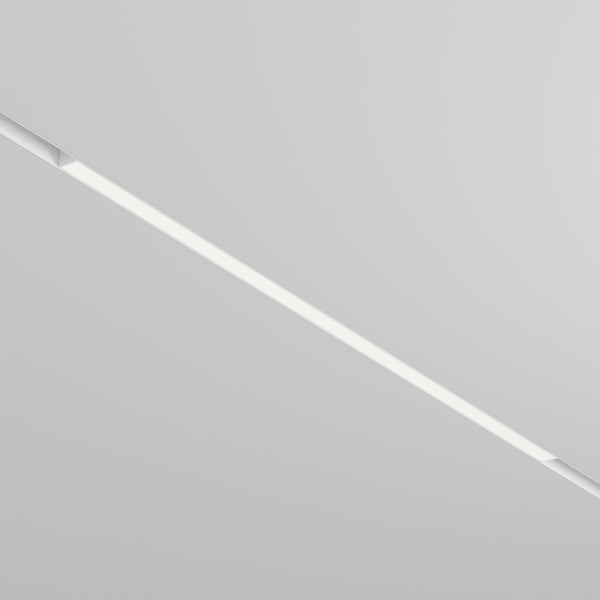
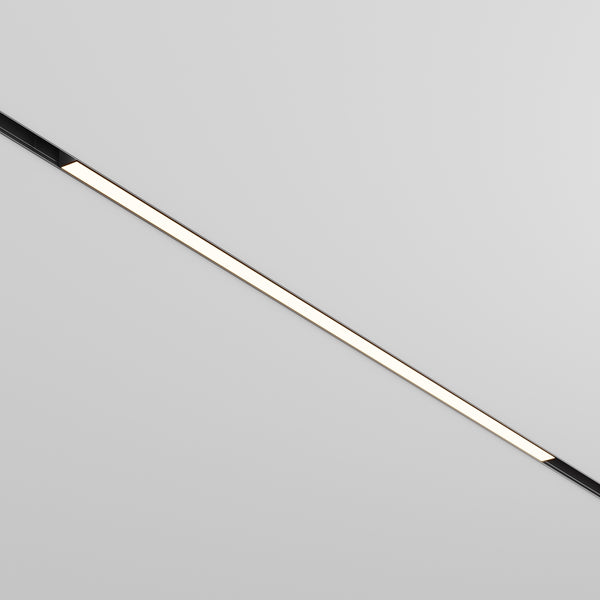
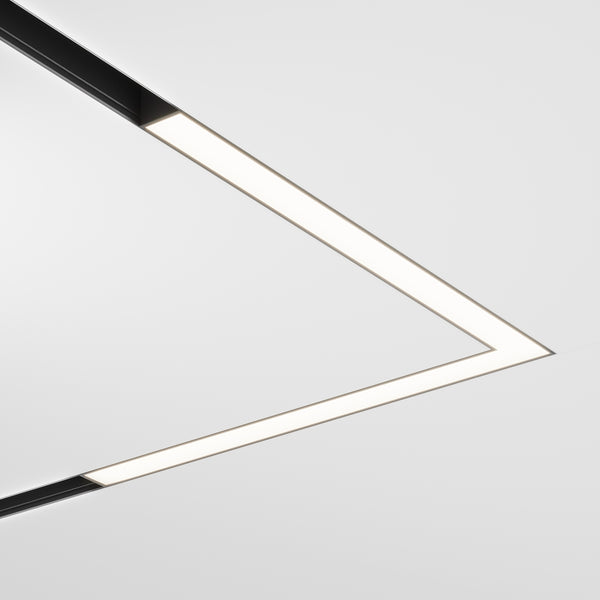
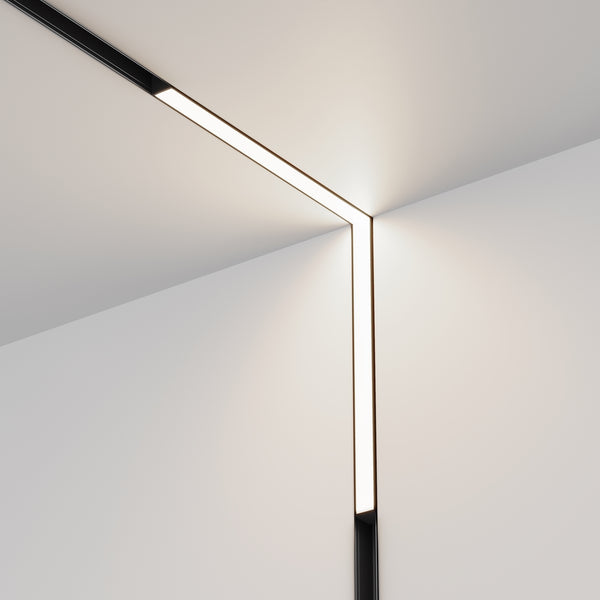
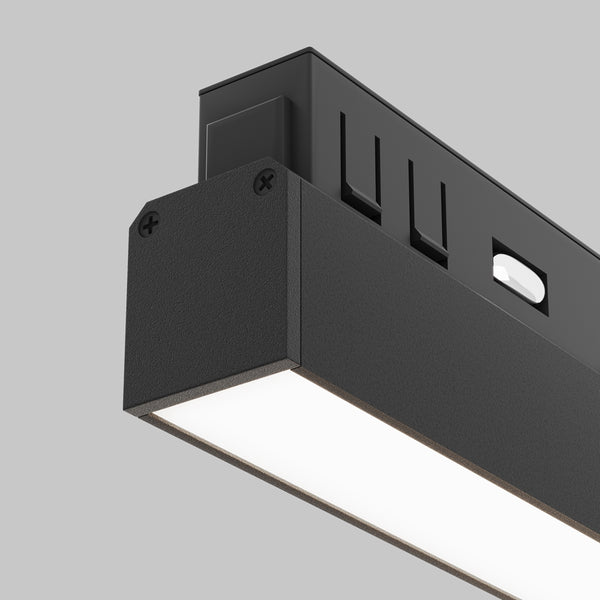
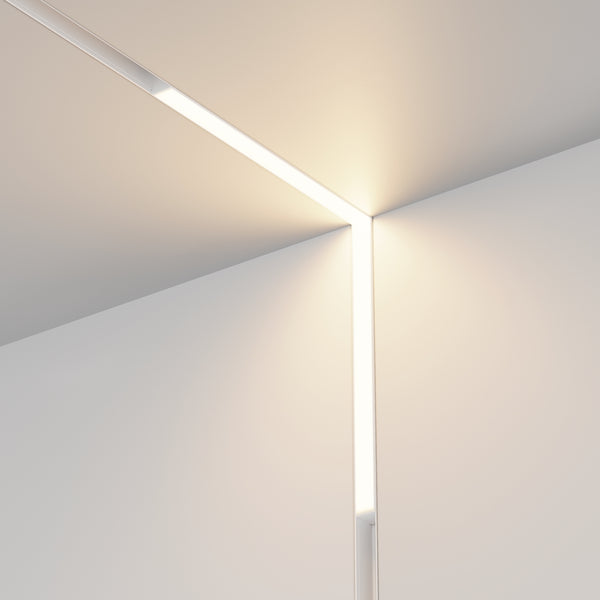
The real dimensions help to decide. The Luno is Ø 9.8 cm and slips into a small void. The Cortix, linear, measures 32.7 cm (L 2.2 cm), the Mirva 60.4 cm: a long profile covers a large table in a single line. For a narrow passage, a spot to fix on the ceiling avoids any work in the ceiling.
Extra flat recessed LED spot: where does it fit?
A low-thickness profile, like the Orva II and its 2.2 cm, suits ceilings where the technical void is thin. You must check the available depth and the cable passage before drilling. For a classic false ceiling, all the living room recessed spots gather the round and linear formats.
LED spot on track: aim the light without multiplying the drillings
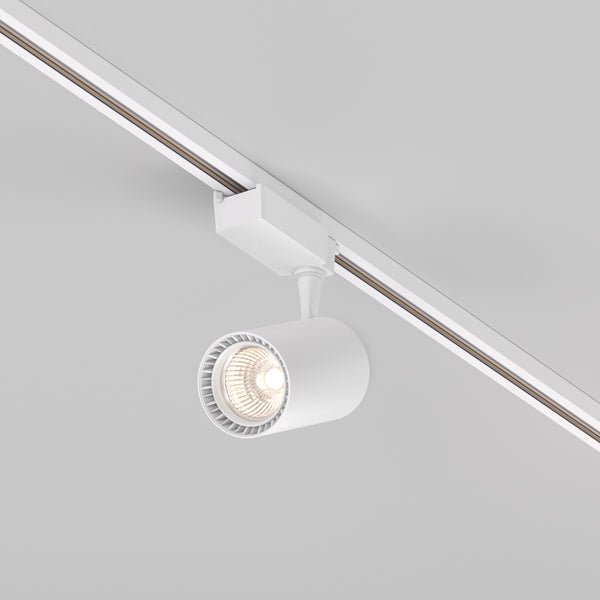
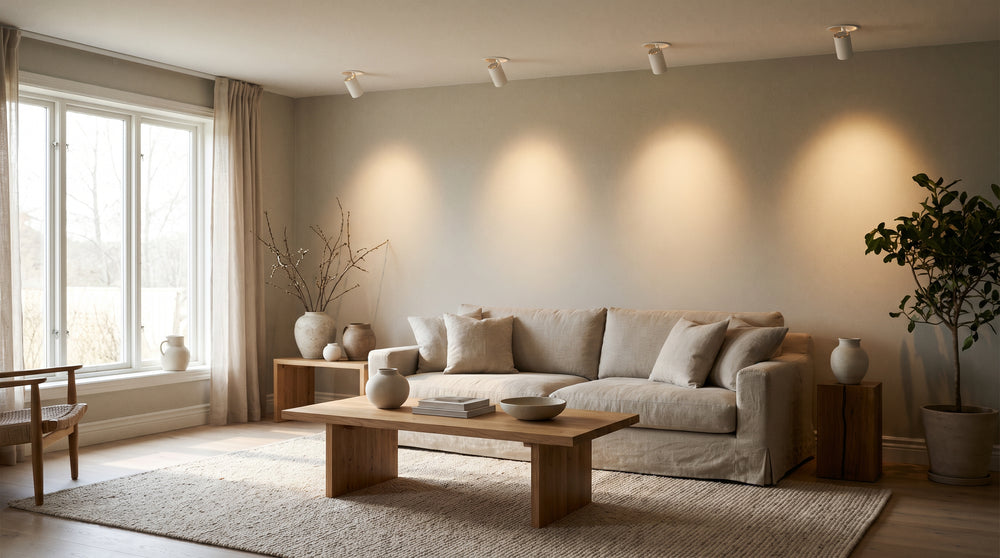
The track is fixed at a few points and receives several heads that you turn towards a wall, a bookcase or a painting. The Tuba on track gives the example with its cylindrical head. The recessed models that can be aimed offer the same flexibility flush with the ceiling.
| Model | Material | Colour | Dimensions | Wattage | Colour temperature |
|---|---|---|---|---|---|
| Solin | Aluminium | White | Ø 8.9 cm / D 13.8 cm | 15 W | Warm white 2700-3500 K |
| Onix | Metal and aluminium | White | L 9.5 cm / D 19.4 cm | 20 W | Warm white 2700-3500 K |
| Noctal | Aluminium | Black | L 30.2 cm / D 30.2 cm | 24 W | Neutral white 3500-4500 K |
| Orva II | Aluminium | Black | L 2.2 cm / D 22 cm | 12 W | Warm white 2700-3500 K |
| Mirva | Aluminium | Black | L 2.2 cm / D 60.4 cm | 24 W | Neutral white 3500-4500 K |
| Soressa | Aluminium | White | Ø 5.2 cm | 12 W | Warm white 2700-3500 K |
How to distribute LED spots in a living room?
Spots are distributed by zones: the periphery for ambience, the centre for general lighting, the walls for accents. Keeping the same colour temperature throughout avoids yellow or blue patches. The exact number depends on the surface and the height, it is validated room by room.
Three well-placed 12 W points give a more comfortable light than a single point pushed to 24 W: fewer hard shadows, less glare, and the possibility of switching part of them off. Corridors and circulation call for a discreet point, often in warm white so as not to break the evening ambience.
Lighting a 20 m2 living room with spots: where to start?
First place the points that light the uses: sofa, coffee table, desk corner. Then add the accents on a wall or a niche, and finish with the circulation. A 60.4 cm linear profile replaces on its own several round points above a large area.
LED projector for living room or recessed spots: what difference in use?
The projector sends a wide and powerful beam onto a surface, useful outdoors or for utility lighting. Recessed spots light from several points distributed in the room and blend into the ceiling. In a living room, distributed lighting remains more comfortable day to day.
| Temperature | Rendering in the room | Where to use it | Models in the selection |
|---|---|---|---|
| Warm white 2700-3500 K | Soft light, settled ambience | Relaxation corners, accent wall, corridor | Soressa, Rondeo, Orveo |
| Neutral white 3500-4500 K | Whiter light, sharp contrasts | Reading, desk corner, general lighting | Noctal, Mirva, Luno |
How to match LED spots with a modern living room chandelier and the rest of the decor?
The spots carry the useful light while the chandelier, the floor lamp or the wall light give the character. Keep a single family of colours for the fixtures, black or white, and repeat the same colour temperature from one source to another. Too many different light shades break the unity of the living room.
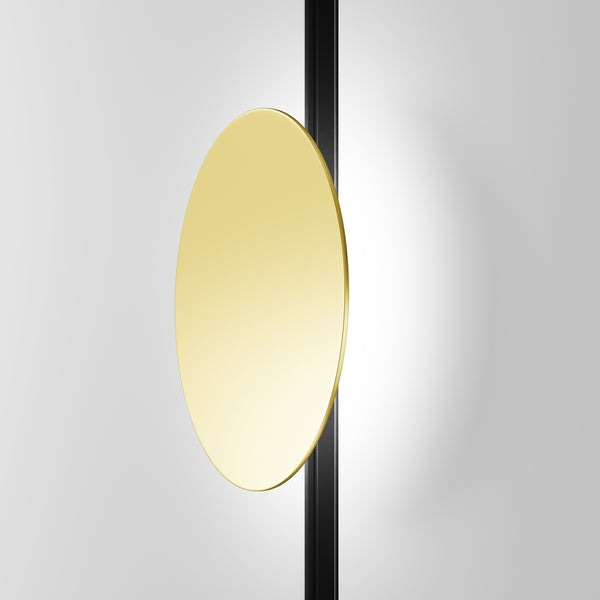
A ball floor lamp for living room lights at seat height and moves near the sofa, a wall light for living room relieves the ceiling and draws a wall. That is where the original living room light fixture makes full sense: a strong piece, completed by sober spots. The Soressa adjustable plate plays this role of discreet and mobile light, useful next to a low piece of furniture.
Modern living room chandelier and spots: how to balance?
A large living room chandelier is chosen on three markers: the volume it occupies relative to the room, its diameter in relation to the table or the sofa, and its suspension height, to keep above the standing passage.
The chandelier remains the central piece above the table or the living room, the spots ensure the rest of the room. Avoid switching both on at maximum at the same time: the chandelier for receiving, the spots for living. A softer light for the bedroom follows the same logic in another room.
What paint colour for a bright living room?
A light shade reflects more light and matches well with a neutral white 3500-4500 K. A dark wall absorbs part of it: better then to multiply the light points than to push a single spot. Paint accompanies the lighting, it does not replace it.
Replacing a living room halogen with LED spots: what should be checked?
Switching from halogen to LED spot comes down to three points: the base, GU10 on some models, the supply voltage of the support, and the existing dimmer which is not always compatible. Models with integrated LED remove the bulb question but remain IP20, so reserved for dry interiors.
An LED spot heats much less and consumes less for comparable lighting, which matters when several points stay on in the evening. On rendering, you find the same comfort by choosing a warm white on the relaxation zones. For a dark ceiling, the black recessed models for dark ceiling blend in visually.
Living room halogen: what to keep when switching to LED?
The support and the wiring are kept if they are in good condition, the transformer is checked. An old dimmer can cause flickering: in that case, replace it or choose non-dimmable models. There is no point redoing everything if the existing network suits.
GU10 base or integrated LED: what maintenance afterwards?
The GU10 lets you change the bulb alone and adjust the temperature over its life. The integrated LED cannot be dismantled: the fixture is replaced as a block, but the lifespan is designed to last a long time. The spots of kitchen like those of the living room follow this same rule.
Black or white LED spot in the living room: which colour to choose?
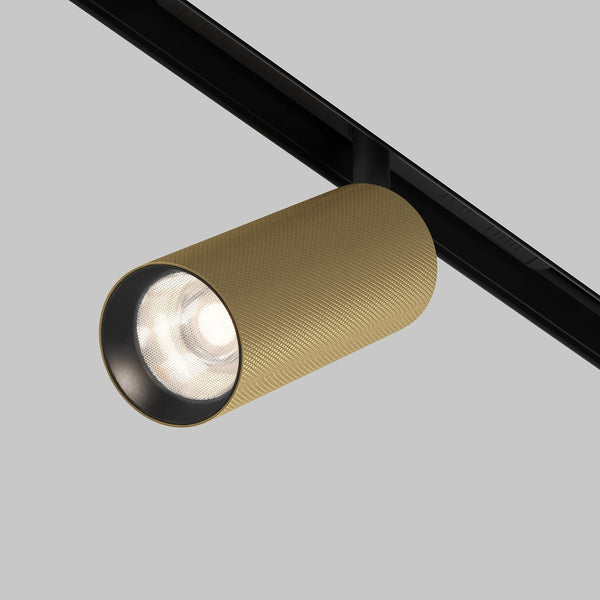
Black matches dark ceilings and graphic decors, white fades into a light ceiling, and gold brings a contemporary touch. As the same family of spots often equips kitchen and living room, choosing a single fixture colour avoids breaking the visual continuity between the two rooms.
Shapes matter as much as shades: the round blends in, the tube draws a line, the square marks a rhythm. Black finishes dominate the selection, which simplifies matching when looking for unity between several rooms.
Black recessed LED spot: on which ceiling?
A dark ceiling or a decor with marked lines accepts black without the spot being seen. On a very light ceiling, it creates an assumed contrast. Conversely, the white spots for light ceiling disappear completely once switched off.
Decor for modern kitchen: keep the same family of spots
Living room and kitchen often communicate: taking the same colour and the same colour temperature avoids a break at the doorway. The decor for modern kitchen benefits from the same markers, with tighter points above the worktop and a more matte light for the entrance.
How to install and maintain a living room LED spot?
Installation starts by cutting the power at the circuit breaker, then by locating the cables before drilling. The models in the selection are IP20, so intended for a dry interior, excluding the bathroom. The dimmer, present on only some models, is checked before purchase.
Mark the locations in pencil, check the void depth one last time, then drill. Cleaning is done dry, with a soft cloth on the diffuser: a liquid product ends up dulling the surface. On the ordering side, secure payment, tracked delivery, returns and Designix customer service accompany each step.
Do you need a dimmer for living room spots?
The dimmer is used to lower the intensity in the evening without switching off: useful in a living room that changes use between the meal and the film. Not all spots accept it. The recessed dimmable models avoid this doubt at the time of choice.
Maintaining an LED spot: what extends its lifespan
Regular dusting of the diffuser is enough to keep a clean rendering. Avoid covering the fixture, which retains heat, and leave the ventilation provided around it. For a work corner, the desk spots follow exactly the same gestures.
Frequently asked questions about living room LED spots
Which LED living room spotlights to choose?
Everything depends on the installation and the use: a round or linear recessed model for a clean ceiling, a model to fix on the ceiling without a false ceiling, a spot on track when you need to aim. Then, warm white 2700-3500 K for ambience, neutral white 3500-4500 K for reading.
What wattage of LED spot should I choose to light my living room?
7 W is enough for an accent or a corridor, 10 to 15 W cover a distributed lighting of a living room, 18 to 24 W light a large living room or a high ceiling widely. The dimmer, available on some models, lets you lower the intensity in the evening without changing the spot.
How to replace a living room halogen with LED spots?
First check the base and the voltage of the existing support: some models use a GU10 base, the others have an integrated LED. The halogen dimmer is not always compatible with an LED spot, so it must be checked before keeping it.
Modern living room chandelier and LED spots: how to combine them?
The chandelier brings the centrepiece, the spots ensure the useful light of the circulation and the reading zones. Keep the same colour temperature on both sources and limit the finishes to a single family, black or white, so the whole remains readable.
What paint colour for a bright living room?
Paint does not replace wattage: a light shade reflects more light and matches well with a neutral white 3500-4500 K, while a dark wall absorbs part of it and rather calls for multiplying the light points than forcing a single spot.