
Japandi style: the perfect fusion of Japan and Scandinavia
This article is also available in French: Le style japandi : la fusion parfaite entre Japon et Scandinavie
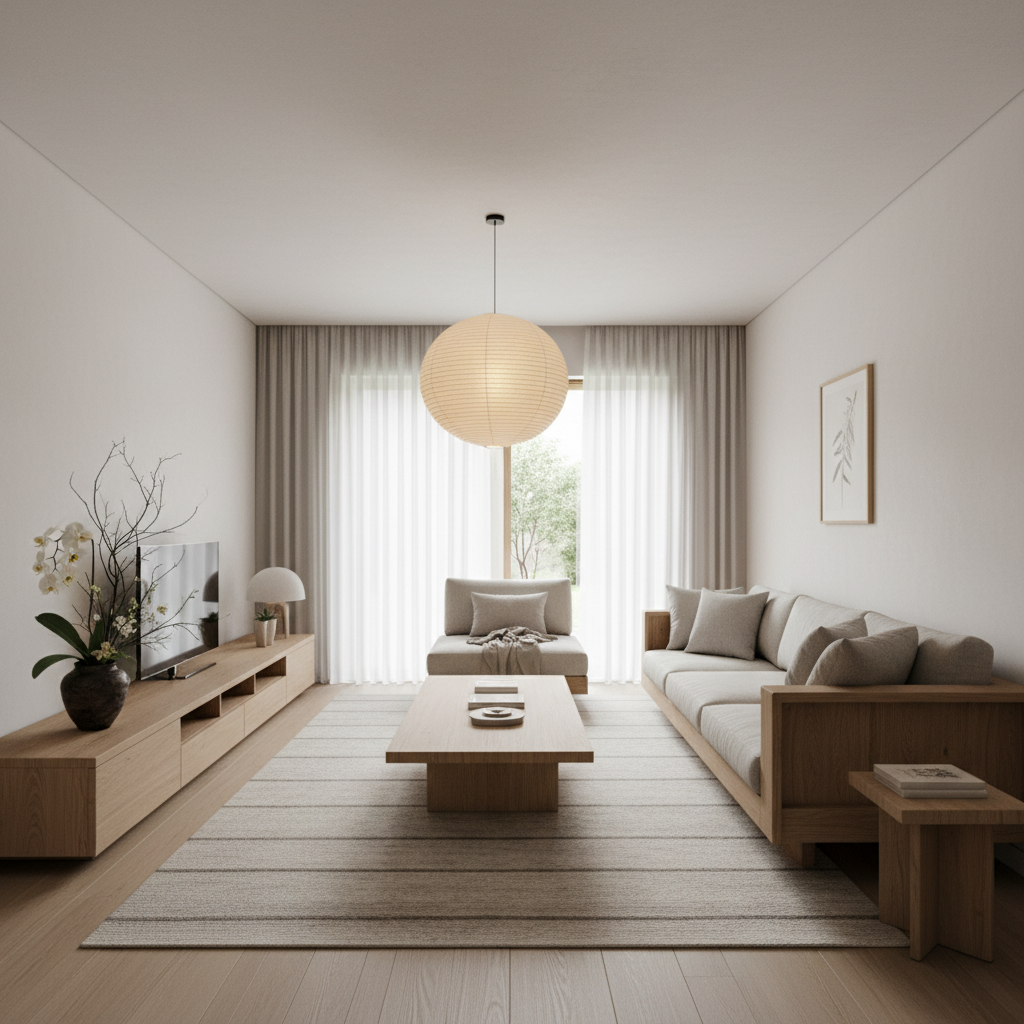
Japandi was born from the meeting of Japanese wabi-sabi aesthetics and Scandinavian design. Both traditions share a common love for simplicity, natural materials, and functionality. Their fusion creates interiors of rare serenity.

The principles of Japandi
The first principle is intentional minimalism. Every object in the room has a purpose, whether functional or aesthetic. Nothing is superfluous, yet nothing is missing. It is a stripped-back approach that calms the mind rather than causing frustration.
The second principle is the beauty of imperfection. Japanese wabi-sabi celebrates the marks of time, raw textures, and organic forms. A wooden table with visible knots or a slightly asymmetrical ceramic vase: these imperfections are signs of life.
The third principle is the connection with nature. The materials used are almost exclusively natural: wood, linen, cotton, stone, and ceramic. The colors mimic those of the earth and sky.
Adopting Japandi in your home
Start by decluttering. Remove anything that is not essential or meaningful. Empty space is a decorative element in its own right in Japandi. A bare wall, an open space on a shelf, a cleared table: these visual pauses are restful.
Choose low-profile furniture with simple lines. Short legs, a characteristic of Japanese furniture, create a low center of gravity that anchors the room and invites you to slow down.

Looking to transform your interior?
Discover the collectionJapandi lighting
Natural light is sacred in a Japandi interior. Maximize it with light, sheer curtains or no curtains at all. Bare windows frame the scenery like a living painting.
For artificial lighting, rice paper lanterns filter light softly. Woven rattan pendants cast delicate shadows. You can find suitable lighting on the Designix shop.

Frequently asked questions
Is Japandi suitable for families with children?
Its philosophy of "less but better" also applies to families. Choose durable materials (solid wood, washable linen) and closed storage to hide toys.
Which plants work for a Japandi interior?
Structural plants: bonsai, bamboo, fiddle-leaf fig, monstera. Choose a few and take good care of them. One beautiful bonsai is worth more than ten unhealthy plants.
Is Japandi expensive to achieve?
Not necessarily. Japandi relies on a few well-chosen pieces of furniture. Invest in quality rather than quantity. A Japandi living room often costs less than an overloaded one.
In stock · shipping costs shown at checkout · up to 30% off in your cart


Ready to turn inspiration into reality?
Tell us about your room, your style and your budget, and we will show you the pieces that truly suit your project.
Get guidance in 30 seconds →


